
13 尺寸结构模块(size.rs)
一、size.rs源码
// Copyright 2013 The Servo Project Developers. See the COPYRIGHT
// file at the top-level directory of this distribution.
//
// Licensed under the Apache License, Version 2.0 <LICENSE-APACHE or
// http://www.apache.org/licenses/LICENSE-2.0> or the MIT license
// <LICENSE-MIT or http://opensource.org/licenses/MIT>, at your
// option. This file may not be copied, modified, or distributed
// except according to those terms.use super::UnknownUnit;
use crate::approxord::{max, min};
use crate::length::Length;
use crate::num::*;
use crate::scale::Scale;
use crate::vector::{vec2, BoolVector2D, Vector2D};
use crate::vector::{vec3, BoolVector3D, Vector3D};use core::cmp::{Eq, PartialEq};
use core::fmt;
use core::hash::Hash;
use core::iter::Sum;
use core::marker::PhantomData;
use core::ops::{Add, AddAssign, Div, DivAssign, Mul, MulAssign, Neg, Sub, SubAssign};#[cfg(feature = "bytemuck")]
use bytemuck::{Pod, Zeroable};
#[cfg(feature = "mint")]
use mint;
use num_traits::{Float, NumCast, Signed};
#[cfg(feature = "serde")]
use serde;/// A 2d size tagged with a unit.
#[repr(C)]
pub struct Size2D<T, U> {/// The extent of the element in the `U` units along the `x` axis (usually horizontal).pub width: T,/// The extent of the element in the `U` units along the `y` axis (usually vertical).pub height: T,#[doc(hidden)]pub _unit: PhantomData<U>,
}impl<T: Copy, U> Copy for Size2D<T, U> {}impl<T: Clone, U> Clone for Size2D<T, U> {fn clone(&self) -> Self {Size2D {width: self.width.clone(),height: self.height.clone(),_unit: PhantomData,}}
}#[cfg(feature = "serde")]
impl<'de, T, U> serde::Deserialize<'de> for Size2D<T, U>
whereT: serde::Deserialize<'de>,
{/// Deserializes 2d size from tuple of width and height.fn deserialize<D>(deserializer: D) -> Result<Self, D::Error>whereD: serde::Deserializer<'de>,{let (width, height) = serde::Deserialize::deserialize(deserializer)?;Ok(Size2D {width,height,_unit: PhantomData,})}
}#[cfg(feature = "serde")]
impl<T, U> serde::Serialize for Size2D<T, U>
whereT: serde::Serialize,
{/// Serializes 2d size to tuple of width and height.fn serialize<S>(&self, serializer: S) -> Result<S::Ok, S::Error>whereS: serde::Serializer,{(&self.width, &self.height).serialize(serializer)}
}#[cfg(feature = "arbitrary")]
impl<'a, T, U> arbitrary::Arbitrary<'a> for Size2D<T, U>
whereT: arbitrary::Arbitrary<'a>,
{fn arbitrary(u: &mut arbitrary::Unstructured<'a>) -> arbitrary::Result<Self> {let (width, height) = arbitrary::Arbitrary::arbitrary(u)?;Ok(Size2D {width,height,_unit: PhantomData,})}
}#[cfg(feature = "bytemuck")]
unsafe impl<T: Zeroable, U> Zeroable for Size2D<T, U> {}#[cfg(feature = "bytemuck")]
unsafe impl<T: Pod, U: 'static> Pod for Size2D<T, U> {}impl<T, U> Eq for Size2D<T, U> where T: Eq {}impl<T, U> PartialEq for Size2D<T, U>
whereT: PartialEq,
{fn eq(&self, other: &Self) -> bool {self.width == other.width && self.height == other.height}
}impl<T, U> Hash for Size2D<T, U>
whereT: Hash,
{fn hash<H: core::hash::Hasher>(&self, h: &mut H) {self.width.hash(h);self.height.hash(h);}
}impl<T: fmt::Debug, U> fmt::Debug for Size2D<T, U> {fn fmt(&self, f: &mut fmt::Formatter) -> fmt::Result {fmt::Debug::fmt(&self.width, f)?;write!(f, "x")?;fmt::Debug::fmt(&self.height, f)}
}impl<T: Default, U> Default for Size2D<T, U> {fn default() -> Self {Size2D::new(Default::default(), Default::default())}
}impl<T, U> Size2D<T, U> {/// The same as [`Zero::zero`] but available without importing trait.////// [`Zero::zero`]: crate::num::Zero::zero#[inline]pub fn zero() -> SelfwhereT: Zero,{Size2D::new(Zero::zero(), Zero::zero())}/// Constructor taking scalar values.#[inline]pub const fn new(width: T, height: T) -> Self {Size2D {width,height,_unit: PhantomData,}}/// Constructor taking scalar strongly typed lengths.#[inline]pub fn from_lengths(width: Length<T, U>, height: Length<T, U>) -> Self {Size2D::new(width.0, height.0)}/// Constructor setting all components to the same value.#[inline]pub fn splat(v: T) -> SelfwhereT: Clone,{Size2D {width: v.clone(),height: v,_unit: PhantomData,}}/// Tag a unitless value with units.#[inline]pub fn from_untyped(p: Size2D<T, UnknownUnit>) -> Self {Size2D::new(p.width, p.height)}
}impl<T: Copy, U> Size2D<T, U> {/// Return this size as an array of two elements (width, then height).#[inline]pub fn to_array(self) -> [T; 2] {[self.width, self.height]}/// Return this size as a tuple of two elements (width, then height).#[inline]pub fn to_tuple(self) -> (T, T) {(self.width, self.height)}/// Return this size as a vector with width and height.#[inline]pub fn to_vector(self) -> Vector2D<T, U> {vec2(self.width, self.height)}/// Drop the units, preserving only the numeric value.#[inline]pub fn to_untyped(self) -> Size2D<T, UnknownUnit> {self.cast_unit()}/// Cast the unit#[inline]pub fn cast_unit<V>(self) -> Size2D<T, V> {Size2D::new(self.width, self.height)}/// Rounds each component to the nearest integer value.////// This behavior is preserved for negative values (unlike the basic cast).////// ```rust/// # use euclid::size2;/// enum Mm {}////// assert_eq!(size2::<_, Mm>(-0.1, -0.8).round(), size2::<_, Mm>(0.0, -1.0))/// ```#[inline]#[must_use]pub fn round(self) -> SelfwhereT: Round,{Size2D::new(self.width.round(), self.height.round())}/// Rounds each component to the smallest integer equal or greater than the original value.////// This behavior is preserved for negative values (unlike the basic cast).////// ```rust/// # use euclid::size2;/// enum Mm {}////// assert_eq!(size2::<_, Mm>(-0.1, -0.8).ceil(), size2::<_, Mm>(0.0, 0.0))/// ```#[inline]#[must_use]pub fn ceil(self) -> SelfwhereT: Ceil,{Size2D::new(self.width.ceil(), self.height.ceil())}/// Rounds each component to the biggest integer equal or lower than the original value.////// This behavior is preserved for negative values (unlike the basic cast).////// ```rust/// # use euclid::size2;/// enum Mm {}////// assert_eq!(size2::<_, Mm>(-0.1, -0.8).floor(), size2::<_, Mm>(-1.0, -1.0))/// ```#[inline]#[must_use]pub fn floor(self) -> SelfwhereT: Floor,{Size2D::new(self.width.floor(), self.height.floor())}/// Returns result of multiplication of both componentspub fn area(self) -> T::OutputwhereT: Mul,{self.width * self.height}/// Linearly interpolate each component between this size and another size.////// # Example////// ```rust/// use euclid::size2;/// use euclid::default::Size2D;////// let from: Size2D<_> = size2(0.0, 10.0);/// let to:  Size2D<_> = size2(8.0, -4.0);////// assert_eq!(from.lerp(to, -1.0), size2(-8.0,  24.0));/// assert_eq!(from.lerp(to,  0.0), size2( 0.0,  10.0));/// assert_eq!(from.lerp(to,  0.5), size2( 4.0,   3.0));/// assert_eq!(from.lerp(to,  1.0), size2( 8.0,  -4.0));/// assert_eq!(from.lerp(to,  2.0), size2(16.0, -18.0));/// ```#[inline]pub fn lerp(self, other: Self, t: T) -> SelfwhereT: One + Sub<Output = T> + Mul<Output = T> + Add<Output = T>,{let one_t = T::one() - t;self * one_t + other * t}
}impl<T: NumCast + Copy, U> Size2D<T, U> {/// Cast from one numeric representation to another, preserving the units.////// When casting from floating point to integer coordinates, the decimals are truncated/// as one would expect from a simple cast, but this behavior does not always make sense/// geometrically. Consider using `round()`, `ceil()` or `floor()` before casting.#[inline]pub fn cast<NewT: NumCast>(self) -> Size2D<NewT, U> {self.try_cast().unwrap()}/// Fallible cast from one numeric representation to another, preserving the units.////// When casting from floating point to integer coordinates, the decimals are truncated/// as one would expect from a simple cast, but this behavior does not always make sense/// geometrically. Consider using `round()`, `ceil()` or `floor()` before casting.pub fn try_cast<NewT: NumCast>(self) -> Option<Size2D<NewT, U>> {match (NumCast::from(self.width), NumCast::from(self.height)) {(Some(w), Some(h)) => Some(Size2D::new(w, h)),_ => None,}}// Convenience functions for common casts/// Cast into an `f32` size.#[inline]pub fn to_f32(self) -> Size2D<f32, U> {self.cast()}/// Cast into an `f64` size.#[inline]pub fn to_f64(self) -> Size2D<f64, U> {self.cast()}/// Cast into an `uint` size, truncating decimals if any.////// When casting from floating point sizes, it is worth considering whether/// to `round()`, `ceil()` or `floor()` before the cast in order to obtain/// the desired conversion behavior.#[inline]pub fn to_usize(self) -> Size2D<usize, U> {self.cast()}/// Cast into an `u32` size, truncating decimals if any.////// When casting from floating point sizes, it is worth considering whether/// to `round()`, `ceil()` or `floor()` before the cast in order to obtain/// the desired conversion behavior.#[inline]pub fn to_u32(self) -> Size2D<u32, U> {self.cast()}/// Cast into an `u64` size, truncating decimals if any.////// When casting from floating point sizes, it is worth considering whether/// to `round()`, `ceil()` or `floor()` before the cast in order to obtain/// the desired conversion behavior.#[inline]pub fn to_u64(self) -> Size2D<u64, U> {self.cast()}/// Cast into an `i32` size, truncating decimals if any.////// When casting from floating point sizes, it is worth considering whether/// to `round()`, `ceil()` or `floor()` before the cast in order to obtain/// the desired conversion behavior.#[inline]pub fn to_i32(self) -> Size2D<i32, U> {self.cast()}/// Cast into an `i64` size, truncating decimals if any.////// When casting from floating point sizes, it is worth considering whether/// to `round()`, `ceil()` or `floor()` before the cast in order to obtain/// the desired conversion behavior.#[inline]pub fn to_i64(self) -> Size2D<i64, U> {self.cast()}
}impl<T: Float, U> Size2D<T, U> {/// Returns `true` if all members are finite.#[inline]pub fn is_finite(self) -> bool {self.width.is_finite() && self.height.is_finite()}
}impl<T: Signed, U> Size2D<T, U> {/// Computes the absolute value of each component.////// For `f32` and `f64`, `NaN` will be returned for component if the component is `NaN`.////// For signed integers, `::MIN` will be returned for component if the component is `::MIN`.pub fn abs(self) -> Self {size2(self.width.abs(), self.height.abs())}/// Returns `true` if both components is positive and `false` any component is zero or negative.pub fn is_positive(self) -> bool {self.width.is_positive() && self.height.is_positive()}
}impl<T: PartialOrd, U> Size2D<T, U> {/// Returns the size each component of which are minimum of this size and another.#[inline]pub fn min(self, other: Self) -> Self {size2(min(self.width, other.width), min(self.height, other.height))}/// Returns the size each component of which are maximum of this size and another.#[inline]pub fn max(self, other: Self) -> Self {size2(max(self.width, other.width), max(self.height, other.height))}/// Returns the size each component of which clamped by corresponding/// components of `start` and `end`.////// Shortcut for `self.max(start).min(end)`.#[inline]pub fn clamp(self, start: Self, end: Self) -> SelfwhereT: Copy,{self.max(start).min(end)}// Returns true if this size is larger or equal to the other size in all dimensions.#[inline]pub fn contains(self, other: Self) -> bool {self.width >= other.width && self.height >= other.height}/// Returns vector with results of "greater then" operation on each component.pub fn greater_than(self, other: Self) -> BoolVector2D {BoolVector2D {x: self.width > other.width,y: self.height > other.height,}}/// Returns vector with results of "lower then" operation on each component.pub fn lower_than(self, other: Self) -> BoolVector2D {BoolVector2D {x: self.width < other.width,y: self.height < other.height,}}/// Returns `true` if any component of size is zero, negative, or NaN.pub fn is_empty(self) -> boolwhereT: Zero,{let zero = T::zero();// The condition is expressed this way so that we return true in// the presence of NaN.!(self.width > zero && self.height > zero)}
}impl<T: PartialEq, U> Size2D<T, U> {/// Returns vector with results of "equal" operation on each component.pub fn equal(self, other: Self) -> BoolVector2D {BoolVector2D {x: self.width == other.width,y: self.height == other.height,}}/// Returns vector with results of "not equal" operation on each component.pub fn not_equal(self, other: Self) -> BoolVector2D {BoolVector2D {x: self.width != other.width,y: self.height != other.height,}}
}impl<T: Round, U> Round for Size2D<T, U> {/// See [`Size2D::round`].#[inline]fn round(self) -> Self {self.round()}
}impl<T: Ceil, U> Ceil for Size2D<T, U> {/// See [`Size2D::ceil`].#[inline]fn ceil(self) -> Self {self.ceil()}
}impl<T: Floor, U> Floor for Size2D<T, U> {/// See [`Size2D::floor`].#[inline]fn floor(self) -> Self {self.floor()}
}impl<T: Zero, U> Zero for Size2D<T, U> {#[inline]fn zero() -> Self {Size2D::new(Zero::zero(), Zero::zero())}
}impl<T: Neg, U> Neg for Size2D<T, U> {type Output = Size2D<T::Output, U>;#[inline]fn neg(self) -> Self::Output {Size2D::new(-self.width, -self.height)}
}impl<T: Add, U> Add for Size2D<T, U> {type Output = Size2D<T::Output, U>;#[inline]fn add(self, other: Self) -> Self::Output {Size2D::new(self.width + other.width, self.height + other.height)}
}impl<T: Copy + Add<T, Output = T>, U> Add<&Self> for Size2D<T, U> {type Output = Self;fn add(self, other: &Self) -> Self {Size2D::new(self.width + other.width, self.height + other.height)}
}impl<T: Add<Output = T> + Zero, U> Sum for Size2D<T, U> {fn sum<I: Iterator<Item = Self>>(iter: I) -> Self {iter.fold(Self::zero(), Add::add)}
}impl<'a, T: 'a + Add<Output = T> + Copy + Zero, U: 'a> Sum<&'a Self> for Size2D<T, U> {fn sum<I: Iterator<Item = &'a Self>>(iter: I) -> Self {iter.fold(Self::zero(), Add::add)}
}impl<T: AddAssign, U> AddAssign for Size2D<T, U> {#[inline]fn add_assign(&mut self, other: Self) {self.width += other.width;self.height += other.height;}
}impl<T: Sub, U> Sub for Size2D<T, U> {type Output = Size2D<T::Output, U>;#[inline]fn sub(self, other: Self) -> Self::Output {Size2D::new(self.width - other.width, self.height - other.height)}
}impl<T: SubAssign, U> SubAssign for Size2D<T, U> {#[inline]fn sub_assign(&mut self, other: Self) {self.width -= other.width;self.height -= other.height;}
}impl<T: Copy + Mul, U> Mul<T> for Size2D<T, U> {type Output = Size2D<T::Output, U>;#[inline]fn mul(self, scale: T) -> Self::Output {Size2D::new(self.width * scale, self.height * scale)}
}impl<T: Copy + MulAssign, U> MulAssign<T> for Size2D<T, U> {#[inline]fn mul_assign(&mut self, other: T) {self.width *= other;self.height *= other;}
}impl<T: Copy + Mul, U1, U2> Mul<Scale<T, U1, U2>> for Size2D<T, U1> {type Output = Size2D<T::Output, U2>;#[inline]fn mul(self, scale: Scale<T, U1, U2>) -> Self::Output {Size2D::new(self.width * scale.0, self.height * scale.0)}
}impl<T: Copy + MulAssign, U> MulAssign<Scale<T, U, U>> for Size2D<T, U> {#[inline]fn mul_assign(&mut self, other: Scale<T, U, U>) {*self *= other.0;}
}impl<T: Copy + Div, U> Div<T> for Size2D<T, U> {type Output = Size2D<T::Output, U>;#[inline]fn div(self, scale: T) -> Self::Output {Size2D::new(self.width / scale, self.height / scale)}
}impl<T: Copy + DivAssign, U> DivAssign<T> for Size2D<T, U> {#[inline]fn div_assign(&mut self, other: T) {self.width /= other;self.height /= other;}
}impl<T: Copy + Div, U1, U2> Div<Scale<T, U1, U2>> for Size2D<T, U2> {type Output = Size2D<T::Output, U1>;#[inline]fn div(self, scale: Scale<T, U1, U2>) -> Self::Output {Size2D::new(self.width / scale.0, self.height / scale.0)}
}impl<T: Copy + DivAssign, U> DivAssign<Scale<T, U, U>> for Size2D<T, U> {#[inline]fn div_assign(&mut self, other: Scale<T, U, U>) {*self /= other.0;}
}/// Shorthand for `Size2D::new(w, h)`.
#[inline]
pub const fn size2<T, U>(w: T, h: T) -> Size2D<T, U> {Size2D::new(w, h)
}#[cfg(feature = "mint")]
impl<T, U> From<mint::Vector2<T>> for Size2D<T, U> {#[inline]fn from(v: mint::Vector2<T>) -> Self {Size2D {width: v.x,height: v.y,_unit: PhantomData,}}
}
#[cfg(feature = "mint")]
impl<T, U> From<Size2D<T, U>> for mint::Vector2<T> {#[inline]fn from(s: Size2D<T, U>) -> Self {mint::Vector2 {x: s.width,y: s.height,}}
}impl<T, U> From<Vector2D<T, U>> for Size2D<T, U> {#[inline]fn from(v: Vector2D<T, U>) -> Self {size2(v.x, v.y)}
}impl<T, U> From<Size2D<T, U>> for [T; 2] {#[inline]fn from(s: Size2D<T, U>) -> Self {[s.width, s.height]}
}impl<T, U> From<[T; 2]> for Size2D<T, U> {#[inline]fn from([w, h]: [T; 2]) -> Self {size2(w, h)}
}impl<T, U> From<Size2D<T, U>> for (T, T) {#[inline]fn from(s: Size2D<T, U>) -> Self {(s.width, s.height)}
}impl<T, U> From<(T, T)> for Size2D<T, U> {#[inline]fn from(tuple: (T, T)) -> Self {size2(tuple.0, tuple.1)}
}#[cfg(test)]
mod size2d {use crate::default::Size2D;#[cfg(feature = "mint")]use mint;#[test]pub fn test_area() {let p = Size2D::new(1.5, 2.0);assert_eq!(p.area(), 3.0);}#[cfg(feature = "mint")]#[test]pub fn test_mint() {let s1 = Size2D::new(1.0, 2.0);let sm: mint::Vector2<_> = s1.into();let s2 = Size2D::from(sm);assert_eq!(s1, s2);}mod ops {use crate::default::Size2D;use crate::scale::Scale;pub enum Mm {}pub enum Cm {}pub type Size2DMm<T> = crate::Size2D<T, Mm>;pub type Size2DCm<T> = crate::Size2D<T, Cm>;#[test]pub fn test_neg() {assert_eq!(-Size2D::new(1.0, 2.0), Size2D::new(-1.0, -2.0));assert_eq!(-Size2D::new(0.0, 0.0), Size2D::new(-0.0, -0.0));assert_eq!(-Size2D::new(-1.0, -2.0), Size2D::new(1.0, 2.0));}#[test]pub fn test_add() {let s1 = Size2D::new(1.0, 2.0);let s2 = Size2D::new(3.0, 4.0);assert_eq!(s1 + s2, Size2D::new(4.0, 6.0));assert_eq!(s1 + &s2, Size2D::new(4.0, 6.0));let s1 = Size2D::new(1.0, 2.0);let s2 = Size2D::new(0.0, 0.0);assert_eq!(s1 + s2, Size2D::new(1.0, 2.0));assert_eq!(s1 + &s2, Size2D::new(1.0, 2.0));let s1 = Size2D::new(1.0, 2.0);let s2 = Size2D::new(-3.0, -4.0);assert_eq!(s1 + s2, Size2D::new(-2.0, -2.0));assert_eq!(s1 + &s2, Size2D::new(-2.0, -2.0));let s1 = Size2D::new(0.0, 0.0);let s2 = Size2D::new(0.0, 0.0);assert_eq!(s1 + s2, Size2D::new(0.0, 0.0));assert_eq!(s1 + &s2, Size2D::new(0.0, 0.0));}#[test]pub fn test_add_assign() {let mut s = Size2D::new(1.0, 2.0);s += Size2D::new(3.0, 4.0);assert_eq!(s, Size2D::new(4.0, 6.0));let mut s = Size2D::new(1.0, 2.0);s += Size2D::new(0.0, 0.0);assert_eq!(s, Size2D::new(1.0, 2.0));let mut s = Size2D::new(1.0, 2.0);s += Size2D::new(-3.0, -4.0);assert_eq!(s, Size2D::new(-2.0, -2.0));let mut s = Size2D::new(0.0, 0.0);s += Size2D::new(0.0, 0.0);assert_eq!(s, Size2D::new(0.0, 0.0));}#[test]pub fn test_sum() {let sizes = [Size2D::new(0.0, 1.0),Size2D::new(1.0, 2.0),Size2D::new(2.0, 3.0),];let sum = Size2D::new(3.0, 6.0);assert_eq!(sizes.iter().sum::<Size2D<_>>(), sum);}#[test]pub fn test_sub() {let s1 = Size2D::new(1.0, 2.0);let s2 = Size2D::new(3.0, 4.0);assert_eq!(s1 - s2, Size2D::new(-2.0, -2.0));let s1 = Size2D::new(1.0, 2.0);let s2 = Size2D::new(0.0, 0.0);assert_eq!(s1 - s2, Size2D::new(1.0, 2.0));let s1 = Size2D::new(1.0, 2.0);let s2 = Size2D::new(-3.0, -4.0);assert_eq!(s1 - s2, Size2D::new(4.0, 6.0));let s1 = Size2D::new(0.0, 0.0);let s2 = Size2D::new(0.0, 0.0);assert_eq!(s1 - s2, Size2D::new(0.0, 0.0));}#[test]pub fn test_sub_assign() {let mut s = Size2D::new(1.0, 2.0);s -= Size2D::new(3.0, 4.0);assert_eq!(s, Size2D::new(-2.0, -2.0));let mut s = Size2D::new(1.0, 2.0);s -= Size2D::new(0.0, 0.0);assert_eq!(s, Size2D::new(1.0, 2.0));let mut s = Size2D::new(1.0, 2.0);s -= Size2D::new(-3.0, -4.0);assert_eq!(s, Size2D::new(4.0, 6.0));let mut s = Size2D::new(0.0, 0.0);s -= Size2D::new(0.0, 0.0);assert_eq!(s, Size2D::new(0.0, 0.0));}#[test]pub fn test_mul_scalar() {let s1: Size2D<f32> = Size2D::new(3.0, 5.0);let result = s1 * 5.0;assert_eq!(result, Size2D::new(15.0, 25.0));}#[test]pub fn test_mul_assign_scalar() {let mut s1 = Size2D::new(3.0, 5.0);s1 *= 5.0;assert_eq!(s1, Size2D::new(15.0, 25.0));}#[test]pub fn test_mul_scale() {let s1 = Size2DMm::new(1.0, 2.0);let cm_per_mm: Scale<f32, Mm, Cm> = Scale::new(0.1);let result = s1 * cm_per_mm;assert_eq!(result, Size2DCm::new(0.1, 0.2));}#[test]pub fn test_mul_assign_scale() {let mut s1 = Size2DMm::new(1.0, 2.0);let scale: Scale<f32, Mm, Mm> = Scale::new(0.1);s1 *= scale;assert_eq!(s1, Size2DMm::new(0.1, 0.2));}#[test]pub fn test_div_scalar() {let s1: Size2D<f32> = Size2D::new(15.0, 25.0);let result = s1 / 5.0;assert_eq!(result, Size2D::new(3.0, 5.0));}#[test]pub fn test_div_assign_scalar() {let mut s1: Size2D<f32> = Size2D::new(15.0, 25.0);s1 /= 5.0;assert_eq!(s1, Size2D::new(3.0, 5.0));}#[test]pub fn test_div_scale() {let s1 = Size2DCm::new(0.1, 0.2);let cm_per_mm: Scale<f32, Mm, Cm> = Scale::new(0.1);let result = s1 / cm_per_mm;assert_eq!(result, Size2DMm::new(1.0, 2.0));}#[test]pub fn test_div_assign_scale() {let mut s1 = Size2DMm::new(0.1, 0.2);let scale: Scale<f32, Mm, Mm> = Scale::new(0.1);s1 /= scale;assert_eq!(s1, Size2DMm::new(1.0, 2.0));}#[test]pub fn test_nan_empty() {use std::f32::NAN;assert!(Size2D::new(NAN, 2.0).is_empty());assert!(Size2D::new(0.0, NAN).is_empty());assert!(Size2D::new(NAN, -2.0).is_empty());}}
}/// A 3d size tagged with a unit.
#[repr(C)]
pub struct Size3D<T, U> {/// The extent of the element in the `U` units along the `x` axis.pub width: T,/// The extent of the element in the `U` units along the `y` axis.pub height: T,/// The extent of the element in the `U` units along the `z` axis.pub depth: T,#[doc(hidden)]pub _unit: PhantomData<U>,
}impl<T: Copy, U> Copy for Size3D<T, U> {}impl<T: Clone, U> Clone for Size3D<T, U> {fn clone(&self) -> Self {Size3D {width: self.width.clone(),height: self.height.clone(),depth: self.depth.clone(),_unit: PhantomData,}}
}#[cfg(feature = "serde")]
impl<'de, T, U> serde::Deserialize<'de> for Size3D<T, U>
whereT: serde::Deserialize<'de>,
{fn deserialize<D>(deserializer: D) -> Result<Self, D::Error>whereD: serde::Deserializer<'de>,{let (width, height, depth) = serde::Deserialize::deserialize(deserializer)?;Ok(Size3D {width,height,depth,_unit: PhantomData,})}
}#[cfg(feature = "serde")]
impl<T, U> serde::Serialize for Size3D<T, U>
whereT: serde::Serialize,
{fn serialize<S>(&self, serializer: S) -> Result<S::Ok, S::Error>whereS: serde::Serializer,{(&self.width, &self.height, &self.depth).serialize(serializer)}
}#[cfg(feature = "arbitrary")]
impl<'a, T, U> arbitrary::Arbitrary<'a> for Size3D<T, U>
whereT: arbitrary::Arbitrary<'a>,
{fn arbitrary(u: &mut arbitrary::Unstructured<'a>) -> arbitrary::Result<Self> {let (width, height, depth) = arbitrary::Arbitrary::arbitrary(u)?;Ok(Size3D {width,height,depth,_unit: PhantomData,})}
}#[cfg(feature = "bytemuck")]
unsafe impl<T: Zeroable, U> Zeroable for Size3D<T, U> {}#[cfg(feature = "bytemuck")]
unsafe impl<T: Pod, U: 'static> Pod for Size3D<T, U> {}impl<T, U> Eq for Size3D<T, U> where T: Eq {}impl<T, U> PartialEq for Size3D<T, U>
whereT: PartialEq,
{fn eq(&self, other: &Self) -> bool {self.width == other.width && self.height == other.height && self.depth == other.depth}
}impl<T, U> Hash for Size3D<T, U>
whereT: Hash,
{fn hash<H: core::hash::Hasher>(&self, h: &mut H) {self.width.hash(h);self.height.hash(h);self.depth.hash(h);}
}impl<T: fmt::Debug, U> fmt::Debug for Size3D<T, U> {fn fmt(&self, f: &mut fmt::Formatter) -> fmt::Result {fmt::Debug::fmt(&self.width, f)?;write!(f, "x")?;fmt::Debug::fmt(&self.height, f)?;write!(f, "x")?;fmt::Debug::fmt(&self.depth, f)}
}impl<T: Default, U> Default for Size3D<T, U> {fn default() -> Self {Size3D::new(Default::default(), Default::default(), Default::default())}
}impl<T, U> Size3D<T, U> {/// The same as [`Zero::zero`] but available without importing trait.////// [`Zero::zero`]: crate::num::Zero::zeropub fn zero() -> SelfwhereT: Zero,{Size3D::new(Zero::zero(), Zero::zero(), Zero::zero())}/// Constructor taking scalar values.#[inline]pub const fn new(width: T, height: T, depth: T) -> Self {Size3D {width,height,depth,_unit: PhantomData,}}/// Constructor taking scalar strongly typed lengths.#[inline]pub fn from_lengths(width: Length<T, U>, height: Length<T, U>, depth: Length<T, U>) -> Self {Size3D::new(width.0, height.0, depth.0)}/// Constructor setting all components to the same value.#[inline]pub fn splat(v: T) -> SelfwhereT: Clone,{Size3D {width: v.clone(),height: v.clone(),depth: v,_unit: PhantomData,}}/// Tag a unitless value with units.#[inline]pub fn from_untyped(p: Size3D<T, UnknownUnit>) -> Self {Size3D::new(p.width, p.height, p.depth)}
}impl<T: Copy, U> Size3D<T, U> {/// Return this size as an array of three elements (width, then height, then depth).#[inline]pub fn to_array(self) -> [T; 3] {[self.width, self.height, self.depth]}/// Return this size as an array of three elements (width, then height, then depth).#[inline]pub fn to_tuple(self) -> (T, T, T) {(self.width, self.height, self.depth)}/// Return this size as a vector with width, height and depth.#[inline]pub fn to_vector(self) -> Vector3D<T, U> {vec3(self.width, self.height, self.depth)}/// Drop the units, preserving only the numeric value.#[inline]pub fn to_untyped(self) -> Size3D<T, UnknownUnit> {self.cast_unit()}/// Cast the unit#[inline]pub fn cast_unit<V>(self) -> Size3D<T, V> {Size3D::new(self.width, self.height, self.depth)}/// Rounds each component to the nearest integer value.////// This behavior is preserved for negative values (unlike the basic cast).////// ```rust/// # use euclid::size3;/// enum Mm {}////// assert_eq!(size3::<_, Mm>(-0.1, -0.8, 0.4).round(), size3::<_, Mm>(0.0, -1.0, 0.0))/// ```#[inline]#[must_use]pub fn round(self) -> SelfwhereT: Round,{Size3D::new(self.width.round(), self.height.round(), self.depth.round())}/// Rounds each component to the smallest integer equal or greater than the original value.////// This behavior is preserved for negative values (unlike the basic cast).////// ```rust/// # use euclid::size3;/// enum Mm {}////// assert_eq!(size3::<_, Mm>(-0.1, -0.8, 0.4).ceil(), size3::<_, Mm>(0.0, 0.0, 1.0))/// ```#[inline]#[must_use]pub fn ceil(self) -> SelfwhereT: Ceil,{Size3D::new(self.width.ceil(), self.height.ceil(), self.depth.ceil())}/// Rounds each component to the biggest integer equal or lower than the original value.////// This behavior is preserved for negative values (unlike the basic cast).////// ```rust/// # use euclid::size3;/// enum Mm {}////// assert_eq!(size3::<_, Mm>(-0.1, -0.8, 0.4).floor(), size3::<_, Mm>(-1.0, -1.0, 0.0))/// ```#[inline]#[must_use]pub fn floor(self) -> SelfwhereT: Floor,{Size3D::new(self.width.floor(), self.height.floor(), self.depth.floor())}/// Returns result of multiplication of all componentspub fn volume(self) -> TwhereT: Mul<Output = T>,{self.width * self.height * self.depth}/// Linearly interpolate between this size and another size.////// # Example////// ```rust/// use euclid::size3;/// use euclid::default::Size3D;////// let from: Size3D<_> = size3(0.0, 10.0, -1.0);/// let to:  Size3D<_> = size3(8.0, -4.0,  0.0);////// assert_eq!(from.lerp(to, -1.0), size3(-8.0,  24.0, -2.0));/// assert_eq!(from.lerp(to,  0.0), size3( 0.0,  10.0, -1.0));/// assert_eq!(from.lerp(to,  0.5), size3( 4.0,   3.0, -0.5));/// assert_eq!(from.lerp(to,  1.0), size3( 8.0,  -4.0,  0.0));/// assert_eq!(from.lerp(to,  2.0), size3(16.0, -18.0,  1.0));/// ```#[inline]pub fn lerp(self, other: Self, t: T) -> SelfwhereT: One + Sub<Output = T> + Mul<Output = T> + Add<Output = T>,{let one_t = T::one() - t;self * one_t + other * t}
}impl<T: NumCast + Copy, U> Size3D<T, U> {/// Cast from one numeric representation to another, preserving the units.////// When casting from floating point to integer coordinates, the decimals are truncated/// as one would expect from a simple cast, but this behavior does not always make sense/// geometrically. Consider using `round()`, `ceil()` or `floor()` before casting.#[inline]pub fn cast<NewT: NumCast>(self) -> Size3D<NewT, U> {self.try_cast().unwrap()}/// Fallible cast from one numeric representation to another, preserving the units.////// When casting from floating point to integer coordinates, the decimals are truncated/// as one would expect from a simple cast, but this behavior does not always make sense/// geometrically. Consider using `round()`, `ceil()` or `floor()` before casting.pub fn try_cast<NewT: NumCast>(self) -> Option<Size3D<NewT, U>> {match (NumCast::from(self.width),NumCast::from(self.height),NumCast::from(self.depth),) {(Some(w), Some(h), Some(d)) => Some(Size3D::new(w, h, d)),_ => None,}}// Convenience functions for common casts/// Cast into an `f32` size.#[inline]pub fn to_f32(self) -> Size3D<f32, U> {self.cast()}/// Cast into an `f64` size.#[inline]pub fn to_f64(self) -> Size3D<f64, U> {self.cast()}/// Cast into an `uint` size, truncating decimals if any.////// When casting from floating point sizes, it is worth considering whether/// to `round()`, `ceil()` or `floor()` before the cast in order to obtain/// the desired conversion behavior.#[inline]pub fn to_usize(self) -> Size3D<usize, U> {self.cast()}/// Cast into an `u32` size, truncating decimals if any.////// When casting from floating point sizes, it is worth considering whether/// to `round()`, `ceil()` or `floor()` before the cast in order to obtain/// the desired conversion behavior.#[inline]pub fn to_u32(self) -> Size3D<u32, U> {self.cast()}/// Cast into an `i32` size, truncating decimals if any.////// When casting from floating point sizes, it is worth considering whether/// to `round()`, `ceil()` or `floor()` before the cast in order to obtain/// the desired conversion behavior.#[inline]pub fn to_i32(self) -> Size3D<i32, U> {self.cast()}/// Cast into an `i64` size, truncating decimals if any.////// When casting from floating point sizes, it is worth considering whether/// to `round()`, `ceil()` or `floor()` before the cast in order to obtain/// the desired conversion behavior.#[inline]pub fn to_i64(self) -> Size3D<i64, U> {self.cast()}
}impl<T: Float, U> Size3D<T, U> {/// Returns `true` if all members are finite.#[inline]pub fn is_finite(self) -> bool {self.width.is_finite() && self.height.is_finite() && self.depth.is_finite()}
}impl<T: Signed, U> Size3D<T, U> {/// Computes the absolute value of each component.////// For `f32` and `f64`, `NaN` will be returned for component if the component is `NaN`.////// For signed integers, `::MIN` will be returned for component if the component is `::MIN`.pub fn abs(self) -> Self {size3(self.width.abs(), self.height.abs(), self.depth.abs())}/// Returns `true` if all components is positive and `false` any component is zero or negative.pub fn is_positive(self) -> bool {self.width.is_positive() && self.height.is_positive() && self.depth.is_positive()}
}impl<T: PartialOrd, U> Size3D<T, U> {/// Returns the size each component of which are minimum of this size and another.#[inline]pub fn min(self, other: Self) -> Self {size3(min(self.width, other.width),min(self.height, other.height),min(self.depth, other.depth),)}/// Returns the size each component of which are maximum of this size and another.#[inline]pub fn max(self, other: Self) -> Self {size3(max(self.width, other.width),max(self.height, other.height),max(self.depth, other.depth),)}/// Returns the size each component of which clamped by corresponding/// components of `start` and `end`.////// Shortcut for `self.max(start).min(end)`.#[inline]pub fn clamp(self, start: Self, end: Self) -> SelfwhereT: Copy,{self.max(start).min(end)}// Returns true if this size is larger or equal to the other size in all dimensions.#[inline]pub fn contains(self, other: Self) -> bool {self.width >= other.width && self.height >= other.height && self.depth >= other.depth}/// Returns vector with results of "greater than" operation on each component.pub fn greater_than(self, other: Self) -> BoolVector3D {BoolVector3D {x: self.width > other.width,y: self.height > other.height,z: self.depth > other.depth,}}/// Returns vector with results of "lower than" operation on each component.pub fn lower_than(self, other: Self) -> BoolVector3D {BoolVector3D {x: self.width < other.width,y: self.height < other.height,z: self.depth < other.depth,}}/// Returns `true` if any component of size is zero, negative or NaN.pub fn is_empty(self) -> boolwhereT: Zero,{let zero = T::zero();!(self.width > zero && self.height > zero && self.depth > zero)}
}impl<T: PartialEq, U> Size3D<T, U> {/// Returns vector with results of "equal" operation on each component.pub fn equal(self, other: Self) -> BoolVector3D {BoolVector3D {x: self.width == other.width,y: self.height == other.height,z: self.depth == other.depth,}}/// Returns vector with results of "not equal" operation on each component.pub fn not_equal(self, other: Self) -> BoolVector3D {BoolVector3D {x: self.width != other.width,y: self.height != other.height,z: self.depth != other.depth,}}
}impl<T: Round, U> Round for Size3D<T, U> {/// See [`Size3D::round`].#[inline]fn round(self) -> Self {self.round()}
}impl<T: Ceil, U> Ceil for Size3D<T, U> {/// See [`Size3D::ceil`].#[inline]fn ceil(self) -> Self {self.ceil()}
}impl<T: Floor, U> Floor for Size3D<T, U> {/// See [`Size3D::floor`].#[inline]fn floor(self) -> Self {self.floor()}
}impl<T: Zero, U> Zero for Size3D<T, U> {#[inline]fn zero() -> Self {Size3D::new(Zero::zero(), Zero::zero(), Zero::zero())}
}impl<T: Neg, U> Neg for Size3D<T, U> {type Output = Size3D<T::Output, U>;#[inline]fn neg(self) -> Self::Output {Size3D::new(-self.width, -self.height, -self.depth)}
}impl<T: Add, U> Add for Size3D<T, U> {type Output = Size3D<T::Output, U>;#[inline]fn add(self, other: Self) -> Self::Output {Size3D::new(self.width + other.width,self.height + other.height,self.depth + other.depth,)}
}impl<T: Copy + Add<T, Output = T>, U> Add<&Self> for Size3D<T, U> {type Output = Self;fn add(self, other: &Self) -> Self {Size3D::new(self.width + other.width,self.height + other.height,self.depth + other.depth,)}
}impl<T: Add<Output = T> + Zero, U> Sum for Size3D<T, U> {fn sum<I: Iterator<Item = Self>>(iter: I) -> Self {iter.fold(Self::zero(), Add::add)}
}impl<'a, T: 'a + Add<Output = T> + Copy + Zero, U: 'a> Sum<&'a Self> for Size3D<T, U> {fn sum<I: Iterator<Item = &'a Self>>(iter: I) -> Self {iter.fold(Self::zero(), Add::add)}
}impl<T: AddAssign, U> AddAssign for Size3D<T, U> {#[inline]fn add_assign(&mut self, other: Self) {self.width += other.width;self.height += other.height;self.depth += other.depth;}
}impl<T: Sub, U> Sub for Size3D<T, U> {type Output = Size3D<T::Output, U>;#[inline]fn sub(self, other: Self) -> Self::Output {Size3D::new(self.width - other.width,self.height - other.height,self.depth - other.depth,)}
}impl<T: SubAssign, U> SubAssign for Size3D<T, U> {#[inline]fn sub_assign(&mut self, other: Self) {self.width -= other.width;self.height -= other.height;self.depth -= other.depth;}
}impl<T: Copy + Mul, U> Mul<T> for Size3D<T, U> {type Output = Size3D<T::Output, U>;#[inline]#[rustfmt::skip]fn mul(self, scale: T) -> Self::Output {Size3D::new(self.width * scale,self.height * scale,self.depth * scale,)}
}impl<T: Copy + MulAssign, U> MulAssign<T> for Size3D<T, U> {#[inline]fn mul_assign(&mut self, other: T) {self.width *= other;self.height *= other;self.depth *= other;}
}impl<T: Copy + Mul, U1, U2> Mul<Scale<T, U1, U2>> for Size3D<T, U1> {type Output = Size3D<T::Output, U2>;#[inline]fn mul(self, scale: Scale<T, U1, U2>) -> Self::Output {Size3D::new(self.width * scale.0,self.height * scale.0,self.depth * scale.0,)}
}impl<T: Copy + MulAssign, U> MulAssign<Scale<T, U, U>> for Size3D<T, U> {#[inline]fn mul_assign(&mut self, other: Scale<T, U, U>) {*self *= other.0;}
}impl<T: Copy + Div, U> Div<T> for Size3D<T, U> {type Output = Size3D<T::Output, U>;#[inline]#[rustfmt::skip]fn div(self, scale: T) -> Self::Output {Size3D::new(self.width / scale,self.height / scale,self.depth / scale,)}
}impl<T: Copy + DivAssign, U> DivAssign<T> for Size3D<T, U> {#[inline]fn div_assign(&mut self, other: T) {self.width /= other;self.height /= other;self.depth /= other;}
}impl<T: Copy + Div, U1, U2> Div<Scale<T, U1, U2>> for Size3D<T, U2> {type Output = Size3D<T::Output, U1>;#[inline]fn div(self, scale: Scale<T, U1, U2>) -> Self::Output {Size3D::new(self.width / scale.0,self.height / scale.0,self.depth / scale.0,)}
}impl<T: Copy + DivAssign, U> DivAssign<Scale<T, U, U>> for Size3D<T, U> {#[inline]fn div_assign(&mut self, other: Scale<T, U, U>) {*self /= other.0;}
}#[cfg(feature = "mint")]
impl<T, U> From<mint::Vector3<T>> for Size3D<T, U> {#[inline]fn from(v: mint::Vector3<T>) -> Self {size3(v.x, v.y, v.z)}
}
#[cfg(feature = "mint")]
impl<T, U> From<Size3D<T, U>> for mint::Vector3<T> {#[inline]fn from(s: Size3D<T, U>) -> Self {mint::Vector3 {x: s.width,y: s.height,z: s.depth,}}
}impl<T, U> From<Vector3D<T, U>> for Size3D<T, U> {#[inline]fn from(v: Vector3D<T, U>) -> Self {size3(v.x, v.y, v.z)}
}impl<T, U> From<Size3D<T, U>> for [T; 3] {#[inline]fn from(s: Size3D<T, U>) -> Self {[s.width, s.height, s.depth]}
}impl<T, U> From<[T; 3]> for Size3D<T, U> {#[inline]fn from([w, h, d]: [T; 3]) -> Self {size3(w, h, d)}
}impl<T, U> From<Size3D<T, U>> for (T, T, T) {#[inline]fn from(s: Size3D<T, U>) -> Self {(s.width, s.height, s.depth)}
}impl<T, U> From<(T, T, T)> for Size3D<T, U> {#[inline]fn from(tuple: (T, T, T)) -> Self {size3(tuple.0, tuple.1, tuple.2)}
}/// Shorthand for `Size3D::new(w, h, d)`.
#[inline]
pub const fn size3<T, U>(w: T, h: T, d: T) -> Size3D<T, U> {Size3D::new(w, h, d)
}#[cfg(test)]
mod size3d {mod ops {use crate::default::{Size2D, Size3D};use crate::scale::Scale;pub enum Mm {}pub enum Cm {}pub type Size3DMm<T> = crate::Size3D<T, Mm>;pub type Size3DCm<T> = crate::Size3D<T, Cm>;#[test]pub fn test_neg() {assert_eq!(-Size3D::new(1.0, 2.0, 3.0), Size3D::new(-1.0, -2.0, -3.0));assert_eq!(-Size3D::new(0.0, 0.0, 0.0), Size3D::new(-0.0, -0.0, -0.0));assert_eq!(-Size3D::new(-1.0, -2.0, -3.0), Size3D::new(1.0, 2.0, 3.0));}#[test]pub fn test_add() {let s1 = Size3D::new(1.0, 2.0, 3.0);let s2 = Size3D::new(4.0, 5.0, 6.0);assert_eq!(s1 + s2, Size3D::new(5.0, 7.0, 9.0));assert_eq!(s1 + &s2, Size3D::new(5.0, 7.0, 9.0));let s1 = Size3D::new(1.0, 2.0, 3.0);let s2 = Size3D::new(0.0, 0.0, 0.0);assert_eq!(s1 + s2, Size3D::new(1.0, 2.0, 3.0));assert_eq!(s1 + &s2, Size3D::new(1.0, 2.0, 3.0));let s1 = Size3D::new(1.0, 2.0, 3.0);let s2 = Size3D::new(-4.0, -5.0, -6.0);assert_eq!(s1 + s2, Size3D::new(-3.0, -3.0, -3.0));assert_eq!(s1 + &s2, Size3D::new(-3.0, -3.0, -3.0));let s1 = Size3D::new(0.0, 0.0, 0.0);let s2 = Size3D::new(0.0, 0.0, 0.0);assert_eq!(s1 + s2, Size3D::new(0.0, 0.0, 0.0));assert_eq!(s1 + &s2, Size3D::new(0.0, 0.0, 0.0));}#[test]pub fn test_sum() {let sizes = [Size3D::new(0.0, 1.0, 2.0),Size3D::new(1.0, 2.0, 3.0),Size3D::new(2.0, 3.0, 4.0),];let sum = Size3D::new(3.0, 6.0, 9.0);assert_eq!(sizes.iter().sum::<Size3D<_>>(), sum);}#[test]pub fn test_add_assign() {let mut s = Size3D::new(1.0, 2.0, 3.0);s += Size3D::new(4.0, 5.0, 6.0);assert_eq!(s, Size3D::new(5.0, 7.0, 9.0));let mut s = Size3D::new(1.0, 2.0, 3.0);s += Size3D::new(0.0, 0.0, 0.0);assert_eq!(s, Size3D::new(1.0, 2.0, 3.0));let mut s = Size3D::new(1.0, 2.0, 3.0);s += Size3D::new(-4.0, -5.0, -6.0);assert_eq!(s, Size3D::new(-3.0, -3.0, -3.0));let mut s = Size3D::new(0.0, 0.0, 0.0);s += Size3D::new(0.0, 0.0, 0.0);assert_eq!(s, Size3D::new(0.0, 0.0, 0.0));}#[test]pub fn test_sub() {let s1 = Size3D::new(1.0, 2.0, 3.0);let s2 = Size3D::new(4.0, 5.0, 6.0);assert_eq!(s1 - s2, Size3D::new(-3.0, -3.0, -3.0));let s1 = Size3D::new(1.0, 2.0, 3.0);let s2 = Size3D::new(0.0, 0.0, 0.0);assert_eq!(s1 - s2, Size3D::new(1.0, 2.0, 3.0));let s1 = Size3D::new(1.0, 2.0, 3.0);let s2 = Size3D::new(-4.0, -5.0, -6.0);assert_eq!(s1 - s2, Size3D::new(5.0, 7.0, 9.0));let s1 = Size3D::new(0.0, 0.0, 0.0);let s2 = Size3D::new(0.0, 0.0, 0.0);assert_eq!(s1 - s2, Size3D::new(0.0, 0.0, 0.0));}#[test]pub fn test_sub_assign() {let mut s = Size3D::new(1.0, 2.0, 3.0);s -= Size3D::new(4.0, 5.0, 6.0);assert_eq!(s, Size3D::new(-3.0, -3.0, -3.0));let mut s = Size3D::new(1.0, 2.0, 3.0);s -= Size3D::new(0.0, 0.0, 0.0);assert_eq!(s, Size3D::new(1.0, 2.0, 3.0));let mut s = Size3D::new(1.0, 2.0, 3.0);s -= Size3D::new(-4.0, -5.0, -6.0);assert_eq!(s, Size3D::new(5.0, 7.0, 9.0));let mut s = Size3D::new(0.0, 0.0, 0.0);s -= Size3D::new(0.0, 0.0, 0.0);assert_eq!(s, Size3D::new(0.0, 0.0, 0.0));}#[test]pub fn test_mul_scalar() {let s1: Size3D<f32> = Size3D::new(3.0, 5.0, 7.0);let result = s1 * 5.0;assert_eq!(result, Size3D::new(15.0, 25.0, 35.0));}#[test]pub fn test_mul_assign_scalar() {let mut s1: Size3D<f32> = Size3D::new(3.0, 5.0, 7.0);s1 *= 5.0;assert_eq!(s1, Size3D::new(15.0, 25.0, 35.0));}#[test]pub fn test_mul_scale() {let s1 = Size3DMm::new(1.0, 2.0, 3.0);let cm_per_mm: Scale<f32, Mm, Cm> = Scale::new(0.1);let result = s1 * cm_per_mm;assert_eq!(result, Size3DCm::new(0.1, 0.2, 0.3));}#[test]pub fn test_mul_assign_scale() {let mut s1 = Size3DMm::new(1.0, 2.0, 3.0);let scale: Scale<f32, Mm, Mm> = Scale::new(0.1);s1 *= scale;assert_eq!(s1, Size3DMm::new(0.1, 0.2, 0.3));}#[test]pub fn test_div_scalar() {let s1: Size3D<f32> = Size3D::new(15.0, 25.0, 35.0);let result = s1 / 5.0;assert_eq!(result, Size3D::new(3.0, 5.0, 7.0));}#[test]pub fn test_div_assign_scalar() {let mut s1: Size3D<f32> = Size3D::new(15.0, 25.0, 35.0);s1 /= 5.0;assert_eq!(s1, Size3D::new(3.0, 5.0, 7.0));}#[test]pub fn test_div_scale() {let s1 = Size3DCm::new(0.1, 0.2, 0.3);let cm_per_mm: Scale<f32, Mm, Cm> = Scale::new(0.1);let result = s1 / cm_per_mm;assert_eq!(result, Size3DMm::new(1.0, 2.0, 3.0));}#[test]pub fn test_div_assign_scale() {let mut s1 = Size3DMm::new(0.1, 0.2, 0.3);let scale: Scale<f32, Mm, Mm> = Scale::new(0.1);s1 /= scale;assert_eq!(s1, Size3DMm::new(1.0, 2.0, 3.0));}#[test]fn test_nonempty() {assert!(!Size2D::new(1.0, 1.0).is_empty());assert!(!Size3D::new(1.0, 1.0, 1.0).is_empty());}#[test]pub fn test_nan_empty() {use std::f32::NAN;assert!(Size3D::new(NAN, 2.0, 3.0).is_empty());assert!(Size3D::new(0.0, NAN, 0.0).is_empty());assert!(Size3D::new(1.0, 2.0, NAN).is_empty());}}
}
二、说明
Size实现与Vector相似。
相关文章:
)
13 尺寸结构模块(size.rs)
一、size.rs源码 // Copyright 2013 The Servo Project Developers. See the COPYRIGHT // file at the top-level directory of this distribution. // // Licensed under the Apache License, Version 2.0 <LICENSE-APACHE or // http://www.apache.org/licenses/LICENSE…...

16.[前端开发]Day16-HTML+CSS阶段练习(网易云音乐五)
完整代码 网易云-main-left-rank(排行榜) <!DOCTYPE html> <html lang"en"> <head><meta charset"UTF-8"><meta http-equiv"X-UA-Compatible" content"IEedge"><meta name&q…...

ARM嵌入式学习--第十天(UART)
--UART介绍 UART(Universal Asynchonous Receiver and Transmitter)通用异步接收器,是一种通用串行数据总线,用于异步通信。该总线双向通信,可以实现全双工传输和接收。在嵌入式设计中,UART用来与PC进行通信,包括与监控…...
)
MoonBit 编译器(留档学习)
MoonBit 编译器 MoonBit 是一个用户友好,构建快,产出质量高的编程语言。 MoonBit | Documentation | Tour | Core This is the source code repository for MoonBit, a programming language that is user-friendly, builds fast, and produces high q…...

【TypeScript】基础:数据类型
文章目录 TypeScript一、简介二、类型声明三、数据类型anyunknownnervervoidobjecttupleenumType一些特殊情况 TypeScript 是JavaScript的超集,代码量比JavaScript复杂、繁多;但是结构更清晰 一、简介 为什么需要TypeScript? JavaScript的…...
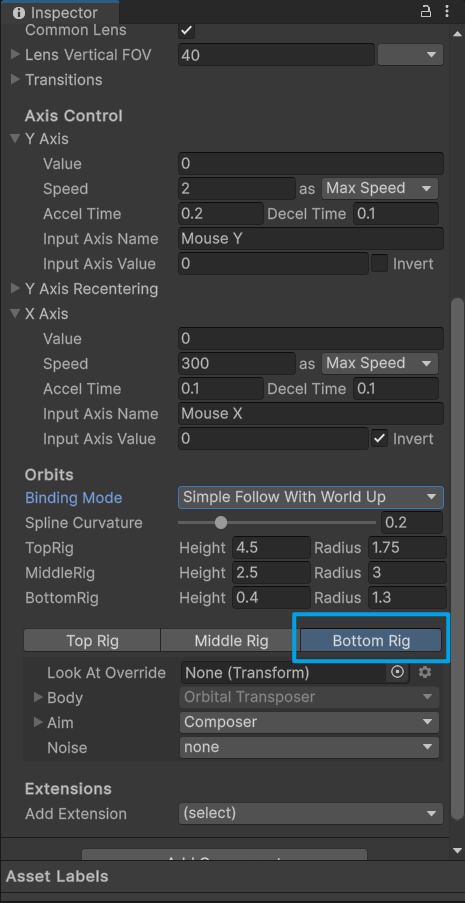
Unity游戏(Assault空对地打击)开发(3) 摄像机的控制
详细步骤 打开My Assets或者Package Manager。 选择Unity Registry。 搜索Cinemachine,找到 Cinemachine包,点击 Install按钮进行安装。 关闭窗口,新建一个FreeLook Camera,如下。 接着新建一个对象Pos,拖到Player下面…...

【HarmonyOS之旅】基于ArkTS开发(三) -> 兼容JS的类Web开发(三)
目录 1 -> 生命周期 1.1 -> 应用生命周期 1.2 -> 页面生命周期 2 -> 资源限定与访问 2.1 -> 资源限定词 2.2 -> 资源限定词的命名要求 2.3 -> 限定词与设备状态的匹配规则 2.4 -> 引用JS模块内resources资源 3 -> 多语言支持 3.1 -> 定…...

小程序-基础加强-自定义组件
前言 这次讲自定义组件 1. 准备今天要用到的项目 2. 初步创建并使用自定义组件 这样就成功在home中引入了test组件 在json中引用了这个组件才能用这个组件 现在我们来实现全局引用组件 在app.json这样使用就可以了 3. 自定义组件的样式 发现页面里面的文本和组件里面的文…...

尝试ai生成figma设计
当听到用ai 自动生成figma设计时,不免好奇这个是如何实现的。在查阅了不少资料后,有了一些想法。参考了:在figma上使用脚本自动生成色谱 这篇文章提供的主要思路是:可以通过脚本的方式构建figma设计。如果我们使用ai 生成figma脚本…...

【周易哲学】生辰八字入门讲解(八)
😊你好,我是小航,一个正在变秃、变强的文艺倾年。 🔔本文讲解【周易哲学】生辰八字入门讲解,期待与你一同探索、学习、进步,一起卷起来叭! 目录 一、六亲女命六亲星六亲宫位相互关系 男命六亲星…...

康德哲学与自组织思想的渊源:从《判断力批判》到系统论的桥梁
康德哲学与自组织思想的渊源:从《判断力批判》到系统论的桥梁 第一节:康德哲学中的自然目的论与自组织思想 核心内容: 康德哲学中的自然目的论和反思判断力概念,为现代系统论中的自组织思想提供了哲学基础,预见了复…...

解决whisper 本地运行时GPU 利用率不高的问题
我在windows 环境下本地运行whisper 模型,使用的是nivdia RTX4070 显卡,结果发现GPU 的利用率只有2% 。使用 import torch print(torch.cuda.is_available()) 返回TRUE。表示我的cuda 是可用的。 最后在github 的下列网页上找到了问题 极低的 GPU 利…...

【自开发工具介绍】SQLSERVER的ImpDp和ExpDp工具02
工具运行前的环境准备 1、登录用户管理员权限确认 工具使用的登录用户(-u后面的用户),必须具有管理员的权限,因为需要读取系统表 例:Export.bat -s 10.48.111.12 -d db1 -u test -p test -schema dbo 2、Powershell的安全策略确认…...

java异常处理——try catch finally
单个异常处理 1.当try里的代码发生了catch里指定类型的异常之后,才会执行catch里的代码,程序正常执行到结尾 2.如果try里的代码发生了非catch指定类型的异常,则会强制停止程序,报错 3.finally修饰的代码一定会执行,除…...

【人工智能】使用Python和Hugging Face构建情感分析应用:从模型训练到Web部署
《Python OpenCV从菜鸟到高手》带你进入图像处理与计算机视觉的大门! 解锁Python编程的无限可能:《奇妙的Python》带你漫游代码世界 情感分析是自然语言处理(NLP)中的重要任务,它通过分析文本来判断情绪或观点的倾向性。近年来,预训练语言模型如BERT、GPT等在情感分析任…...

DeepSeek-R1:通过强化学习激励大型语言模型(LLMs)的推理能力
摘要 我们推出了第一代推理模型:DeepSeek-R1-Zero和DeepSeek-R1。DeepSeek-R1-Zero是一个未经监督微调(SFT)作为初步步骤,而是通过大规模强化学习(RL)训练的模型,展现出卓越的推理能力。通过强…...

算法随笔_37: 交替合并字符串
上一篇:算法随笔_36: 复写零-CSDN博客 题目描述如下: 给你两个字符串 word1 和 word2 。请你从 word1 开始,通过交替添加字母来合并字符串。如果一个字符串比另一个字符串长,就将多出来的字母追加到合并后字符串的末尾。 返回 合并后的字符串 。 示例…...

低成本、高附加值,具有较强的可扩展性和流通便利性的行业
目录 虚拟资源类 1. 网课教程 2. 设计素材 3. 软件工具 服务类 1. 写作服务 2. 咨询顾问 3. 在线教育 4. 社交媒体管理 虚拟资源类 1. 网课教程 特点:高附加值,可复制性强,市场需求大。 执行流程: 选择领域:…...

vue入门到实战 二
目录 2.1 计算属性computed 2.1.1什么是计算属性 2.1.2 只有getter方法的计算属性 2.1.3 定义有getter和setter方法的计算属性 2.1.4 计算属性和methods的对比 2.2 监听器属性watch 2.2.1 watch属性的用法 2.2.2 computed属性和watch属性的对比 2.1 计算属性computed…...

基于FPGA的BT1120编解码
BT1120与BT656 类似 BT1120与BT656同类属于一个视频协议,两者无论从组成、协议、同步码以及传输过程都是十分相似: 1、两者都是以F(场)、V(帧)、H(消隐)、D(有效)来区分数据的内容。 2、两者的传输数据都采用一样的方式,即内同步传输数据。 3、两者都传输的数据都是…...

二叉树-堆(补充)
二叉树-堆 1.二叉树的基本特性2.堆2.1.堆的基本概念2.2.堆的实现2.2.1.基本结构2.2.2.堆的初始化2.2.3.堆的销毁2.2.4.堆的插入2.2.5.取出堆顶的数据2.2.6.堆的删除2.2.7.堆的判空2.2.8.堆的数据个数2.2.9.交换2.2.10.打印堆数据2.2.11.堆的创建2.2.12.堆排序2.2.13.完整代码 3…...

基于springboot私房菜定制上门服务系统设计与实现(源码+数据库+文档)
私房菜定制上门服务系统目录 目录 基于springbootvue私房菜定制上门服务系统设计与实现 一、前言 二、系统功能设计 三、系统实现 1、管理员功能实现 (1)菜品管理 (2)公告管理 (3) 厨师管理 2、用…...

2025开源DouyinLiveRecorder全平台直播间录制工具整合包,多直播同时录制、教学直播录制、教学视频推送、简单易用不占内存
一、DouyinLiveRecorder软件介绍(文末提供下载) 官方地址:GitHub - ihmily/DouyinLiveRecorder 本文信息来源于作者GitHub地址 一款简易的可循环值守的直播录制工具,基于FFmpeg实现多平台直播源录制,支持自定义配置录制…...

利用飞书机器人进行 - ArXiv自动化检索推荐
相关作者的Github仓库 ArXivToday-Lark 使用教程 Step1 新建机器人 根据飞书官方机器人使用手册,新建自定义机器人,并记录好webhook地址,后续将在配置文件中更新该地址。 可以先完成到后续步骤之前,后续的步骤与安全相关&…...

25.2.2学习内容
通过前序遍历和后序遍历求可能的二叉树的种数(AI生成): #include<stdio.h> #include<string.h> #include<stdlib.h> #include<math.h>struct TreeNode {char val;struct TreeNode *left;struct TreeNode *right; };…...

python算法和数据结构刷题[5]:动态规划
动态规划(Dynamic Programming, DP)是一种算法思想,用于解决具有最优子结构的问题。它通过将大问题分解为小问题,并找到这些小问题的最优解,从而得到整个问题的最优解。动态规划与分治法相似,但区别在于动态…...
--LaunchedEffect)
Compose笔记(二)--LaunchedEffect
这一节了解一下LaunchedEffect,在 Jetpack Compose 里,LaunchedEffect是一种用于启动协程的可组合函数,其主要用途是在协程里执行异步操作。LaunchedEffect函数能够接收一个或多个key参数。 1 key的含义: LaunchedEffect函数的key参数指的是…...

QT知识点复习
1.qt核心机制 对象树、信号和槽、事件机制 2.对象树的作用 优化了内存回收机制。子对象实例化的时候,被父对象放对象树上,父对象释放内存,子对象也释放内存 3.信号和槽的作用 实现多个组件之间的通讯 4.信号和槽的几种连接方式 1.UI界面提…...

【Rust自学】16.2. 使用消息传递来跨线程传递数据
喜欢的话别忘了点赞、收藏加关注哦,对接下来的教程有兴趣的可以关注专栏。谢谢喵!(・ω・) 16.2.1. 消息传递 有一种很流行而且能保证安全并发的技术(或者叫机制)叫做消息传递。在这种机制里,线…...

Python 合并 Excel 单元格
合并 Excel 单元格是 Excel 数据处理和表格设计中的一项常用操作。例如,在制作表格标题时,经常会将多个单元格合并,使标题能够跨列显示,更加醒目和美观。此外,当对数据进行分类时,为了使同一类别的数据在视…...