
【小沐学NLP】Python实现TF-IDF算法(nltk、sklearn、jieba)
文章目录
- 1、简介
- 1.1 TF
- 1.2 IDF
- 1.3 TF-IDF
- 2.1 TF-IDF(sklearn)
- 2.2 TF-IDF(nltk)
- 2.3 TF-IDF(Jieba)
- 2.4 TF-IDF(python)
- 结语
1、简介
TF-IDF(term frequency–inverse document frequency)是一种用于信息检索与数据挖掘的常用加权技术。TF是词频(Term Frequency),IDF是逆文本频率指数(Inverse Document Frequency)。
TF-IDF是一种统计方法,用以评估一字词对于一个文件集或一个语料库中的其中一份文件的重要程度。字词的重要性随着它在文件中出现的次数成正比增加,但同时会随着它在语料库中出现的频率成反比下降。
TF-IDF的主要思想是:如果某个词或短语在一篇文章中出现的频率TF高,并且在其他文章中很少出现,则认为此词或者短语具有很好的类别区分能力,适合用来分类。
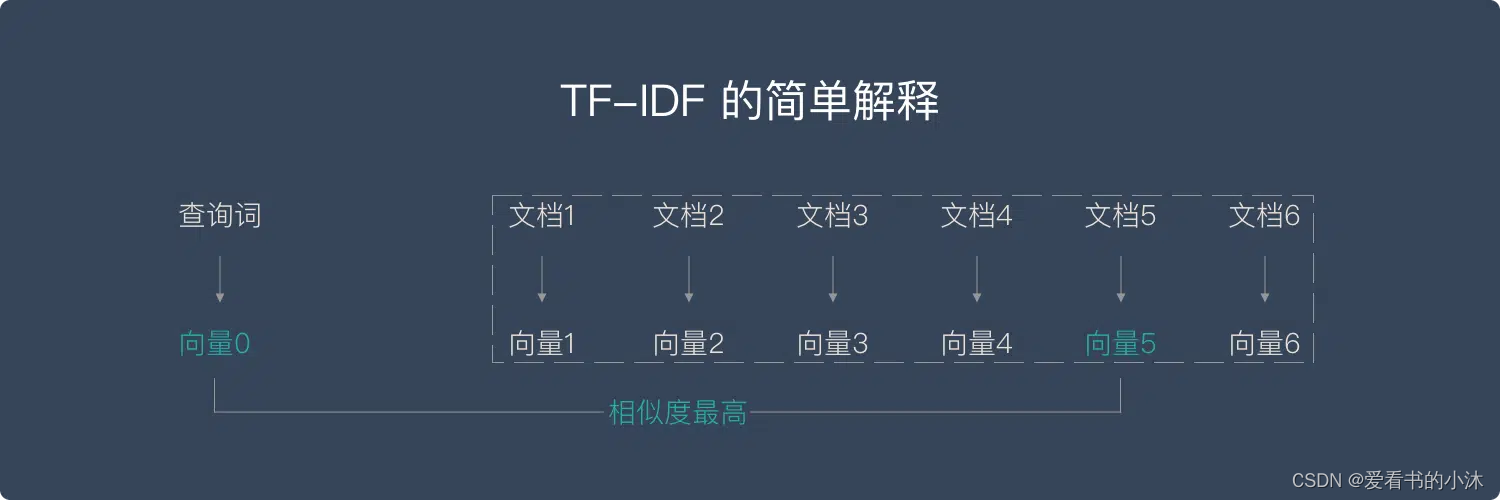
当有TF(词频)和IDF(逆文档频率)后,将这两个词相乘,就能得到一个词的TF-IDF的值。某个词在文章中的TF-IDF越大,那么一般而言这个词在这篇文章的重要性会越高,所以通过计算文章中各个词的TF-IDF,由大到小排序,排在最前面的几个词,就是该文章的关键词。
1.1 TF
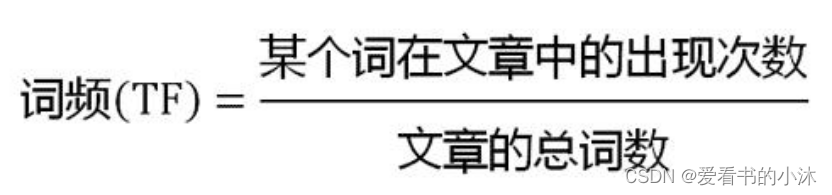
TF(Term Frequency,词频),某个词在文档中出现的次数或频率。如果某篇文档中的某个词出现多次,那这个词可能是比较重要的词。当然,需要排除停用词。
词频(TF)=某个词在文档中出现的次数/文档的总词数
1.2 IDF
IDF(Inverse Document Frequency,逆文档频率),这是一个词语“权重”的度量,如果一个词在多篇文档中词频较低,也就表示这是一个比较少见的词,则这个词 IDF 值越大。
逆文档频率(IDF)=log(语料库的文档总数/(包含该词的文档数+1))

分母之所以要加 1,是为了避免分母为 0。这属于一种平滑方法。在不同的库中,实现 IDF 时,使用的平滑方法不完全相同。
1.3 TF-IDF
将 TF 和 IDF 相乘就得到 TF-IDF。
TF−IDF=词频(TF)×逆文档频率(IDF)

一个词的重要程度跟它在文档中出现的次数成正比,跟它在语料库出现的次数成反比。某一特定文件内的高词语频率,以及该词语在整个文件集合中的低文件频率,可以产生出高权重的TF-IDF。因此,TF-IDF倾向于过滤掉常见的词语,保留重要的词语。
例如,考虑一个包含 100 个单词的文档, 其中单词 apple 出现了 5 次。苹果的术语频率(即 TF)为 (5 / 100) = 0.05。现在,假设我们有 1000 万份文档,其中 1000 份中出现了 apple 这个词。然后,反向文档频率(即 IDF)计算为 log(10,000,000 / 1,000) = 4。
因此,TF-IDF 权重是这些量的乘积:0.05 * 4 = 0.20。 # 2、测试
2.1 TF-IDF(sklearn)
scikit-learn包进行TF-IDF分词权重计算主要用到了两个类:CountVectorizer和TfidfTransformer。其中CountVectorizer是通过fit_transform函数将文本中的词语转换为词频矩阵,矩阵元素a[i][j] 表示j词在第i个文本下的词频。即各个词语出现的次数,通过get_feature_names()可看到所有文本的关键字,通过toarray()可看到词频矩阵的结果。

对象TfidfVectorizer的定义如下:
class sklearn.feature_extraction.text.TfidfVectorizer(*, input='content', encoding='utf-8', decode_error='strict', strip_accents=None, lowercase=True, preprocessor=None, tokenizer=None, analyzer='word', stop_words=None, token_pattern='(?u)\b\w\w+\b', ngram_range=(1, 1), max_df=1.0, min_df=1, max_features=None, vocabulary=None, binary=False, dtype=<class 'numpy.float64'>, norm='l2', use_idf=True, smooth_idf=True, sublinear_tf=False
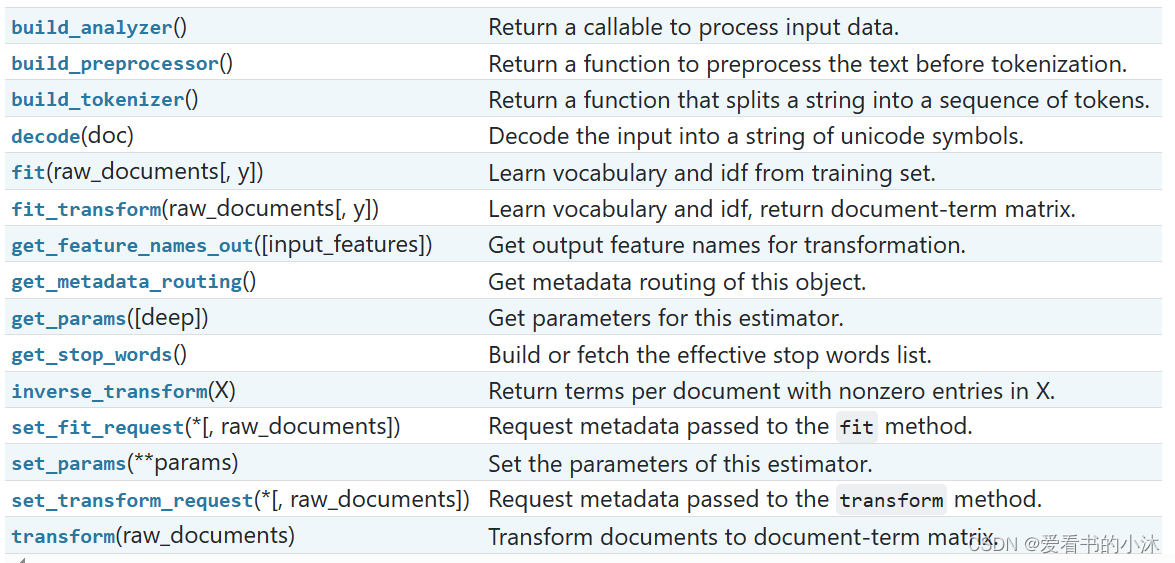
对象TfidfVectorizer的方法如下:
安装库:
pip install scikit-learn
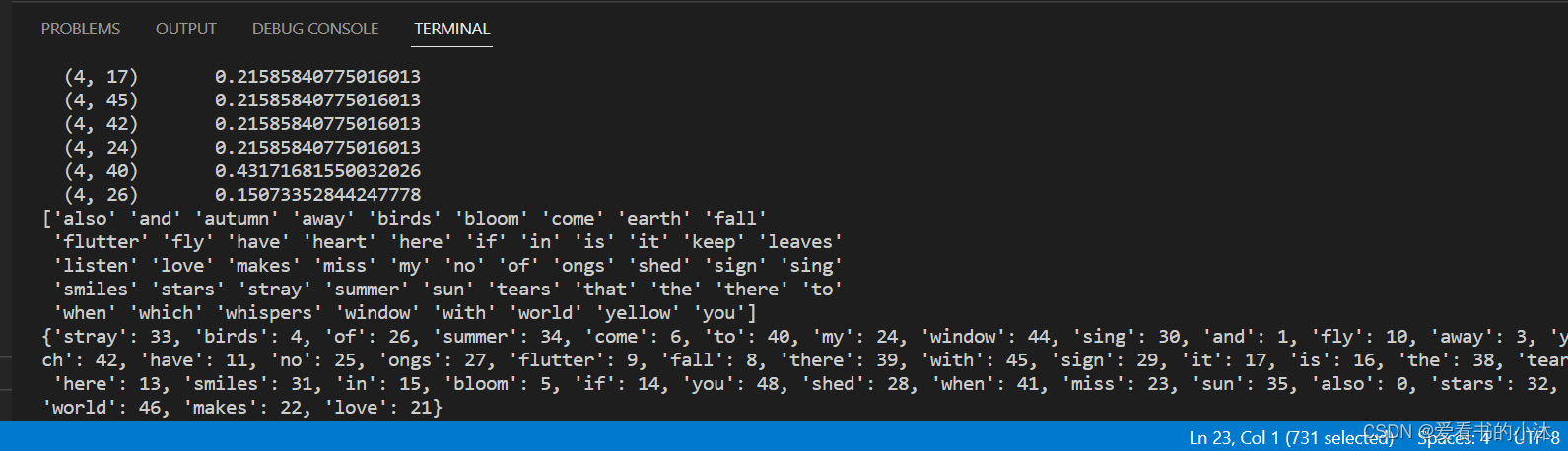
测试代码如下:
from sklearn.feature_extraction.text import TfidfTransformer
from sklearn.feature_extraction.text import CountVectorizercorpus = ["stray birds of summer come to my window to sing and fly away","and yellow leaves of autumn  which have no ongs flutter and fall there with a sign","it is the tears of the earth that keep here smiles in bloom","if you shed tears when you miss the sun you also miss the stars","listen my heart to the whispers of the world with which it makes love to you",
]#tfidf_vec = CountVectorizer()
tfidf_vec = TfidfVectorizer()# 使用 fit_transform() 得到 TF-IDF 矩阵
tfidf_matrix = tfidf_vec.fit_transform(corpus)
print(tfidf_matrix)
print(tfidf_matrix.toarray())
print(tfidf_matrix.shape)# 使用 get_feature_names() 得到不重复的单词
print(tfidf_vec.get_feature_names_out())# 得到每个单词对应的 ID
print(tfidf_vec.vocabulary_)
# Importing the TfidfVectorizer class from sklearn.feature_extraction.text module
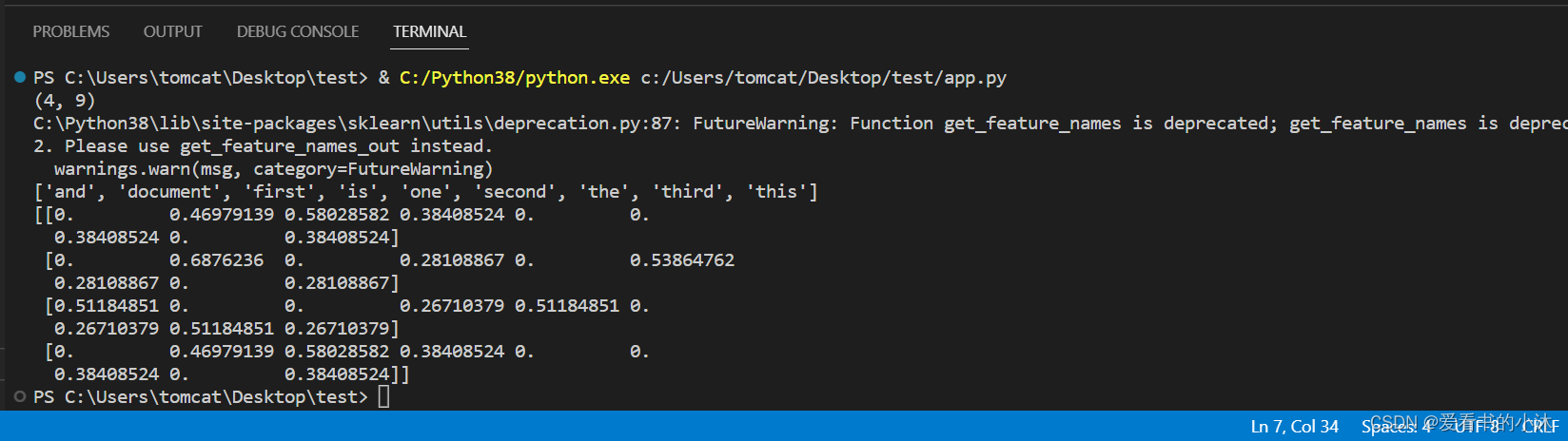
from sklearn.feature_extraction.text import TfidfVectorizer# Creating a list of documents (corpus) to vectorize
corpus = ['This is the first document.','This document is the second document.','And this is the third one.','Is this the first document?',
]# Initializing a TfidfVectorizer object with default parameters
vectorizer = TfidfVectorizer()# Fitting the vectorizer to the corpus and transforming it into a sparse matrix of tf-idf values
X = vectorizer.fit_transform(corpus)# Printing the shape of the matrix (number of documents, number of features)
print(X.shape)
# Output: (4, 9)# Printing the feature names (words) that the vectorizer extracted from the corpus
print(vectorizer.get_feature_names())
# Output: ['and', 'document', 'first', 'is', 'one', 'second', 'the', 'third', 'this']# Printing the matrix in a dense format
print(X.toarray())
from sklearn.feature_extraction.text import CountVectorizer
from sklearn.feature_extraction.text import TfidfTransformercorpus_doc = ["stray birds of summer come to my window to sing and fly away","and yellow leaves of autumn  which have no ongs flutter and fall there with a sign","it is the tears of the earth that keep here smiles in bloom","if you shed tears when you miss the sun you also miss the stars","listen my heart to the whispers of the world with which it makes love to you",
]test_doc = ["with we dreamt that we were strangers", "of the were"]#该类会将文本中的词语转换为词频矩阵,矩阵元素a[i][j] 表示j词在i类文本下的词频
vectorizer = CountVectorizer(max_features=10)
#该类会统计每个词语的tf-idf权值
tf_idf_transformer = TfidfTransformer()
#将文本转为词频矩阵并计算tf-idf
tf_idf = tf_idf_transformer.fit_transform(vectorizer.fit_transform(corpus_doc))
#将tf-idf矩阵抽取出来,元素a[i][j]表示j词在i类文本中的tf-idf权重
x_train_weight = tf_idf.toarray()print(tf_idf)
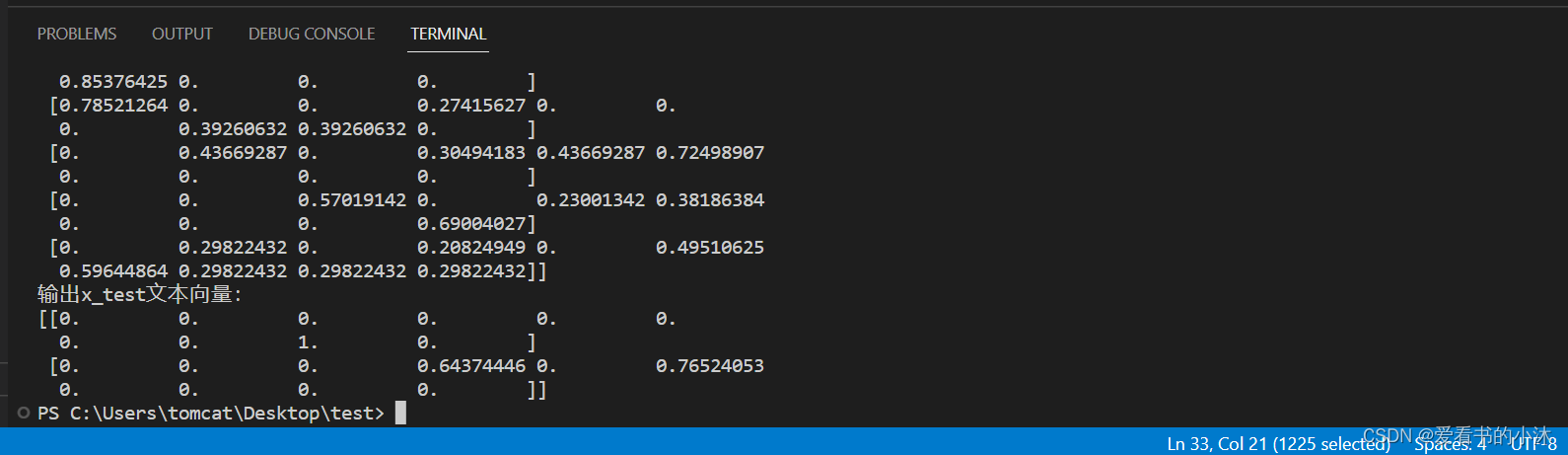
print(vectorizer.vocabulary_)#对测试集进行tf-idf权重计算
tf_idf = tf_idf_transformer.transform(vectorizer.transform(test_doc))
x_test_weight = tf_idf.toarray()  # 测试集TF-IDF权重矩阵print('输出x_train文本向量:')
print(x_train_weight)
print('输出x_test文本向量:')
print(x_test_weight)
#coding=utf-8
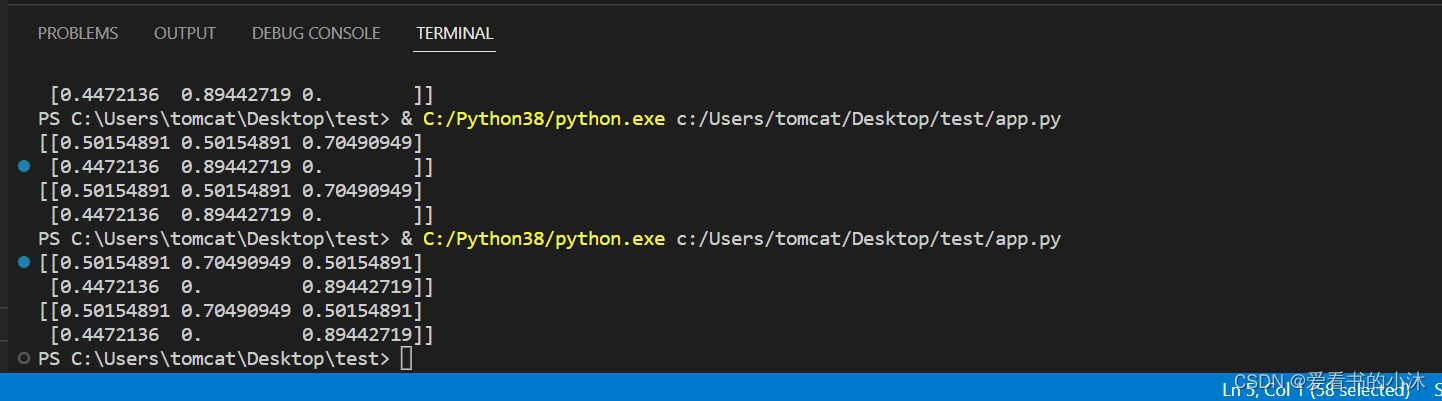
from sklearn.feature_extraction.text import TfidfVectorizerdocument = ["yxy have a pen.","yxy have an apple."]tfidf_model = TfidfVectorizer().fit(document)
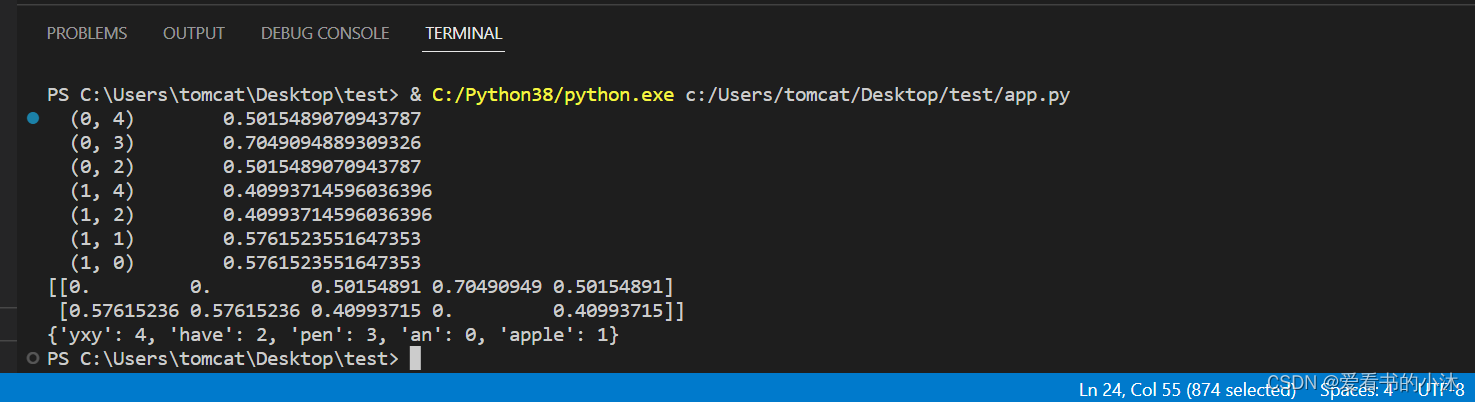
sparse_result = tfidf_model.transform(document) # 得到tf-idf矩阵,稀疏矩阵表示法print(sparse_result)
#   (0, 4)        0.5015489070943787 # 第0个字符串,对应词典序号为4的词的TFIDF为0.5015489070943787
#   (0, 3)        0.7049094889309326
#   (0, 2)        0.5015489070943787
#   (1, 4)        0.40993714596036396
#   (1, 2)        0.40993714596036396
#   (1, 1)        0.5761523551647353
#   (1, 0)        0.5761523551647353print(sparse_result.todense())  # 转化为更直观的一般矩阵
# [[0.         0.         0.50154891 0.70490949 0.50154891]
#  [0.57615236 0.57615236 0.40993715 0.         0.40993715]]print(tfidf_model.vocabulary_) # 词语与列的对应关系
# {'yxy': 4, 'have': 2, 'pen': 3, 'an': 0, 'apple': 1}
from sklearn.feature_extraction.text import TfidfTransformer
from sklearn.feature_extraction.text import CountVectorizer  # corpus 模拟语料库
corpus=["yxy third document","yxy yxy document"]# 1、TfidfTransformer是把TF矩阵转成TF-IDF矩阵,所以需要先词频统计CountVectorizer,转换成TF-IDF矩阵
# 先计算了TF然后再转换成了TF-IDF
tfvectorizer=CountVectorizer()
count_vector=tfvectorizer.fit_transform(corpus) # Tf 矩阵
transformer = TfidfTransformer() # 转换Tf矩阵
tfidf = transformer.fit_transform(count_vector) # 将TF转换成Tf-Idf
arr=tfidf.toarray()
print(arr)# 2、一步到位的方法
# TF-IDF一步到位
from sklearn.feature_extraction.text import TfidfVectorizer
tfidf = TfidfVectorizer()
# tfidf.fit(corpus) # use vectorizer to fit the corpus
# corpus_vector=tfidf.transform(corpus).toarray()
corpus_vector=tfidf.fit_transform(corpus).toarray()
print(corpus_vector)
2.2 TF-IDF(nltk)
使用nltk自带的TF-IDF函数对词表中每个词计算其TF-IDF值。
安装库:
pip install nltk
测试代码如下:
from nltk.text import TextCollection
from nltk.tokenize import word_tokenizecorpus_doc = ["stray birds of summer come to my window to sing and fly away","and yellow leaves of autumn  which have no ongs flutter and fall there with a sign","it is the tears of the earth that keep here smiles in bloom","if you shed tears when you miss the sun you also miss the stars","listen my heart to the whispers of the world with which it makes love to you",
]#构建语料库corpus
corpus_doc=[word_tokenize(word) for word in corpus_doc] #对每个句子进行分词
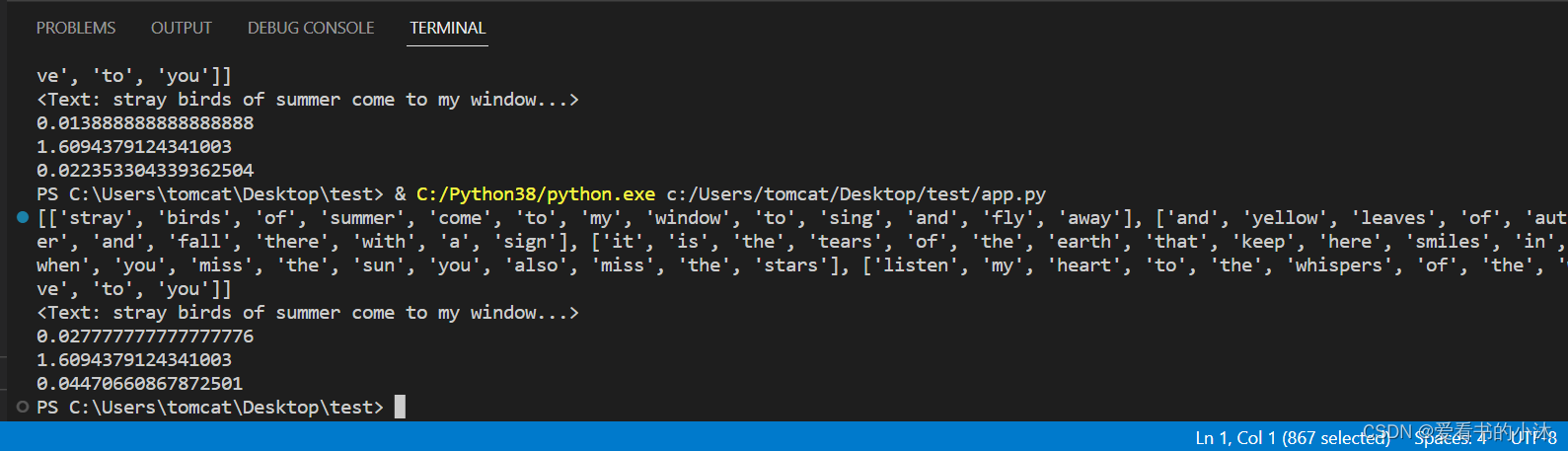
print(corpus_doc)  #输出分词后的结果
corpus=TextCollection(corpus_doc)  #构建语料库
print(corpus)  #输出语料库#计算语料库中"which"的tf值
tf=corpus.tf('miss', corpus)
print(tf)#计算语料库中"which"的idf值
idf=corpus.idf('miss')
print(idf)#计算语料库中"which"的tf-idf值
tf_idf=corpus.tf_idf('miss',corpus)
print(tf_idf)
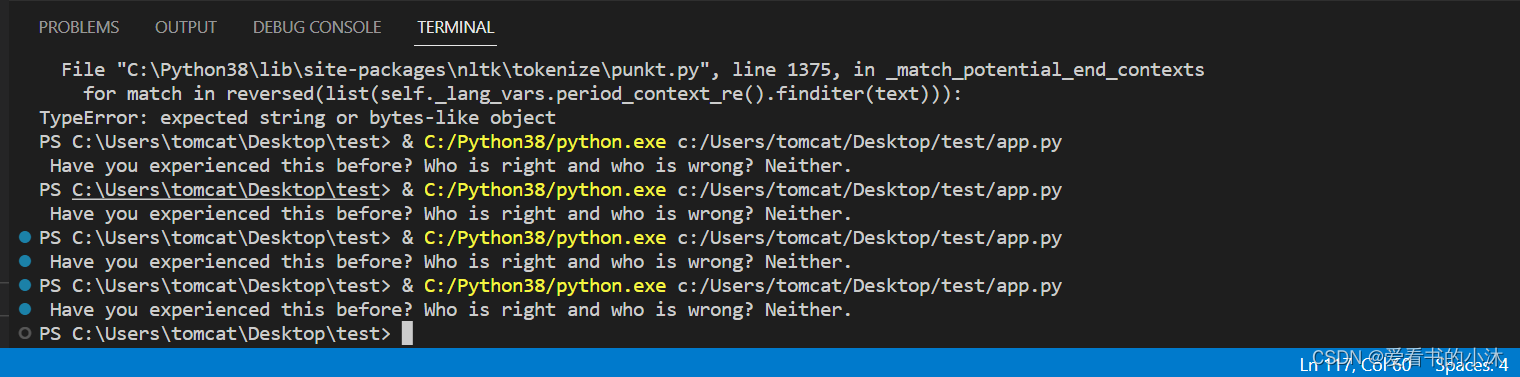
这是一种抽取式文本摘要技术。下面使用 Tf-IDF 算法总结了文本。
import mathfrom nltk import sent_tokenize, word_tokenize, PorterStemmer
from nltk.corpus import stopwords   def _create_frequency_matrix(sentences):frequency_matrix = {}stopWords = set(stopwords.words("english"))ps = PorterStemmer()for sent in sentences:freq_table = {}words = word_tokenize(sent)for word in words:word = word.lower()word = ps.stem(word)if word in stopWords:continueif word in freq_table:freq_table[word] += 1else:freq_table[word] = 1frequency_matrix[sent[:15]] = freq_tablereturn frequency_matrixdef _create_tf_matrix(freq_matrix):tf_matrix = {}for sent, f_table in freq_matrix.items():tf_table = {}count_words_in_sentence = len(f_table)for word, count in f_table.items():tf_table[word] = count / count_words_in_sentencetf_matrix[sent] = tf_tablereturn tf_matrixdef _create_documents_per_words(freq_matrix):word_per_doc_table = {}for sent, f_table in freq_matrix.items():for word, count in f_table.items():if word in word_per_doc_table:word_per_doc_table[word] += 1else:word_per_doc_table[word] = 1return word_per_doc_tabledef _create_idf_matrix(freq_matrix, count_doc_per_words, total_documents):idf_matrix = {}for sent, f_table in freq_matrix.items():idf_table = {}for word in f_table.keys():idf_table[word] = math.log10(total_documents / float(count_doc_per_words[word]))idf_matrix[sent] = idf_tablereturn idf_matrixdef _create_tf_idf_matrix(tf_matrix, idf_matrix):tf_idf_matrix = {}for (sent1, f_table1), (sent2, f_table2) in zip(tf_matrix.items(), idf_matrix.items()):tf_idf_table = {}for (word1, value1), (word2, value2) in zip(f_table1.items(),f_table2.items()):  # here, keys are the same in both the tabletf_idf_table[word1] = float(value1 * value2)tf_idf_matrix[sent1] = tf_idf_tablereturn tf_idf_matrixdef _score_sentences(tf_idf_matrix) -> dict:"""score a sentence by its word's TFBasic algorithm: adding the TF frequency of every non-stop word in a sentence divided by total no of words in a sentence.:rtype: dict"""sentenceValue = {}for sent, f_table in tf_idf_matrix.items():total_score_per_sentence = 0count_words_in_sentence = len(f_table)for word, score in f_table.items():total_score_per_sentence += scoresentenceValue[sent] = total_score_per_sentence / count_words_in_sentencereturn sentenceValuedef _find_average_score(sentenceValue) -> int:"""Find the average score from the sentence value dictionary:rtype: int"""sumValues = 0for entry in sentenceValue:sumValues += sentenceValue[entry]# Average value of a sentence from original summary_textaverage = (sumValues / len(sentenceValue))return averagedef _generate_summary(sentences, sentenceValue, threshold):sentence_count = 0summary = ''for sentence in sentences:if sentence[:15] in sentenceValue and sentenceValue[sentence[:15]] >= (threshold):summary += " " + sentencesentence_count += 1return summarytext = '''
Those Who Are Resilient Stay In The Game Longer “On the mountains of truth you can never climb in vain:
either you will reach a point higher up today, or you will be training your powers so that you will be able to climb higher tomorrow.”
— Friedrich Nietzsche Challenges and setbacks are not meant to defeat you,
but promote you. However, I realise after many years of defeats, it can crush your spirit and it is easier to give up than risk further setbacks
and disappointments. Have you experienced this before? To be honest, I don’t have the answers.
I can’t tell you what the right course of action is; only you will know.
However, it’s important not to be discouraged by failure when pursuing a goal or a dream,
since failure itself means different things to different people. To a person with a Fixed Mindset failure is a blow to their self-esteem,
yet to a person with a Growth Mindset, it’s an opportunity to improve and find new ways to overcome their obstacles. Same failure,
yet different responses. Who is right and who is wrong? Neither. Each person has a different mindset that decides their outcome.
Those who are resilient stay in the game longer and draw on their inner means to succeed.'
''''''
We already have a sentence tokenizer, so we just need
to run the sent_tokenize() method to create the array of sentences.
'''
# 1 Sentence Tokenize
sentences = sent_tokenize(text)
total_documents = len(sentences)
#print(sentences)# 2 Create the Frequency matrix of the words in each sentence.
freq_matrix = _create_frequency_matrix(sentences)
#print(freq_matrix)'''
Term frequency (TF) is how often a word appears in a document, divided by how many words are there in a document.
'''
# 3 Calculate TermFrequency and generate a matrix
tf_matrix = _create_tf_matrix(freq_matrix)
#print(tf_matrix)# 4 creating table for documents per words
count_doc_per_words = _create_documents_per_words(freq_matrix)
#print(count_doc_per_words)'''
Inverse document frequency (IDF) is how unique or rare a word is.
'''
# 5 Calculate IDF and generate a matrix
idf_matrix = _create_idf_matrix(freq_matrix, count_doc_per_words, total_documents)
#print(idf_matrix)# 6 Calculate TF-IDF and generate a matrix
tf_idf_matrix = _create_tf_idf_matrix(tf_matrix, idf_matrix)
#print(tf_idf_matrix)# 7 Important Algorithm: score the sentences
sentence_scores = _score_sentences(tf_idf_matrix)
#print(sentence_scores)# 8 Find the threshold
threshold = _find_average_score(sentence_scores)
#print(threshold)# 9 Important Algorithm: Generate the summary
summary = _generate_summary(sentences, sentence_scores, 1.3 * threshold)
print(summary)
2.3 TF-IDF(Jieba)
jieba.analyse.extract_tags()提取关键字的原理是使用TF-IDF算法。
安装库:
pip install Jieba
测试代码如下:
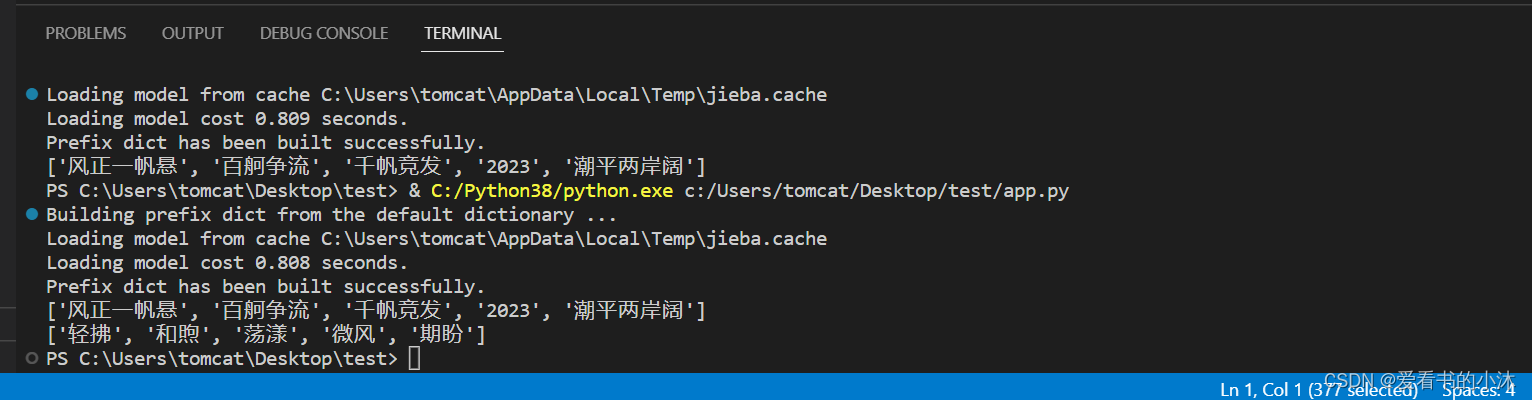
import jieba.analysesentence='2023,每一个你,都在认真果敢地拼,步履坚定地闯。潮平两岸阔,风正一帆悬。经济的大海辽阔浩瀚,为每一次起航注入力量。百舸争流、千帆竞发,终将汇聚乘风逐浪的磅礴之力。'
keywords=jieba.analyse.extract_tags(sentence, topK=5, withWeight=False, allowPOS=())
print(keywords)sentence='今天的阳光特别和煦舒适,微风轻拂,荡漾着每一颗期盼的心。人生,总要在温暖中前行。春天,已经在向我们招手了。'
keywords=jieba.analyse.extract_tags(sentence, topK=5, withWeight=False, allowPOS=())
#keywords = jieba.analyse.extract_tags(sentence, topK=20, withWeight=True, allowPOS=('n','nr','ns'))
print(keywords)
sentence 为待提取的文本
topK 为返回几个 TF/IDF 权重最大的关键词,默认值为 20
withWeight 为是否一并返回关键词权重值,默认值为 False
allowPOS是允许的提取的词性,默认为allowPOS=‘ns’, ‘n’, ‘vn’, ‘v’,提取地名、名词、动名词、动词
2.4 TF-IDF(python)
# -*- coding: utf-8 -*-
from collections import defaultdict
import math
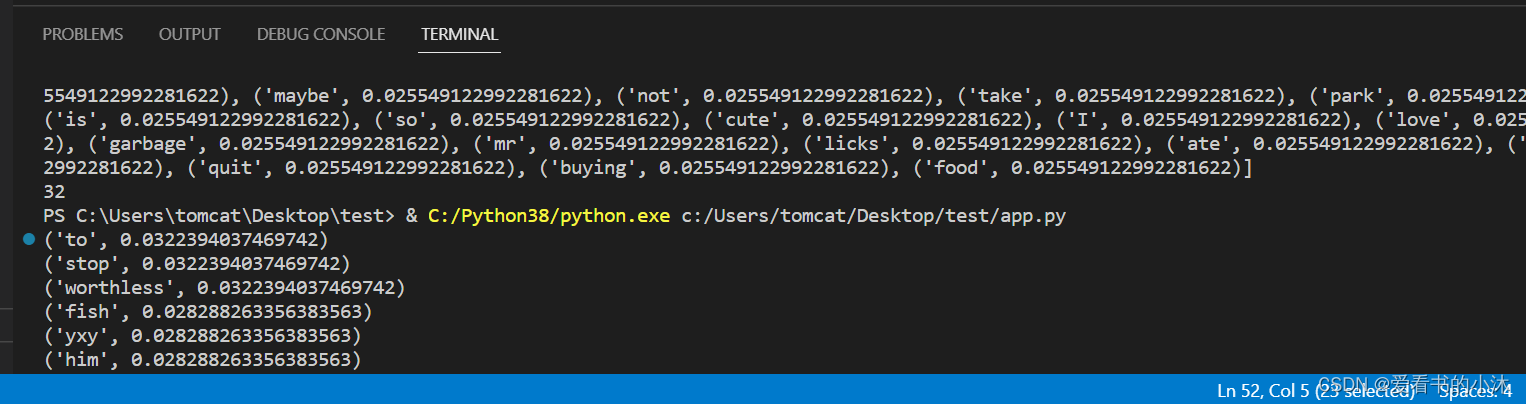
import operatordef loadDataSet():dataset = [ ['fish', 'yxy', 'has', 'flea', 'problems', 'help', 'please'],    # 切分的词条['maybe', 'not', 'take', 'him', 'to', 'yxy', 'park', 'book'],['fish', 'dalmation', 'is', 'so', 'cute', 'I', 'love', 'him'],['stop', 'posting', 'book', 'moon', 'sun'],['mr', 'licks', 'ate', 'fish', 'steak', 'how', 'to', 'stop', 'him'],['quit', 'buying', 'moon', 'yxy', 'food', 'book'] ]return datasetdef computeTFIDF(list_words):#总词频统计doc_frequency=defaultdict(int)for word_list in list_words:for i in word_list:doc_frequency[i]+=1#计算每个词的TF值word_tf={}  #存储没个词的tf值for i in doc_frequency:word_tf[i]=doc_frequency[i]/sum(doc_frequency.values())#计算每个词的IDF值doc_num=len(list_words)word_idf={} #存储每个词的idf值word_doc=defaultdict(int) #存储包含该词的文档数for i in doc_frequency:for j in list_words:if i in j:word_doc[i]+=1for i in doc_frequency:word_idf[i]=math.log(doc_num/(word_doc[i]+1))#计算每个词的TF*IDF的值word_tf_idf={}for i in doc_frequency:word_tf_idf[i]=word_tf[i]*word_idf[i]# 对字典按值由大到小排序dict_feature_select=sorted(word_tf_idf.items(),key=operator.itemgetter(1),reverse=True)return dict_feature_selectif __name__=='__main__':data_list=loadDataSet() #加载数据tfidf=computeTFIDF(data_list) #所有词的TF-IDF值print(*tfidf, sep="\n")print(len(tfidf))
结语
如果您觉得该方法或代码有一点点用处,可以给作者点个赞,或打赏杯咖啡;╮( ̄▽ ̄)╭
如果您感觉方法或代码不咋地//(ㄒoㄒ)//,就在评论处留言,作者继续改进;o_O???
如果您需要相关功能的代码定制化开发,可以留言私信作者;(✿◡‿◡)
感谢各位大佬童鞋们的支持!( ´ ▽´ )ノ ( ´ ▽´)っ!!!
相关文章:
【小沐学NLP】Python实现TF-IDF算法(nltk、sklearn、jieba)
文章目录 1、简介1.1 TF1.2 IDF1.3 TF-IDF2.1 TF-IDF(sklearn)2.2 TF-IDF(nltk)2.3 TF-IDF(Jieba)2.4 TF-IDF(python) 结语 1、简介 TF-IDF(term frequency–inverse document frequency)是一种用于信息检索与数据挖掘的常用加权技术。TF是词频(Term Fr…...
.cer格式证书文件和 .pfx格式证书文件有什么区别?
这里我们将讨论.cer和.pfx文件类型之间的差异。 什么是数字证书? 数字证书在电子通信中用作验证身份的密码机制。我们需要这些证书来建立安全的在线通信渠道,并确保数字数据的隐私、真实性和正确性。 数字证书包括主题(实体详细信息…...
【docker实战】安装tomcat并连接mysql数据库
本节用docker来安装tomcat,并用这个tomcat连接我们上一节安装好的mysql数据库 一、拉取镜像 我们安装8.5.69版本 先搜索一下 [rootlocalhost ~]# docker search tomcat NAME DESCRIPTION …...

LeetCode 每日一题 Day 32 ||递归单调栈
2487. 从链表中移除节点 给你一个链表的头节点 head 。 移除每个右侧有一个更大数值的节点。 返回修改后链表的头节点 head 。 示例 1: 输入:head [5,2,13,3,8] 输出:[13,8] 解释:需要移除的节点是 5 ,2 和 3 。…...
【mars3d】FixedRoute的circle没有跟polyline贴着模型的解决方案
问题:【mars3d】官网的贴模型示例中,参考api文档增加了circle的配置,但是FixedRoute的circle没有跟polyline贴着模型 circle: { radius: 10, materialType: mars3d.MaterialType.CircleWave, materialOptions: { color: "#ffff00"…...
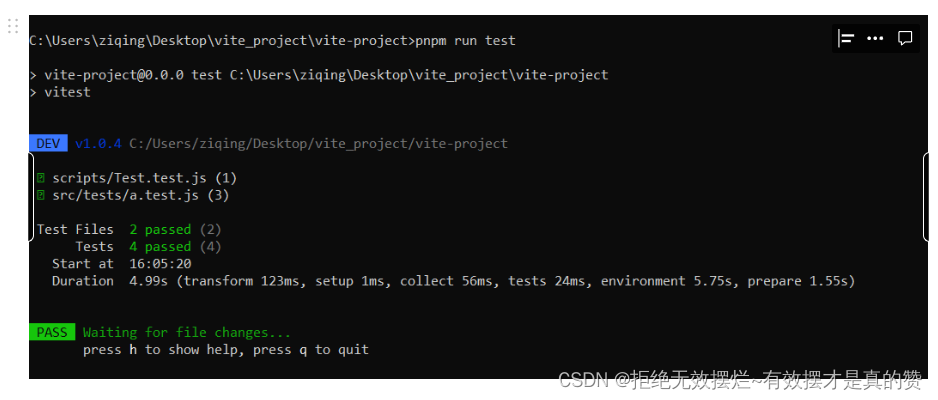
Day7 vitest 之 vitest配置第三版
项目目录 runner Type: VitestRunnerConstructor Default: node, 当运行test的时候 benchmark,当运行bench测试的时候 功能 自定义测试运行程序的路径。 要求 应与自定义库运行程序一起使用。 如果您只是运行测试,则可能不需要这个。它主要由library作者使用 …...

git补充上次提交
1.首先,确保你还没有执行 git push 操作。如果尚未推送到远程仓库,那么可以在本地进行修正。 2.添加遗漏的文件: git add <遗漏的文件路径>3.提交新修改或新增的文件,并将它与上一次提交合并(如果希望保持提交历…...

计算机网络名词解释
1.ICMP 网际控制报文 允许主机或路由器报告差错情况和提供有关异常情况的报告 2.RIP路由信息协议 是一种分布式的,基于距离向量的路由选择协议 3.BGP 外部网关协议 是不同自治系统的路由器之间交换路由信息的协议 4.IGMP 网际管理协议 使用多播路由器知道多播…...
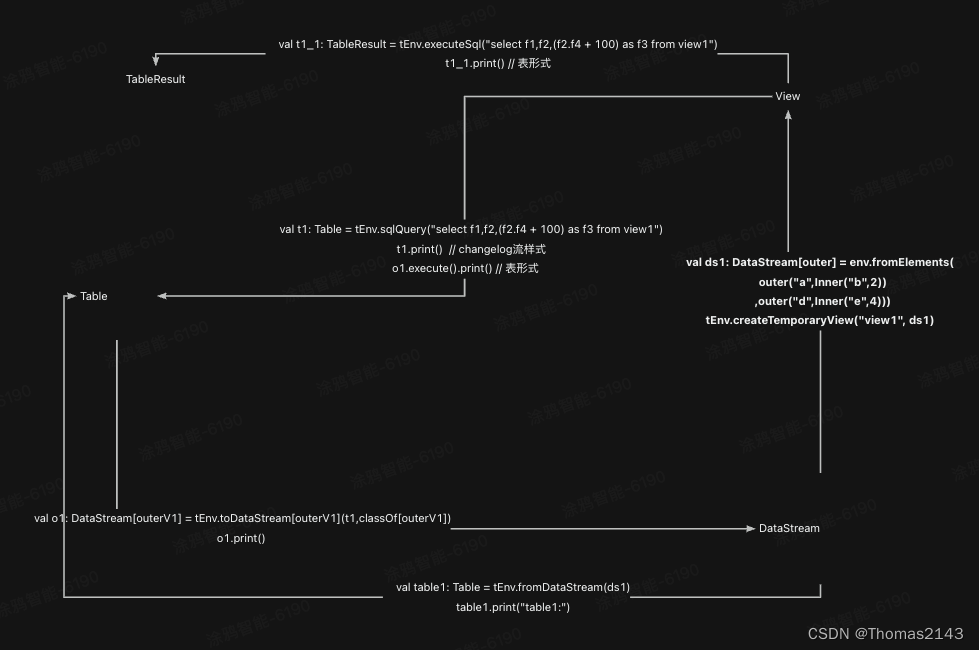
flink table view datastream互转
case class outer(f1:String,f2:Inner) case class outerV1(f1:String,f2:Inner,f3:Int) case class Inner(f3:String,f4:Int) 测试代码 package com.yy.table.convertimport org.apache.flink.streaming.api.scala.StreamExecutionEnvironment import org.apache.flink.tabl…...

redis重启后数据丢失问题解决(亲测好用)
redis修改密码重启后发现redis中的数据丢失了 解决办法: 首先在redis的安装目录下查找重启之前的dump.rdb文件,发现只有当天的一个dump.rdb文件,确认不是重启备份的文件 然后我就全盘找一下dump.rdb的备份文件,找到前一天的备份…...

敬请期待……
敬请期待…… 《Python百宝箱》 序号文章目录直达链接表白系列1无法拒绝的表白界面https://want595.blog.csdn.net/article/details/1347448942满屏飘字表白代码https://want595.blog.csdn.net/article/details/1350373883无限弹窗表白代码...
)
3.10 Android eBPF HelloWorld调试(四)
一,读取eBPF map的android应用程序示例 1.1 C++源码及源码解读 /system/memory/bpfmapparsed/hello_world_map_parser.cpp //基于aosp android12#define LOG_TAG "BPF_MAP_PARSER"#include <log/log.h> #include <stdlib.h> #include <unistd.h&g…...
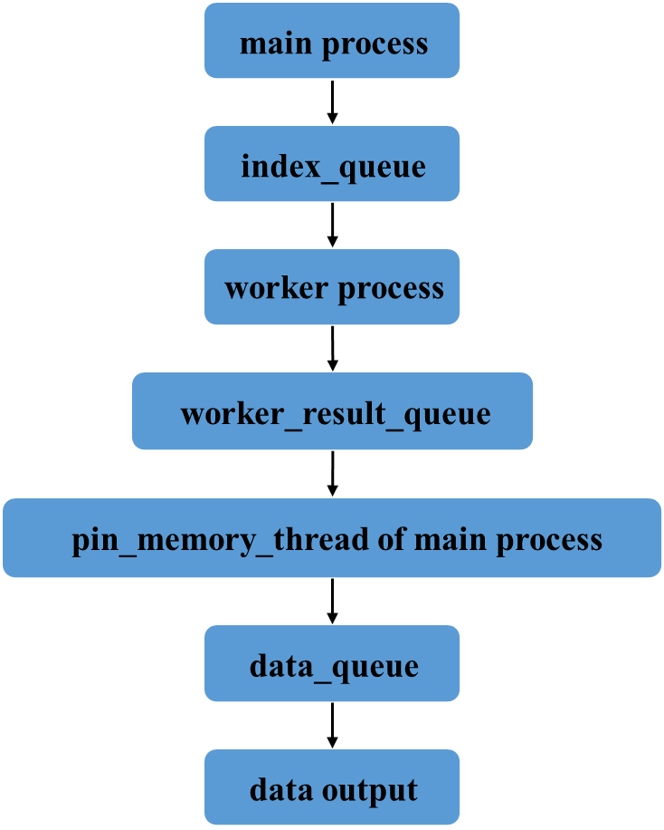
PyTorch常用工具(1)数据处理
文章目录 前言1 数据处理1.1 Dataset1.2 DataLoader 前言 在训练神经网络的过程中需要用到很多的工具,最重要的是数据处理、可视化和GPU加速。本章主要介绍PyTorch在这些方面常用的工具模块,合理使用这些工具可以极大地提高编程效率。 由于内容较多&am…...

docker-简单说说cgroup
前面我们简单说了下namespace, 现在我们来接着简单说说cgroup。通过docker-简单说说namespace文章我们知道: namespace 是为了隔离进程组之间的资源,那cgroup就是为了对进程组的监控和限制资源。Cgroup 可以限制进程组使用的资源数量和分配&a…...
印象笔记04: 如何将印象笔记超级会员价值最大化利用?
印象笔记04: 如何将印象笔记超级会员价值最大化利用? 为什么有这个问题 我不知道有没有人一开始接触印象笔记觉得非常好。奈何只能两个设备同步,局限太多。而会员活动比较优惠——就开了会员。而且我开了十年……。只能开发一下看看怎么最大…...

我的JDK动态代理流程
我的JDK动态代理流程 我梳理的动态代理流程大约是: 如果每一个框架都有自己的BPP,且自己的BPP中都有自己的wrapIfNecessory,那样可能就是一个BPP一个代理类。但通常应该都是各自的框架以提供 Advisior(切面)的方式&am…...
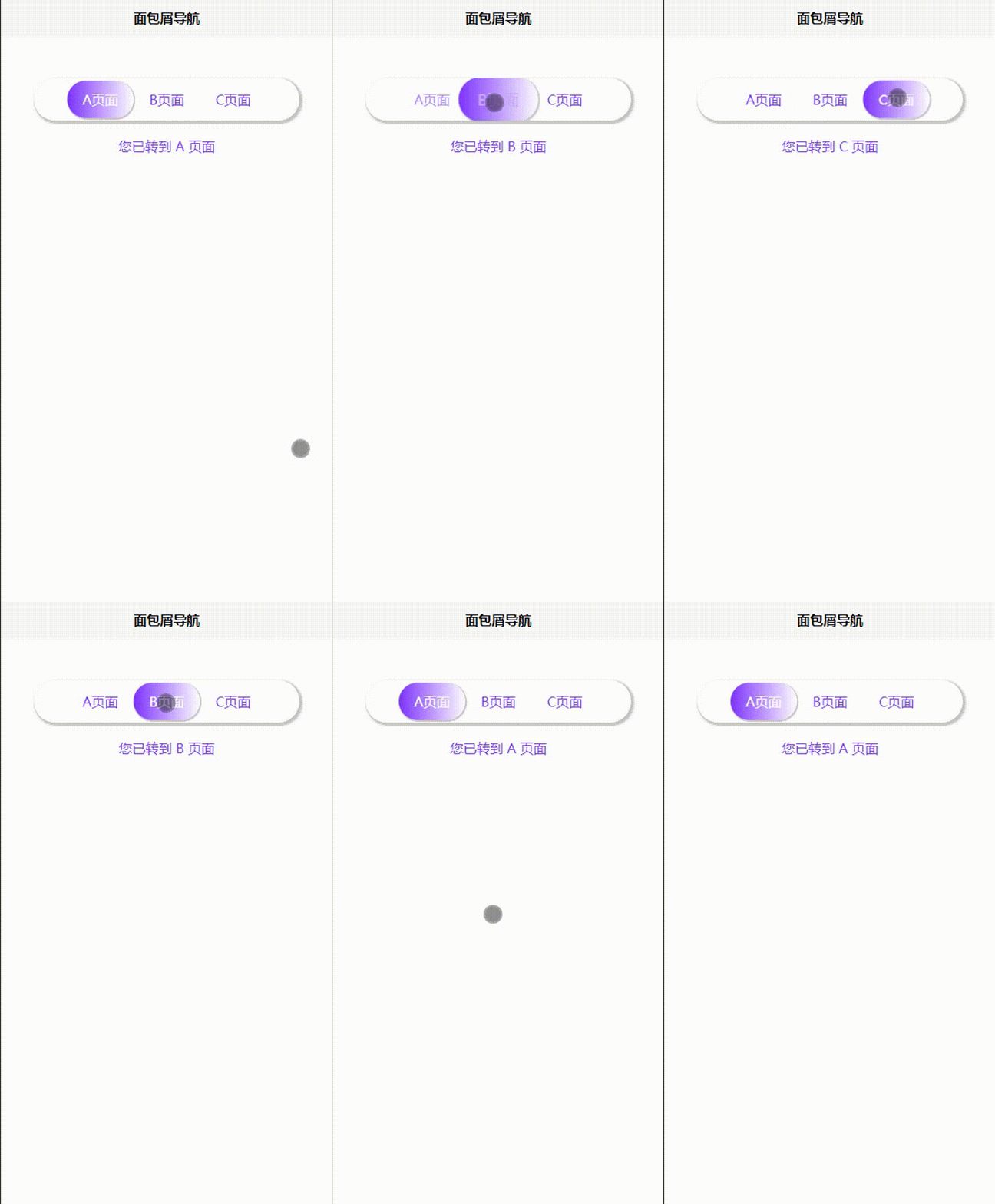
uniapp Vue3 面包屑导航 带动态样式
上干货 <template><view class"bei"><view class"container"><view class"indicator"></view><!-- 遍历路由列表 --><view v-for"(item, index) in routes" :key"index" :class&quo…...

openGauss学习笔记-174 openGauss 数据库运维-备份与恢复-导入数据-管理并发写入操作
文章目录 openGauss学习笔记-174 openGauss 数据库运维-备份与恢复-导入数据-管理并发写入操作174.1 事务隔离说明174.2 写入和读写操作174.3 并发写入事务的潜在死锁情况 openGauss学习笔记-174 openGauss 数据库运维-备份与恢复-导入数据-管理并发写入操作 174.1 事务隔离说…...
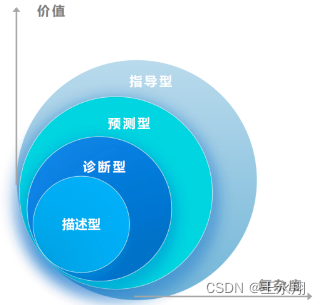
数据分析可被划分为4个重要的类别
1、描述型:发生了什么? 全面、准确、实时的数据有效的可视化 2、诊断型:为什么会发生? 能够深入了解问题的根本原因隔离所有混淆信息的能力 3、预测型:可能发生什么? 通过历史数据来预测特定的结果通过…...
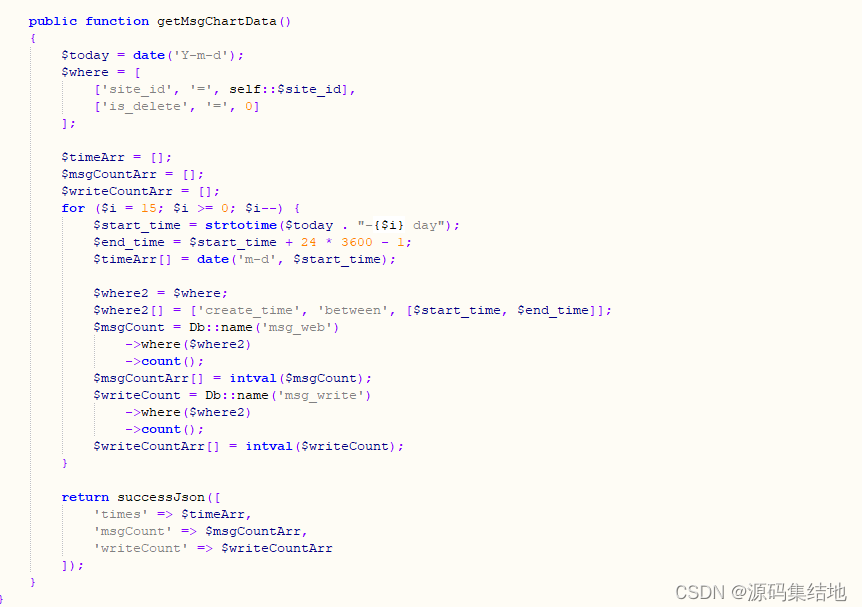
爆火小游戏敲木鱼流量主小程序源码系统+完整的代码包以及安装搭建教程
随着移动互联网的快速发展,小程序已成为一种新的应用形态,深入到人们生活的方方面面。其中,小游戏由于其简单、有趣的特点,吸引了大量用户,也成为了许多开发者的首选。敲木鱼小游戏,以其独特的玩法和轻松的…...

开源智能体技术解析:从LangChain到自主抓取,构建自动化工作流
1. 项目概述:从“Awesome”列表看开源智能体生态的演进 最近在梳理一些前沿的自动化工具链时,又翻到了 mergisi/awesome-openclaw-agents 这个仓库。对于长期关注AI Agent(智能体)和自动化工作流开发的同行来说,这类…...

终极CoreCycler教程:简单三步完成CPU稳定性测试与优化
终极CoreCycler教程:简单三步完成CPU稳定性测试与优化 【免费下载链接】corecycler Script to test single core stability, e.g. for PBO & Curve Optimizer on AMD Ryzen or overclocking/undervolting on Intel processors 项目地址: https://gitcode.com/…...

防火门安装与验收要点|闭门器、密封条、顺序器缺一不可
防火门安装与验收要点一、必备配件(缺一不可)闭门器:自动关门,火灾常态闭合防火密封条:遇火膨胀,隔烟阻火顺序器:双扇门专用,保证先后闭合二、安装要点门框墙体嵌实牢固,…...

怎样免费让老Mac重获新生:OpenCore Legacy Patcher专业教程
怎样免费让老Mac重获新生:OpenCore Legacy Patcher专业教程 【免费下载链接】OpenCore-Legacy-Patcher Experience macOS just like before 项目地址: https://gitcode.com/GitHub_Trending/op/OpenCore-Legacy-Patcher 想让你的旧Mac重新焕发活力吗…...

5分钟掌握小红书无水印下载:让内容保存效率提升300%
5分钟掌握小红书无水印下载:让内容保存效率提升300% 【免费下载链接】XHS-Downloader 小红书(XiaoHongShu、RedNote)链接提取/作品采集工具:提取账号发布、收藏、点赞、专辑作品链接;提取搜索结果作品、用户链接&#…...

Docker化OpenOffice部署:文档自动化转换服务实战指南
1. 项目概述与核心价值最近在折腾一个老项目,需要处理一批.odt格式的文档,这让我想起了那个曾经在开源办公软件领域与微软Office分庭抗礼的“老将”——OpenOffice。虽然现在LibreOffice的风头更盛,但OpenOffice依然有其独特的生态位和用户群…...

Unity区域加载系统:实现开放世界无缝加载与内存优化
1. 项目概述:一个高效、可扩展的Unity区域加载系统 最近在做一个开放世界风格的项目,场景大了之后,加载卡顿和内存管理就成了老大难问题。传统的Unity场景加载,要么一股脑全塞进内存,要么就得自己写一堆脚本来手动控制…...

Kubernetes上Jenkins全栈部署:动态Agent与生产环境调优指南
1. 项目概述:一个面向Kubernetes的Jenkins全栈部署方案在容器化和云原生技术成为主流的今天,如何高效、稳定地部署和管理持续集成/持续交付(CI/CD)流水线,是每个开发团队和运维工程师必须面对的课题。传统的单体Jenkin…...

手把手带你激活Matlab2016b:Windows 64位系统下的完整许可配置指南
1. 准备工作:确保激活环境完整 在开始激活Matlab2016b之前,我们需要做好充分的准备工作。首先确认你已经按照官方流程完成了基础安装,并且安装目录下存在完整的文件结构。我遇到过不少朋友因为安装不完整导致后续激活失败的情况,所…...

CI/CD安全最佳实践:保护软件交付流程
CI/CD安全最佳实践:保护软件交付流程 一、CI/CD安全最佳实践概述 1.1 CI/CD安全最佳实践的定义 CI/CD安全最佳实践是指在持续集成和持续部署流程中实施的安全策略和措施。它涵盖代码提交、构建、测试、部署等各个阶段的安全防护。 1.2 CI/CD安全最佳实践的价值 安全…...