
[移动通讯]【Carrier Aggregation-9】【 Radio Resource Control (RRC) Aspects】
前言:
CA 分析辅助工具: UE Capabilities

目录:
- 总体流程
- Radio Resource Control (RRC) Aspects
- SCell addition and removal
- Handover
一 总体流程
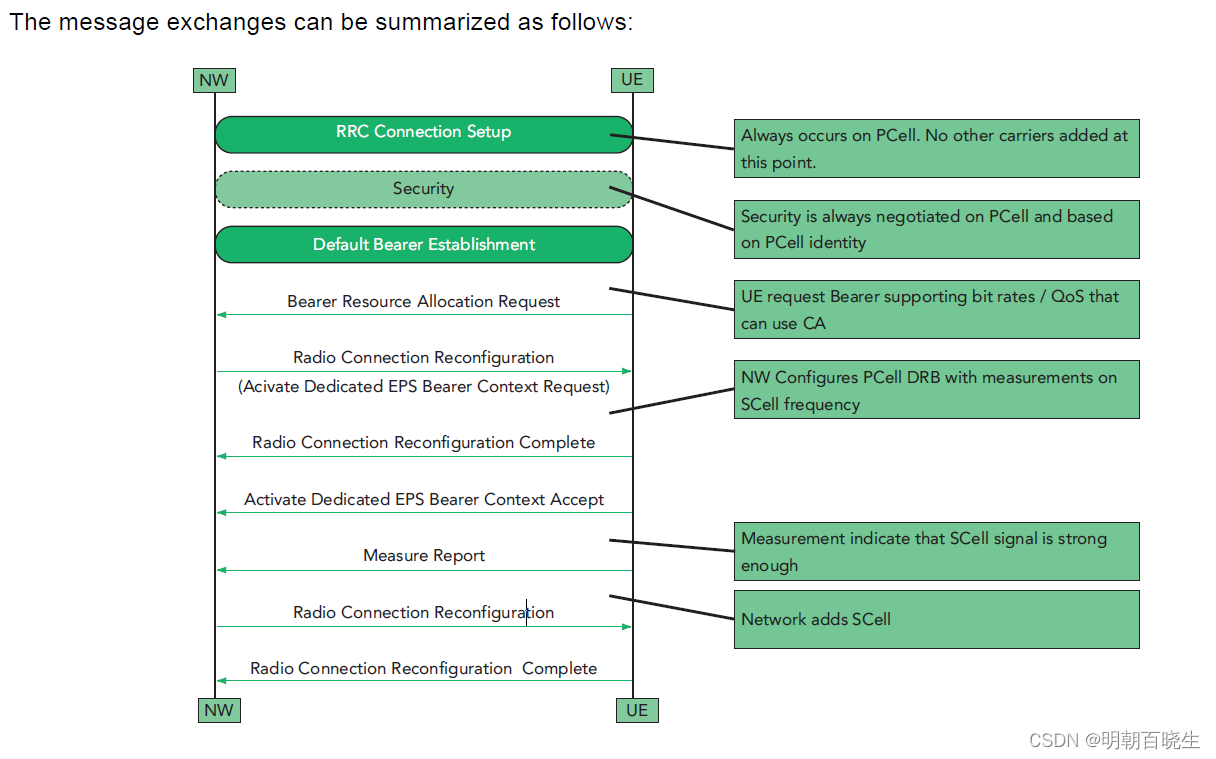
1.1 CA 总体流程
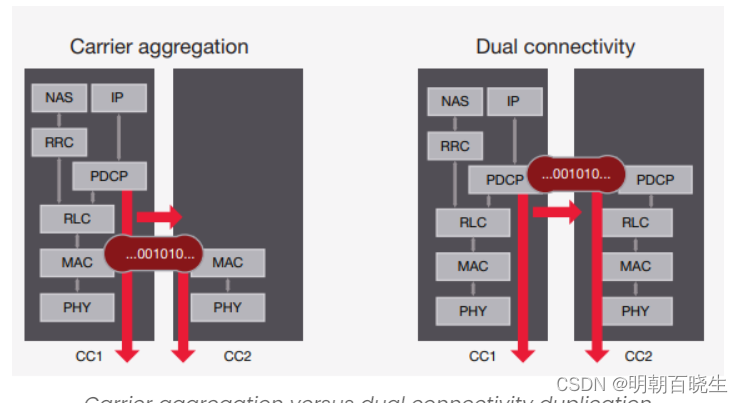
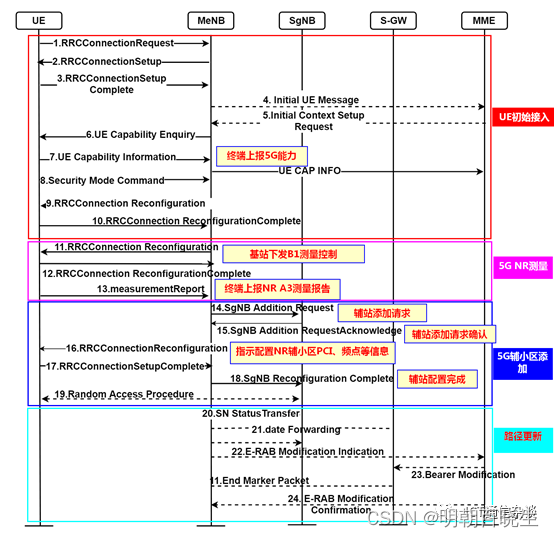
1.2 CA 和 NSA 区别
NSA 我理解也是一种特殊的CA 方案,但是无线资源管理,以及终端影响到了PDCP,SDAP,
RLC 层。

二 Radio Resource Control (RRC) Aspects
为了更灵活使用CA, E-UTRAN 必须了解UE 支持CA 的情况.
这里面我们重点解读一下 UE Capability Information OTA 信令
UL_DCCH / UECapabilityInformation
2.1 UE category
The category that UE support is indicated in UE Capability Information message as shown below. Notice that ue-Category can specify only up to Cat 4.
The category higher than 4 should be assinged to another IE (Information Element) ue-Category-v1020. (Here we are having similar confusing IEs as in WCDMA/HSPA. So many different places to check to figure out exact category))
CA support is implied by UE categories 6, 7, and 8
The UE category (without suffix) defines a combined uplink and downlink radio throughput capability
例:我们OTA 里面看到如下信息
| ue-Category | 4 |
| ue-Category-v1020 总体信息 | 6 |
| ue-CategoryDL-r12 具体上下行 | 13 |
| ue-CategoryUL-r12 具体上下行 | 5 |
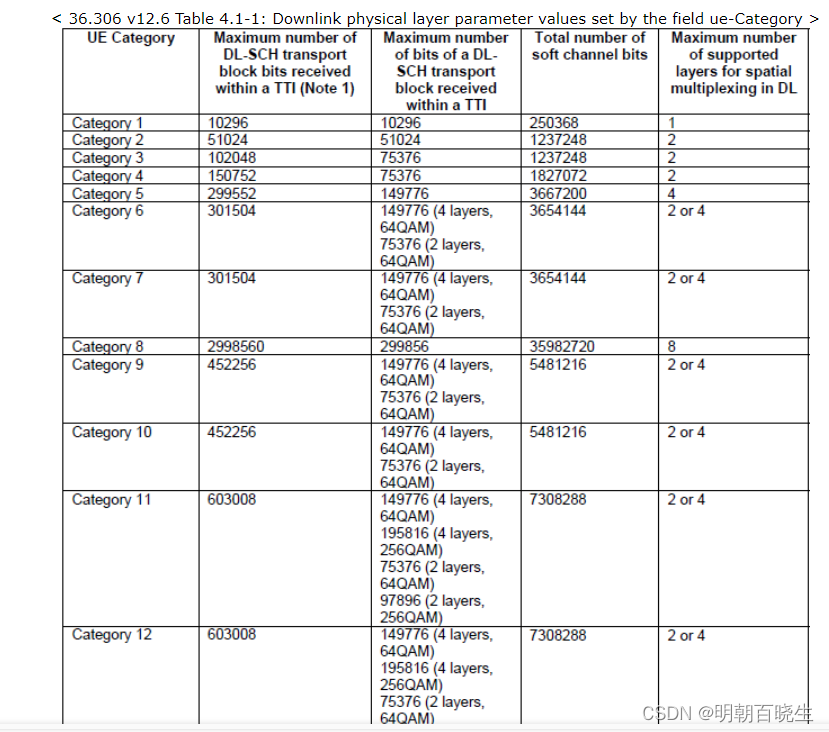
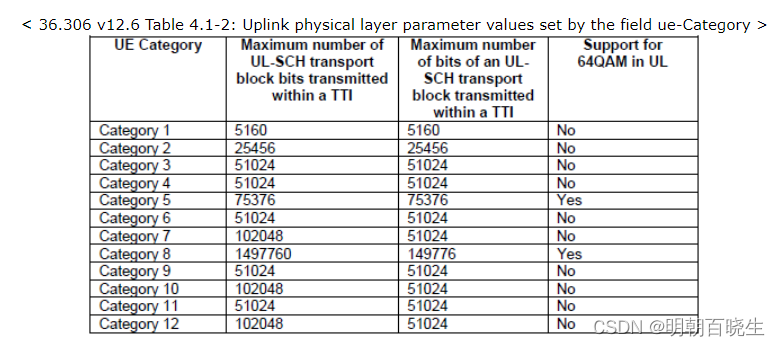
36.306 defines the maximum throughput for each category as follows :
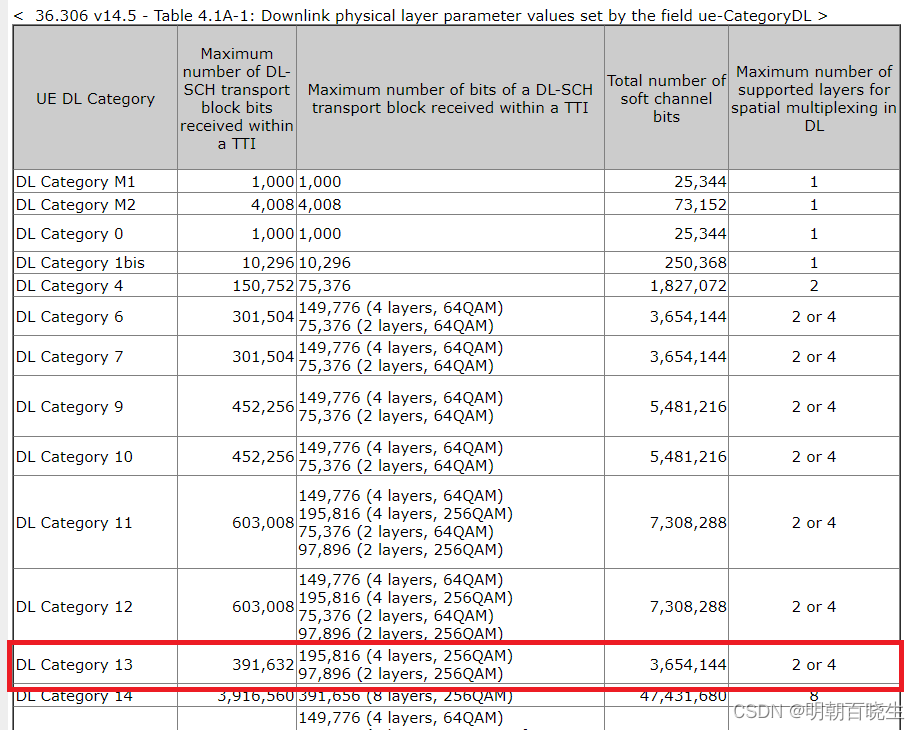
Note : Following throughput does not make difference about the number of Carriers. When you are talking about Categories about Carrier Aggregation throughput, you would be clear on whether you are talking about the category for each component carrier or categories of aggregated carriers.
This tables tells you only about the maximum throughput, it doesn't tell in detail about how you achieve it. Many people tries to associate this table to a specific MIMO configuration or Carrier Aggregation(CA) configuration. But there is no direction connection between this table and MIMO/CA condition.
简单的说,这个标志位跟载波聚合没关系
注意事项:
Note 1 :
The number shown in this table is the number of bits that can be transmitted in 1 TTI (1 ms). So you have to multiply this number by 1000 to get the rate in 'bps'. For example, Table 4.1-1 Category 3 says 102048. If you convert this number into bps, it is 102048 x 1000 = 102,048,000 bps.
Note 2 :
You should be very careful when you talk about the throughput in Kbps, Mbps unit. A lot of people do the conversion by dividing the number by 1000, 1000000. But in digital theory (especially in computer world) 1 Kbps is 2^10 bits and 1 Mbps is 2^20 bits. When the number is small, you don't see much difference, however when the number is very big, the difference between the two different conversion would give you huge difference.
Note 3 :
The number shows in this table is based on the assumption that all the DL/UL TTI carries only user data (U-Plane Data), but in really you cannot allocate 100% of resources for user data only. There should be a certain portion of overhead (like SIBs, MAC CE, Signaling etc). So real throughput you get will be less than the one listed in this table.
下行:3GPP 36.306 V14.5-Table 4.1A-A< Downlink physical layer parameter values set by the field ue-CategoryDL >
上行:< 36.306 v13.4 - Table 4.1A-2: Uplink physical layer parameter values set by the field ue-CategoryUL >

2.2 Cross-carrier scheduling support
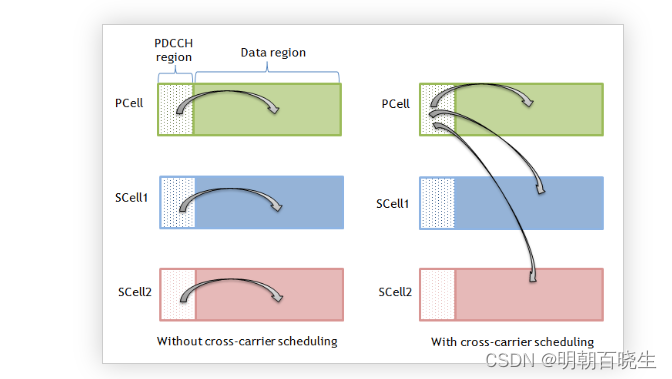
指示UE 可以从PCell 上面接收SCell的PDCCH 调度信息。 PCell PDCCH 里面包含
SCell 的PDCCH 信息
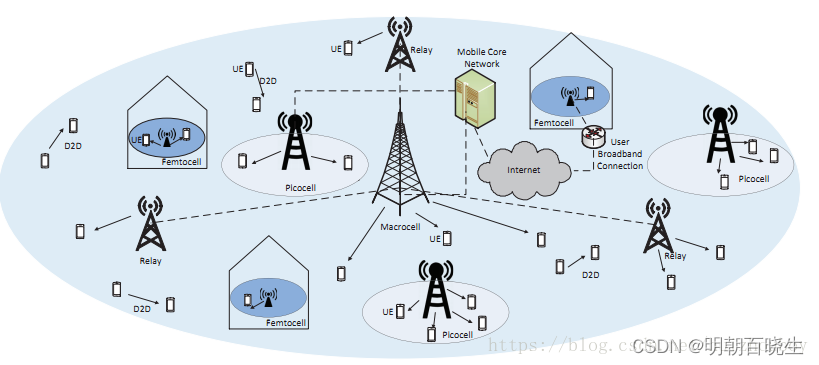
(A heterogeneous network is a network connecting computers and other devices with different operating systems and/or protocols. For example, local area networks (LANs) that connect Microsoft Windows and Linux based personal computers with Apple Macintosh computers are heterogeneous.)
构网络主要是针对目前现在无线接入网络的差异性。例如宏基站(Macro Basestation)、小基站(Micro Basestation)以及家庭基站(Femto Basestation)覆盖的区域。这类基站主要是接入协议是相同的
Cross-carrier scheduling is an important feature in heterogeneous networks (HetNet) where inter-cell interference is significant when the cells within HetNet are deployed on the same carrier frequency.(不同Band 频点相同)
The PDCCH, carrying Downlink control information (DCI), must be received by the UEs at the cell edge, so, PDCCH may be transmitted with higher power than the traffic channels. This causes inter-cell interference on the PDCCH of the respective carrier. In CA, cross-carrier scheduling enables the UE connected to different nodes to receive the PDCCH on different carriers to eliminate inter-cell interference on the PDCCH
Cross-carrier scheduling may also be used to balance the loads from traffic and scheduling across different component carriers.
This technique is also effective in scenarios where scheduling of PDCCH on a carrier which has larger bandwidth compared to the carrier of relatively small bandwidth, due to the fact that carriers with smaller bandwidths have relatively low frequency diversity gain.
Without cross-carrier scheduling, the downlink scheduling assignments on PDCCH are valid for the component carrier (CC) on which they were transmitted.
Similarly, for uplink grants, there is an association between downlink and uplink CCs (provided in cell 's system information) such that each uplink CC has
an associated downlink CC. Thus, from the uplink–downlink association, the UE will know to which uplink CC the DCI relates to.With cross-carrier scheduling, the PDSCH is received on a CC other than the one on which PDCCH/EPDCCH is received. Similarly, the PUSCH would be transmitted on an associated CC other than the one on which uplink grant is received.
The cross-carrier scheduling feature is optional for the UE introduced in Release-10. The UE indicates its support of this feature with parameter crossCarrierScheduling-r10 under PhyLayerParameters-v1020 during the UE capability transfer procedure.
Cross-carrier scheduling does not apply to PCell i.e. PCell is always scheduled via its own PDCCH. As shown in the figure below, cross-carrier scheduling is only used to schedule resources on a Secondary CC without PDCCH.
For each UE, the eNodeB can either enable or disable the cross-carrier scheduling independently for each CC, via RRC signaling.
When cross-carrier scheduling is active, the UE needs to know to which CC a certain DCI relates. The carrier responsible for delivering scheduling information should add an indication in the DCI, which SCell the DCI is intended for.A new 3-bit Carrier Indicator Field (CIF) is added at the beginning of Release-8 PDCCH DCI formats. Whether CIF is present in a serving cell’s PDCCH DCI or not is configured by eNodeB via RRC signaling. CIF value ‘zero’ indicates PCell, while the other SCell can be addressed with ServCellIndex i.e., CIF value is the same as ServCellIndex.
The cif-Presence-r10 in physicalConfigDedicated (PCell configuration) indicates whether CIF is present in the PDCCH DCI of the PCell.
Similarly, each SCell may be configured with cross-carrier scheduling as part of SCell addition or modification. crossCarrierSchedulingConfig is responsible for this and is part of PhysicalConfigDedicatedSCell.schedulingCellInfo under crossCarrierSchedulingConfig indicates whether cross-carrier scheduling is enabled or not. If schedulingCellInfo indicates ‘own’, it means that the SCell will be transmitting its own PDCCH i.e., cross-carrier scheduling not enabled. On the other hand, if cross-carrier scheduling is enabled, then schedulingCellInfo indicates ‘other’, which means that some ‘other’ serving cell would be transmitting PDCCH DCI.
The parameter schedulingCellId informs the UE about which cell signals the downlink allocations and uplink grants for the concerned SCell.
As discussed above, when the cross-carrier scheduling is enabled on an SCell, the UE wouldn’t be decoding PDCCH on that SCell, so UE doesn’t need to decode PCIFH on the concerned SCell. This implies that the UE does not know how many OFDM symbols in the beginning of each subframe are used for control data. Hence, this information referred to as pdsch-Start needs to be informed to the UE at the time of activating cross-carrier scheduling.
pdsch-Start is the starting OFDM symbol of PDSCH (data region) for the concerned SCell. Values 1, 2, 3 are applicable when dl-Bandwidth for the concerned SCell is greater than 10 resource blocks, values 2, 3, 4 are applicable when dl-Bandwidth for the concerned SCell is less than or equal to 10 resource blocks.
Also, it is important to note that, when cross-carrier scheduling is active for an SCell, it can only be scheduled by one CC. Considering the same example above, it is not possible for SCell1 to receive scheduling information on PDCCH from both PCell and SCell2.
The common search space is always on the primary cell, but the UE-specific search space can be on the primary cell or on any of the secondary cells.
A UE configured with the CIF for a given serving cell shall assume that the CIF is not present in any PDCCH of the serving cell in the common search space. On the other hand, the UE shall assume that CIF is present in PDCCH located in the UE specific search space.
2.3 Simultaneous PUCCH and PUSCH transmission support
For CA-capable UEs, implies that the UE can support
simultaneous PUCCH and PUSCH transmission on different CCs.
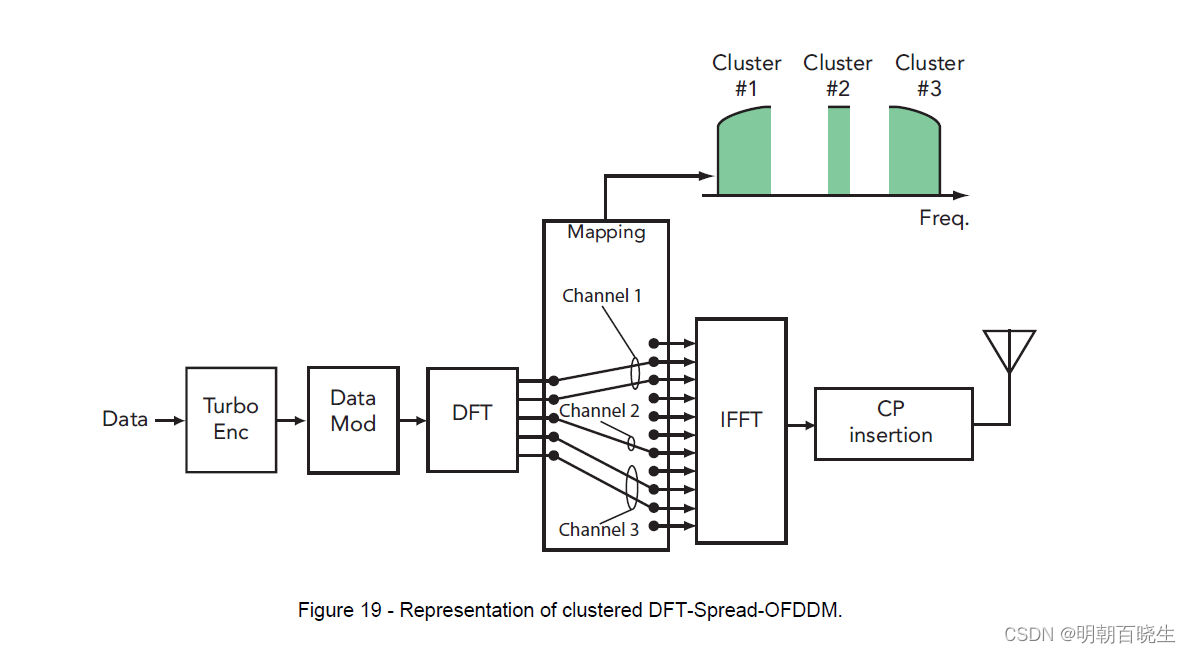
2.4 Multi-cluster PUSCH within a CC support
Indicates baseband (non-band-specific) support for multi-cluster
PUSCH transmission within CCs. (Explained in testing section)

2.5 Non-contiguous uplink resource allocation within a CC support
Indicates that RF (band- specific) supports noncontiguous
uplink resource allocations within CCs.
2.6Supported band combinations
– Indicates the specific frequency band and channel bandwidth configurations that
the UE can utilize in support of CA.
2.7 Event A6 reporting support
– Indicates that the UE is able to report Event A6, which occurs when a neighbor PCell
becomes stronger than a serving SCell by an offset.
2.8 SCell addition during handover to E-UTRA support
– Indicates that the UE can support E-UTRAN inbound interradio
2.9 access technology (IRAT) handover directly into CA mode.
Periodic SRS transmission on all CCs support – Indicates that the UE can transmit periodic SRSs on all SCells.
三 SCell addition and removal
SCells are added and removed from the set of serving cells through the RRC Connection Reconfiguration procedure.
Note that, since intra-LTE handover is treated as an RRC connection reconfiguration, SCell “handover” is supported.
The CA-related information sent by the base station pursuant to this the RRC Connection Reconfiguration procedure is summarized below.
Cross-carrier scheduling configuration – Indicates, among other things, if scheduling for the referenced,SCell is handled by that SCell or by another cell.
• SCell PUSCH configuration – Indicates, among other things, whether resource block group hopping is utilized on the SCell.
• SCell uplink power control configuration – Carries a number of primitives related to SCell uplink TPC, including the path loss reference linking parameter.
• SCell CQI reporting configuration – Carries a number of primitives related to CQI measurements reporting for SCells.
四 Handover
Handover processing for LTE in Release-10 is largely the same as Releases 8 and 9, except that clarifications are made to refer to PCell in the measurement-related RRC signaling messages.
Release-10 does introduce one new measurement event: Event A6. As indicated above, Event A6 occurs when a neighboring cell’s strength becomes better than an SCell’s strength by an offset.
In the case of Intra-Band SCell’s, this event is less useful, as the strength of the PCell and the SCells usually is very similar. However, with Inter-Band serving cells, the strength of a neighbouring PCell could be significantly different from a serving SCell. Depending on network conditions – such as traffic load distribution – it could be advantageous to
execute a handover to the cell identified by Event A6.
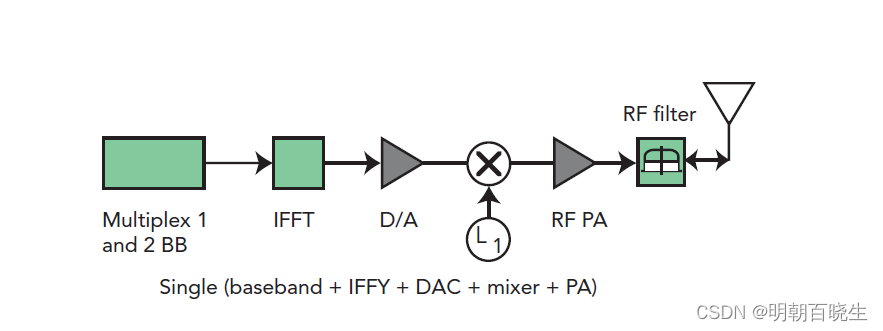
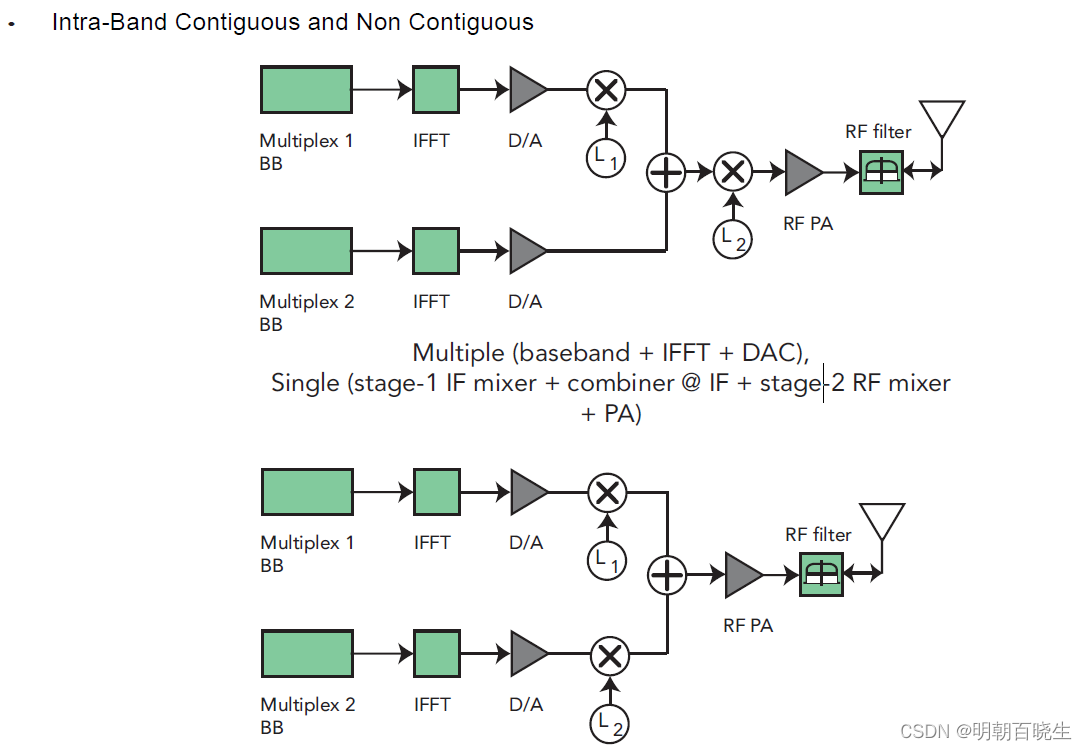
Intra-Band scenario
Intra-Band Contiguous and Non Contiguous
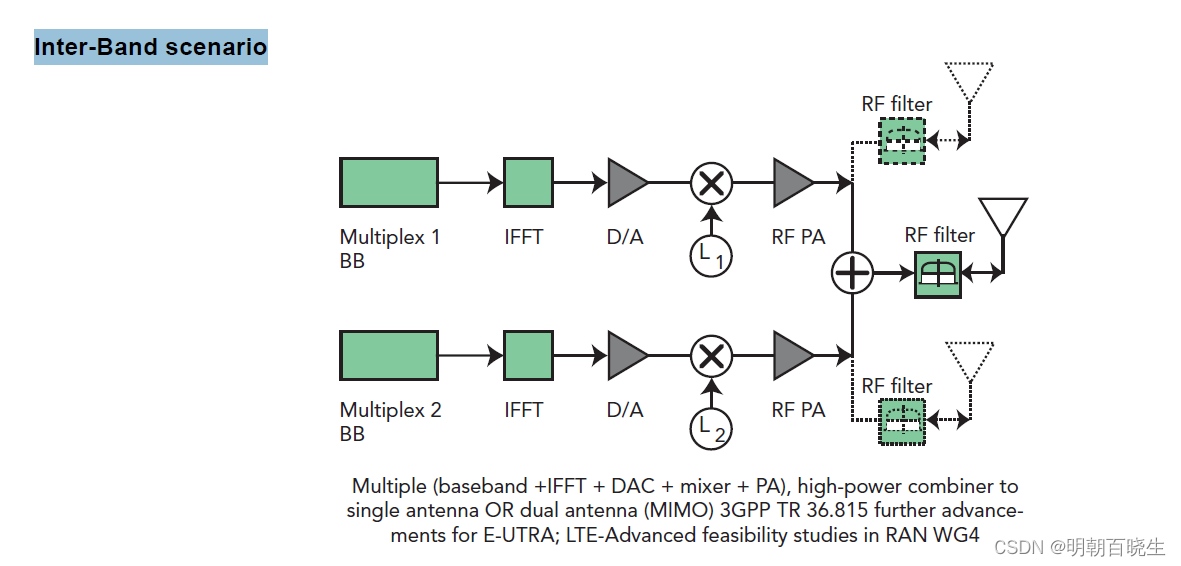
Inter-Band scenario
参考:
4G | ShareTechnote
相关文章:
[移动通讯]【Carrier Aggregation-9】【 Radio Resource Control (RRC) Aspects】
前言: CA 分析辅助工具: UE Capabilities 目录: 总体流程 Radio Resource Control (RRC) Aspects SCell addition and removal Handover 一 总体流程 1.1 CA 总体流程 1.2 CA 和 NSA 区别 NSA 我理解也是一种特殊的CA 方案&…...

故障预测与健康管理(PHM)的由来以及当前面临的挑战
故障预测与健康管理(PHM)作为一项关键技术,旨在帮助企业在事故发生之前较长时间内实现故障预测与健康管理,达到“治未病”的效果。PHM的发展源于对设备可靠性和安全性的追求,以及对预测性维护的需求。然而,…...
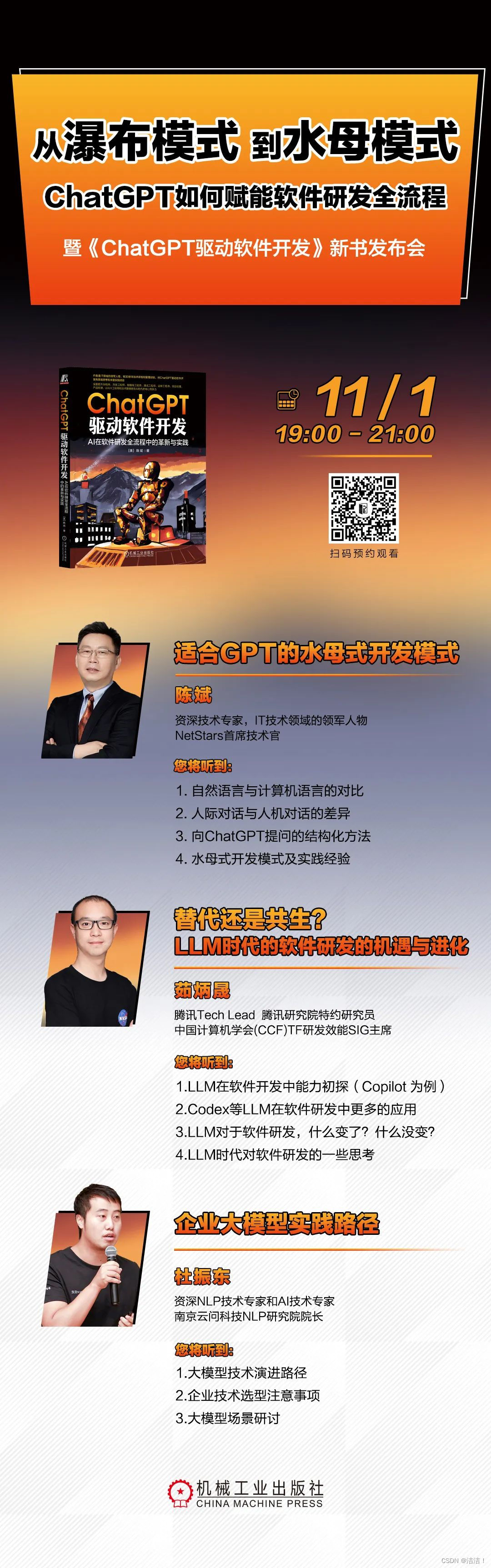
【ChatGPT瀑布到水母】AI 在驱动软件研发的革新与实践
这里写目录标题 前言内容简介作者简介专家推荐读者对象目录直播预告 前言 计算机技术的发展和互联网的普及,使信息处理和传输变得更加高效,极大地改变了金融、商业、教育、娱乐等领域的运作方式。数据分析、人工智能和云计算等新兴技术,也在不…...

【Django】项目模型
Django的基本命令 django-admin 命令含义startproject启动Django项目startapp启动Django应用check检查项目完整性runserver本地运行项目shell进入Django项目的Python Shell环境test 进行Django用例测试makemigrations创建模型变更的迁移文件migrate执行makemigrations…...
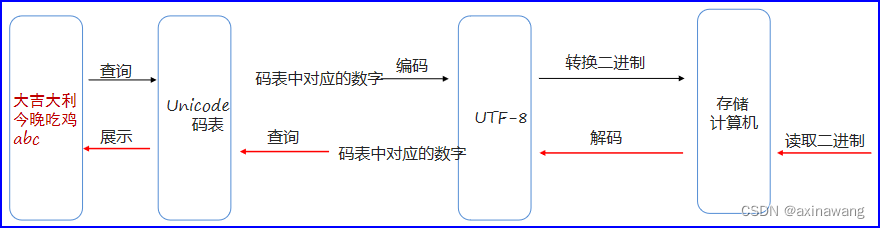
字符集详解
常见字符集介绍 字符集基础知识: 计算机底层不可以直接存储字符的。 计算机中底层只能存储二进制(0、1) 。 二进制是可以转换成十进制的。 结论:计算机底层可以表示成十进制编号。计算机可以给人类字符进行编号存储,这套编号规则就是字符…...

Vert.x学习笔记-什么是Vert.x
Vert.x介绍 用官网的一句话来总结:Vert.x是用于在JVM上构建响应式应用程序的工具包,项目初期的目标是成为“JVM版的Node.js”,但是后续的发展逐渐偏离了初期的目标,变成了一个给JVM提供量身定制的异步编程基础框架的工具包。 Ver…...
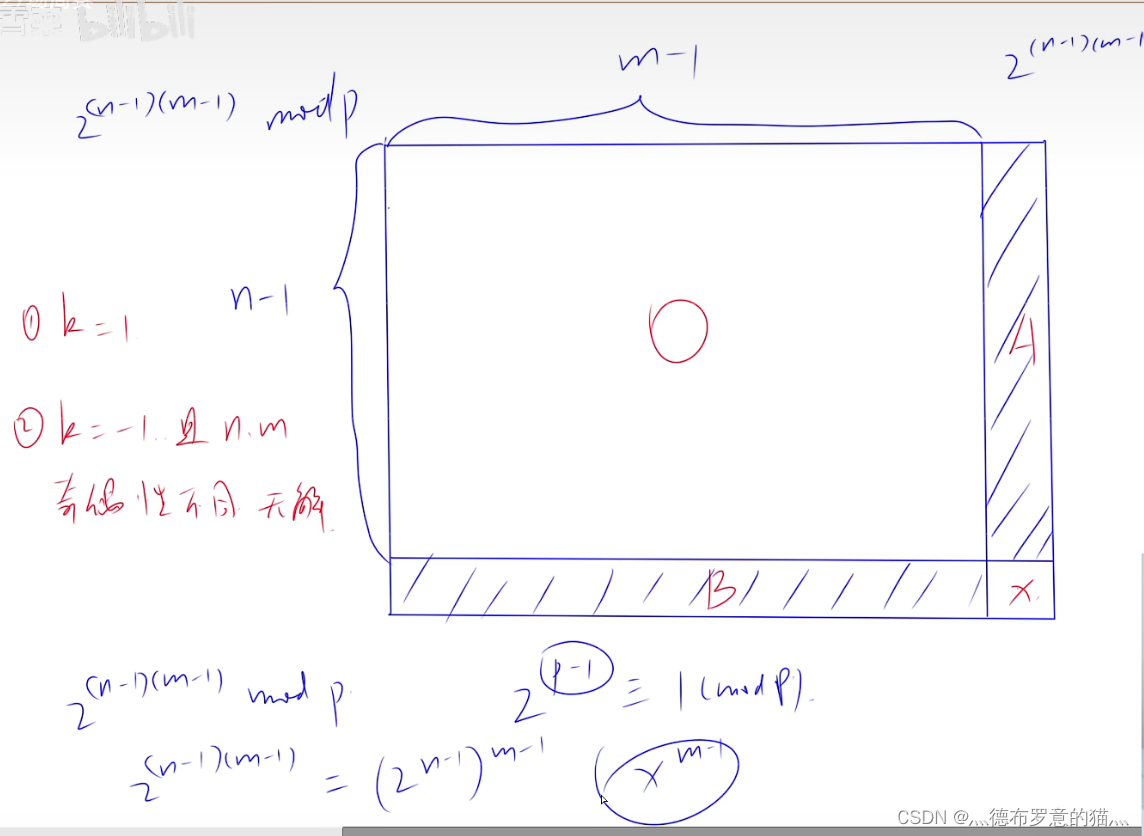
AcWing 第127场周赛 构造矩阵
构造题目,考虑去除掉最后一行最后一列先进行考虑,假设除了最后一行和最后一列都已经排好了(你可以随便排),那么分析知最后一个数字由限制以外其他都已经确定了,无解的情况是k为-1 并且n,m的奇偶…...
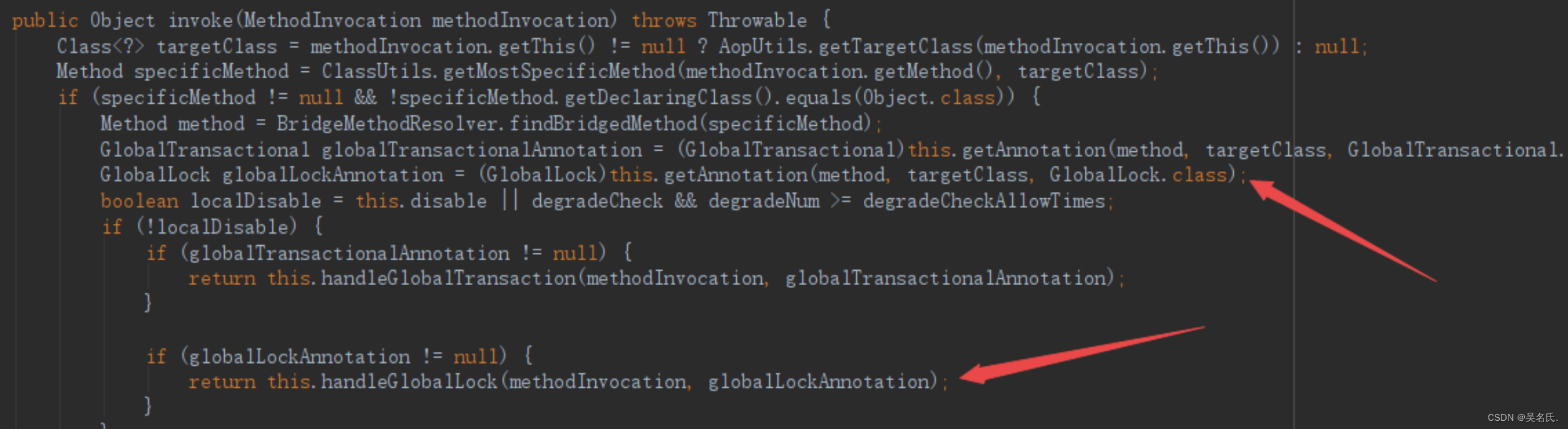
Seata入门系列【15】@GlobalLock注解使用场景及源码分析
1 前言 在Seata 中提供了一个全局锁注解GlobalLock,字面意思是全局锁,搜索相关文档,发现资料很少,所以分析下它的应用场景和基本原理,首先看下源码中对该注解的说明: // 声明事务仅在单个本地RM中执行 //…...
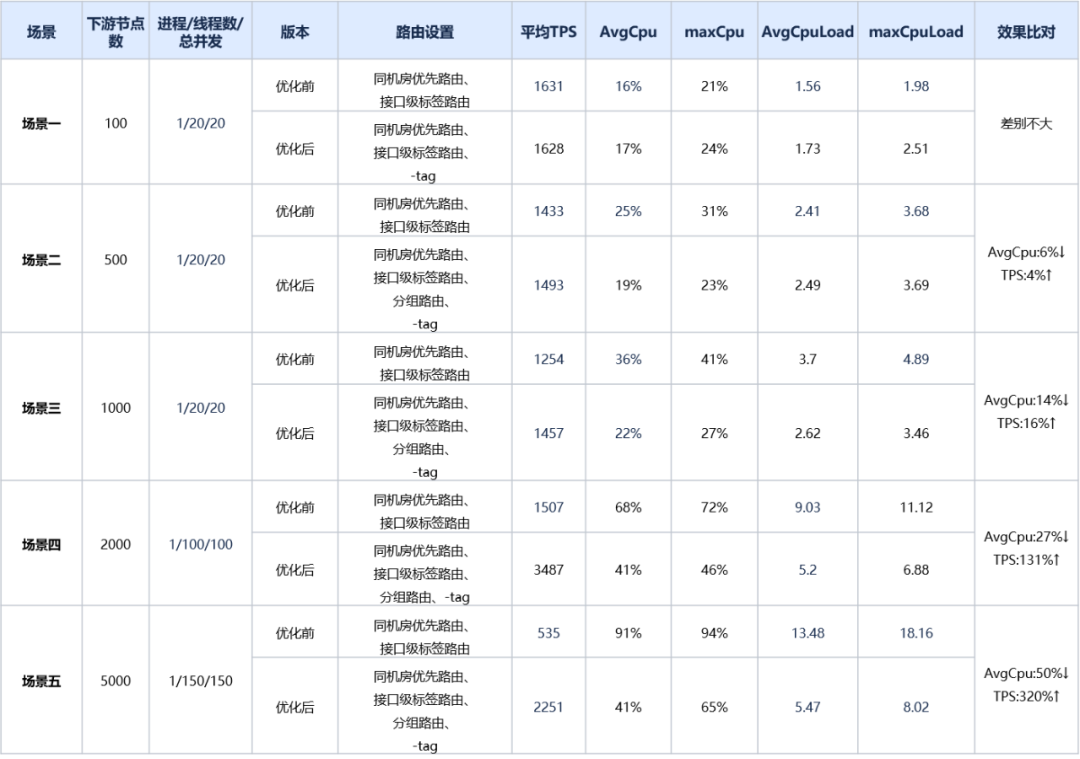
Dubbo 路由及负载均衡性能优化
作者:vivo 互联网中间件团队- Wang Xiaochuang 本文主要介绍在vivo内部针对Dubbo路由模块及负载均衡的一些优化手段,主要是异步化缓存,可减少在RPC调用过程中路由及负载均衡的CPU消耗,极大提升调用效率。 一、概要 vivo内部Java…...

Python数据可视化入门指南
Matplotlib和Plotly是两个在Python中广泛使用的数据可视化库,它们具有丰富的API和功能,用于创建各种类型的图表和图形。在本篇博客中,我们将介绍它们的主要特点和基本用法。 Matplotlib 主要特点: 高度自定义: Matp…...

我的ChatGPT的几个使用场景
示例一,工作辅助、写函数代码: 这里展示了一个完整的代码,修正,然后最终输出的过程。GPT具备足够丰富的相关的小型代码生成能力,语法能力也足够好。这类应用场景,在我的GPT使用中,能占到65%以上…...
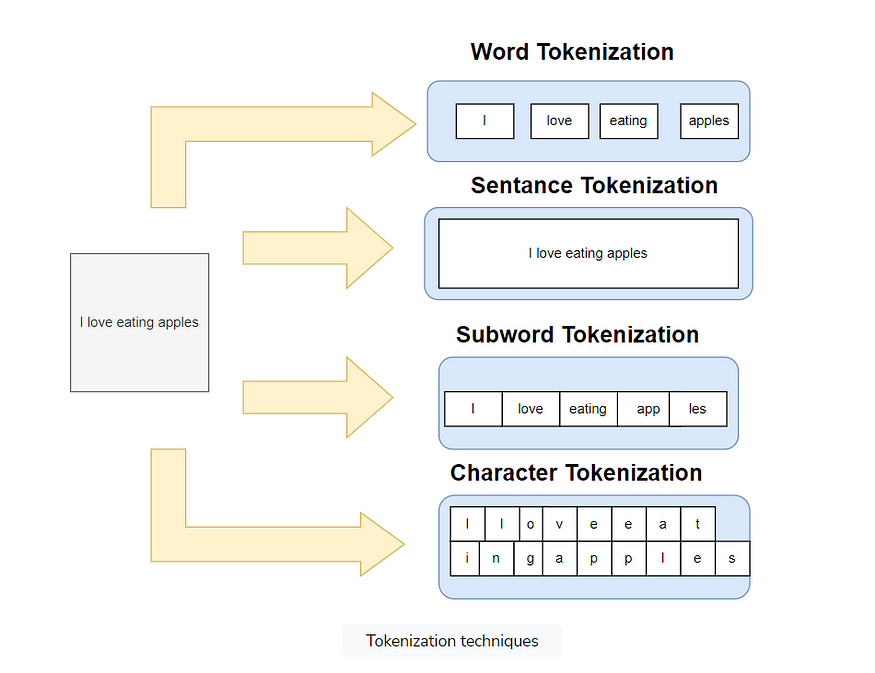
3 — NLP 中的标记化:分解文本数据的艺术
一、说明 这是一个系列文章的第三篇文章, 文章前半部分分别是: 1 — NLP 的文本预处理技术2 — NLP中的词干提取和词形还原:文本预处理技术 在本文中,我们将介绍标记化主题。在开始之前,我建议您阅读我之前介绍…...

C++-类与对象(上)
一、 auto关键字 1.自动识别数据类型 2.auto的初始化 3.auto简化for循环 nullptr的使用 二、类与对象 1.c中类的定义 2.c语言与c的比较 3.类的访问限定符以及封装 3.1访问限定符 3.2封装 3.3类的作用域 3.4类的声明与定义分离 🗡CSDN主页:d1ff1cult.&…...

多进程间通信学习之无名管道
无名管道:首先它是内核空间的实现机制;然后只能用于亲缘进程间通信;它在内核所占的大小是64KB;它采用半双工的通信方式;请勿使用lseek函数;读写特点:若读端存在写管道,那么有多少数据…...

flink常用的几种调优手段的优缺点
背景: 不管是基于减少反压还是基于减少端到端的延迟的目的,我们有时候都需要对flink进行调优,本文就整理下几种常见的调优手段以及他们的优缺点 flink调优手段 1.使用事件时间EventTime模式时,可以设置水位线发送的时间间隔,比…...

如何选择安全又可靠的文件数据同步软件?
数据实时同步价值体现在它能够确保数据在多个设备或系统之间实时更新和保持一致。这种技术可以应用于许多领域,如电子商务、社交媒体、金融服务等。在这些领域中,数据实时同步可以带来很多好处,如提高工作效率、减少数据不一致、提高用户体验…...

使用反射调用类的私有内部类的私有方法
文章目录 使用反射调用类的私有方法类实现方法实现代码 使用反射调用类的私有内部类的私有方法类实现方法实现代码 在进行单元测试时,我们往往需要直接访问某个类的内部类或者某个类的私有方法,此时正常的调用就无能为力了,因此我们可以使用反…...

记一次 AWD 比赛中曲折的 Linux 提权
前提背景: 今天一场 AWD 比赛中,遇到一个场景:PHP网站存在SQL注入和文件上传漏洞, MYSQL当前用户为ROOT,文件上传蚁剑连接SHELL是权限很低的用户。我需要想办法进行提权,才能读取到 /root 目录下的 flag。 一、sqlmap …...
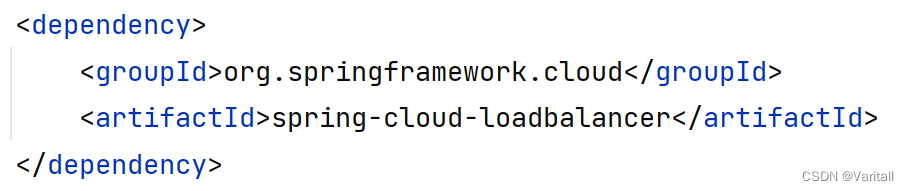
[SpringCloud] Feign 与 Gateway 简介
目录 一、Feign 简介 1、RestTemplate 远程调用中存在的问题 2、定义和使用 Feign 客户端 3、Feign 自定义配置 4、Feign 性能优化 5、Feign 最佳实践 6、Feign 使用问题汇总 二、Gateway 网关简介 1、搭建网关服务 2、路由断言工厂 3、路由的过滤器配置 4、全局过…...

[Unity] 个人编码规范与命名准则参考
Unity C# 在写的过程中, 和纯 C# 是有很大出入的. 甚至说, Unity C# 就是邪教. 例如它的命名规范与 C# 是不一致的, 而且由于游戏引擎的介入, 编写时的习惯相较于 C# 来讲, 也需要有所改变. 通用编码规范 常见的一些编码规范就不需要过多提及了, 这里只做简单列举. 添加合适…...

电机PID调参总翻车?试试VOFA+这个“示波器”功能,实时对比目标与实际值
电机PID调参实战:用VOFA实现波形可视化诊断 调试电机PID控制器时,最令人头疼的莫过于面对一堆抽象数据却无法直观理解系统行为。传统方法依赖串口打印数值或简单示波器观察,往往需要反复修改参数、重新烧录程序,效率低下且容易错过…...

蓝桥杯嵌入式模拟赛2实战复盘:用STM32G431搞定LCD、LED、按键、PWM和串口
蓝桥杯嵌入式模拟赛2全流程实战解析:从零构建STM32G431多模块协同系统 当开发板的电源指示灯第一次亮起,LCD屏幕浮现出清晰的白色字符时,我知道这不仅仅是一次普通的练习——这是将分散的模块知识整合成完整系统的关键时刻。蓝桥杯嵌入式模拟…...

数据科学工具链实战指南:从核心工具到架构选型
1. 项目概述:数据科学工具生态的实战视角聊起数据科学,很多人第一反应是复杂的算法和模型。但干了这么多年,我越来越觉得,工具链的选型和熟练度,才是决定一个数据科学项目能否高效落地、甚至能否成功的关键。算法是“道…...

5秒完成B站缓存视频转换:m4s到MP4无损转换完整指南
5秒完成B站缓存视频转换:m4s到MP4无损转换完整指南 【免费下载链接】m4s-converter 一个跨平台小工具,将bilibili缓存的m4s格式音视频文件合并成mp4 项目地址: https://gitcode.com/gh_mirrors/m4/m4s-converter 你是否曾为B站缓存视频无法在其他…...

影刀RPA里藏了个Python?手把手教你用它管理第三方包和写数据处理脚本
影刀RPA中的Python开发实战:从包管理到数据处理脚本集成 在自动化流程开发领域,影刀RPA正逐渐成为连接低代码操作与专业编程的桥梁。对于已经掌握Python基础但希望提升自动化效率的开发者而言,影刀RPA提供的Python集成能力堪称效率倍增器。本…...

节日场景下慈善钓鱼与宠物诈骗机理及闭环防御研究
摘要 节日期间公众捐赠意愿上升、宠物领养需求旺盛,为网络钓鱼与社交欺诈提供了高发土壤。波士顿警方发布的节日安全预警显示,假冒慈善机构钓鱼、虚假宠物领养与交易诈骗已成为典型高发案件,两类攻击均依托情感诱导、域名仿冒、社交工程与支付…...

Google Cloud Dataflow 背后的流式处理模型
原文:towardsdatascience.com/the-stream-processing-model-behind-google-cloud-dataflow-0d927c9506a0?sourcecollection_archive---------3-----------------------#2024-04-27 在无界数据处理中的正确性、延迟和成本平衡 https://medium.com/vutrinh274?sour…...
)
Oracle SQL 十道经典练习题(附完整代码 + 解题思路)
Oracle SQL 十道经典练习题(附完整代码 解题思路) 在数据库学习和面试中,SQL 查询是核心技能之一。本文基于 Oracle 数据库,整理了 10 道经典 SQL 练习题,涵盖表创建、数据插入、多表关联、分组统计、自连接等高频考点…...

告别手动提交!用Bash脚本批量处理VASP+ShengBTE热输运计算的700+任务
计算材料学自动化革命:Bash脚本驱动的高通量热输运计算实践 在计算材料学领域,研究者常常需要处理数百甚至上千个相似的计算任务。以硅材料热输运性质计算为例,当使用VASP结合ShengBTE进行三阶力常数计算时,可能产生700多个独立的…...

JPEXS Free Flash Decompiler终极指南:轻松替换SWF字体解决兼容性问题
JPEXS Free Flash Decompiler终极指南:轻松替换SWF字体解决兼容性问题 【免费下载链接】jpexs-decompiler JPEXS Free Flash Decompiler 项目地址: https://gitcode.com/gh_mirrors/jp/jpexs-decompiler 你是否曾遇到过SWF文件中的字体在不同设备上显示异常&…...