
【Docker】docker部署lnmp和搭建wordpress网站
环境准备
docker:192.168.67.30
虚拟机:4核4G
systemctl stop firewalld
systemctl disable firewalld
setenforce 0
安装docker
#安装依赖包
yum -y install yum-utils device-mapper-persistent-data lvm2
#设置阿里云镜像
yum-config-manager --add-repo https://mirrors.aliyun.com/docker-ce/linux/centos/docker-ce.repo
#安装最新版本的docker
yum -y install docker-ce docker-ce-cli containerd.io
#设置开机自启
systemctl enable docker.service
#镜像加速下载
mkdir -p /etc/docker
tee /etc/docker/daemon.json <<-'EOF'
{"registry-mirrors": ["https://fil0uwf5.mirror.aliyuncs.com"]
}
EOF
#重新加载配置,重启docker
systemctl daemon-reload
systemctl restart docker
#下载镜像
docker pull centos:7
docker images
创建自定义网络 mynetwork
docker network create --subnet=172.18.0.0/16 --opt "com.docker.network.bridge.name"="docker1" mynetworkdocker network list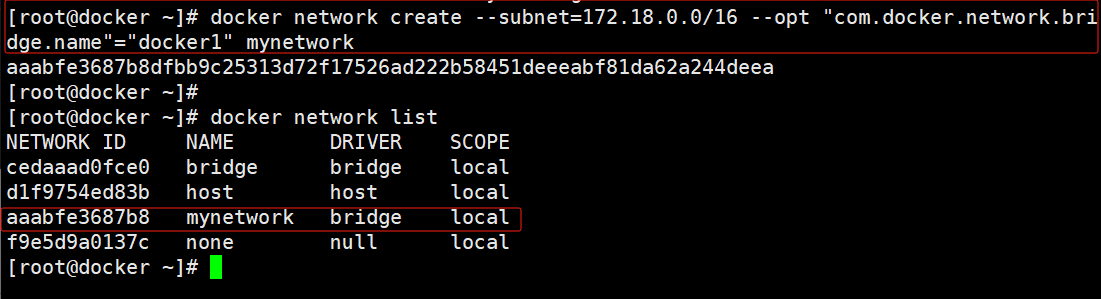
部署nginx镜像(容器IP为172.18.0.10)
创建nginx目录
mkdir -p /opt/lnmp/nginx
cd /opt/lnmp/nginx/
编辑Dockerfile
vim Dockerfile
i
FROM centos:7
MAINTAINER this is nginx image <monor>
RUN yum -y install pcre-devel zlib-devel gcc gcc-c++ make
RUN useradd -M -s /sbin/nologin nginx
ADD nginx-1.12.0.tar.gz /usr/local/src/
WORKDIR /usr/local/src/nginx-1.12.0
RUN ./configure \
--prefix=/usr/local/nginx \
--user=nginx \
--group=nginx \
--with-http_stub_status_module && make -j4 && make install
ENV PATH /usr/local/nginx/sbin:$PATH
ADD nginx.conf /usr/local/nginx/conf/
ADD wordpress-4.9.4-zh_CN.tar.gz /usr/local/nginx/html/
RUN chmod 777 -R /usr/local/nginx/html/
EXPOSE 80
EXPOSE 443
ENTRYPOINT ["/usr/local/nginx/sbin/nginx","-g","daemon off;"]
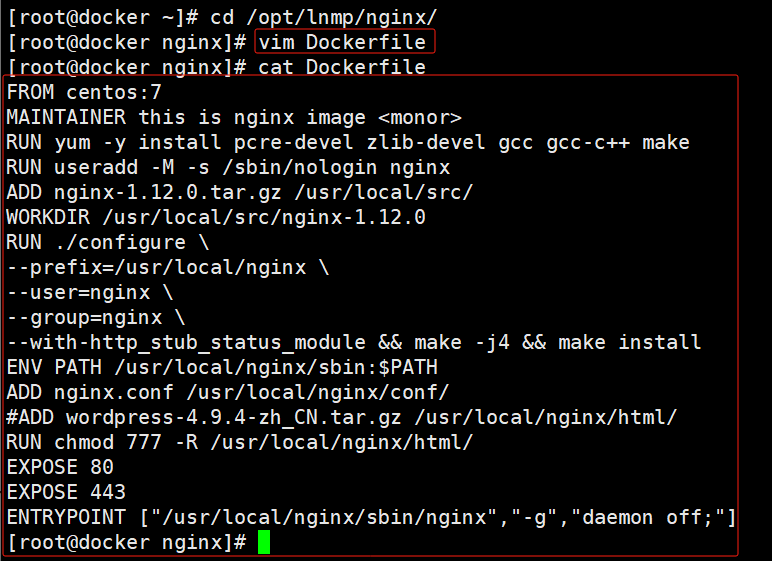
上传 nginx-1.12.0.tar.gz、wordpress-4.9.4-zh_CN.tar.gz 到 /opt/lnmp/nginx/ 目录中
解压 wordpress 到html
cd /opt/lnmp/nginx
mkdir /opt/lnmp/nginx/html
tar xf wordpress-4.9.4-zh_CN.tar.gz -C /opt/lnmp/nginx/html/
ll /opt/lnmp/nginx/html/
nginx.conf 文件
vim nginx.conf
i
#user nobody;
worker_processes 1;#error_log logs/error.log;
#error_log logs/error.log notice;
#error_log logs/error.log info;#pid logs/nginx.pid;events {worker_connections 1024;
}http {include mime.types;default_type application/octet-stream;#log_format main '$remote_addr - $remote_user [$time_local] "$request" '# '$status $body_bytes_sent "$http_referer" '# '"$http_user_agent" "$http_x_forwarded_for"';#access_log logs/access.log main;sendfile on;#tcp_nopush on;#keepalive_timeout 0;keepalive_timeout 65;#gzip on;server {listen 80;server_name localhost;charset utf-8;#access_log logs/host.access.log main;location / {root html;index index.html index.php;}#error_page 404 /404.html;# redirect server error pages to the static page /50x.html#error_page 500 502 503 504 /50x.html;location = /50x.html {root html;}# proxy the PHP scripts to Apache listening on 127.0.0.1:80##location ~ \.php$ {# proxy_pass http://127.0.0.1;#}# pass the PHP scripts to FastCGI server listening on 127.0.0.1:9000#location ~ \.php$ {root html;fastcgi_pass 172.18.0.30:9000;fastcgi_index index.php;fastcgi_param SCRIPT_FILENAME /usr/local/nginx/html$fastcgi_script_name;include fastcgi_params;}# deny access to .htaccess files, if Apache's document root# concurs with nginx's one##location ~ /\.ht {# deny all;#}}# another virtual host using mix of IP-, name-, and port-based configuration##server {# listen 8000;# listen somename:8080;# server_name somename alias another.alias;# location / {# root html;# index index.html index.htm;# }#}# HTTPS server##server {# listen 443 ssl;# server_name localhost;# ssl_certificate cert.pem;# ssl_certificate_key cert.key;# ssl_session_cache shared:SSL:1m;# ssl_session_timeout 5m;# ssl_ciphers HIGH:!aNULL:!MD5;# ssl_prefer_server_ciphers on;# location / {# root html;# index index.html index.htm;# }#}}

创建nginx镜像
docker build -t nginx:lnmp .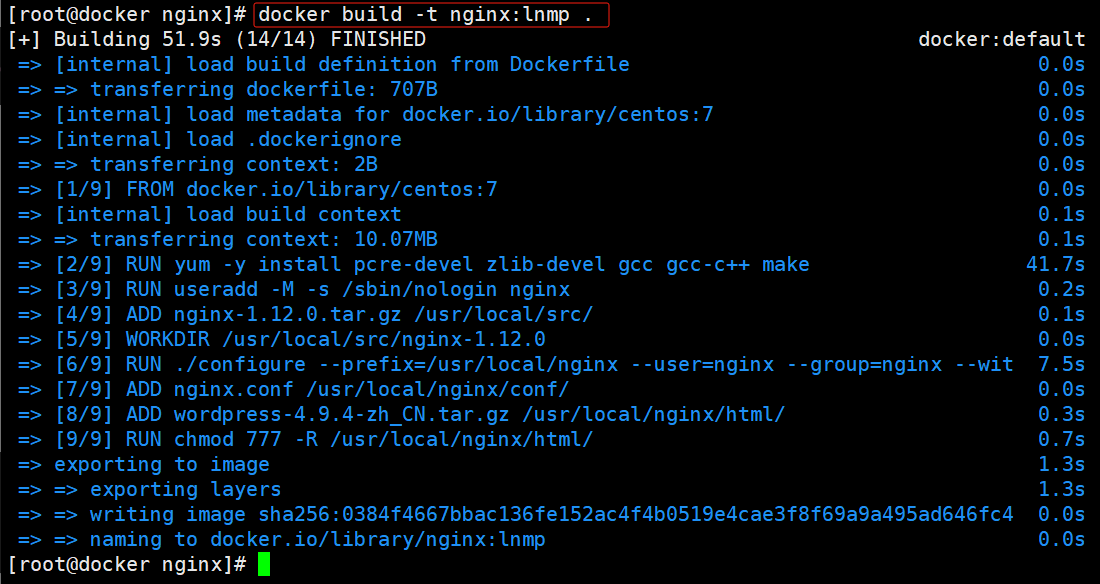
创建容器,设置端口和ip
docker run -d --name nginx -p 80:80 -v /opt/lnmp/nginx/html:/usr/local/nginx/html --net mynetwork --ip 172.18.0.10 nginx:lnmp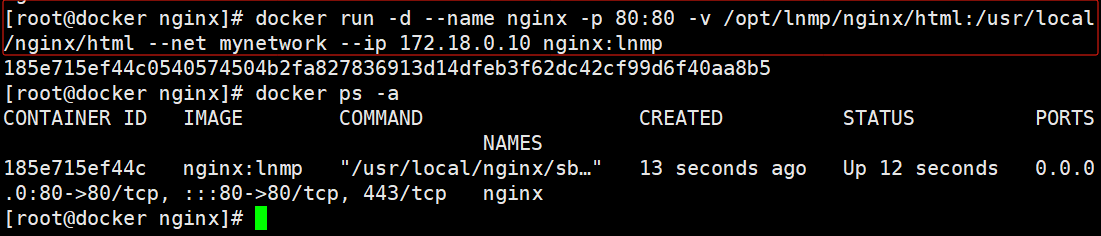
部署MySQL镜像(容器为:172.18.0.20)
创建mysqld目录
mkdir /opt/lnmp/mysqld
cd /opt/lnmp/mysqld/
上传 my.cnf、mysql-boost-5.7.20.tar.gz 到 /opt/lnmp/mysqld 目录中

编辑Dockerfile文件
vim /Dockerfile
i
FROM centos:7
MAINTAINER this is mysql image <monor>
RUN yum -y install gcc gcc-c++ ncurses ncurses-devel bison cmake make
ADD mysql-boost-5.7.20.tar.gz /usr/local/src/
WORKDIR /usr/local/src/mysql-5.7.20/
RUN cmake \
-DCMAKE_INSTALL_PREFIX=/usr/local/mysql \
-DMYSQL_UNIX_ADDR=/usr/local/mysql/mysql.sock \
-DSYSCONFDIR=/etc \
-DSYSTEMD_PID_DIR=/usr/local/mysql \
-DDEFAULT_CHARSET=utf8 \
-DDEFAULT_COLLATION=utf8_general_ci \
-DWITH_INNOBASE_STORAGE_ENGINE=1 \
-DWITH_ARCHIVE_STORAGE_ENGINE=1 \
-DWITH_BLACKHOLE_STORAGE_ENGINE=1 \
-DWITH_PERFSCHEMA_STORAGE_ENGINE=1 \
-DMYSQL_DATADIR=/usr/local/mysql/data \
-DWITH_BOOST=boost \
-DWITH_SYSTEMD=1 && make -j4 && make install
ADD my.cnf /etc/
ENV PATH=/usr/local/mysql/bin:/usr/local/mysql/lib:$PATH
RUN useradd -M -s /sbin/nologin mysql
RUN chown mysql:mysql /etc/my.cnf
RUN chown -R mysql:mysql /usr/local/mysql/
RUN /usr/local/mysql/bin/mysqld \
--initialize-insecure \
--user=mysql \
--basedir=/usr/local/mysql \
--datadir=/usr/local/mysql/data
EXPOSE 3306
CMD ["/usr/local/mysql/bin/mysqld"]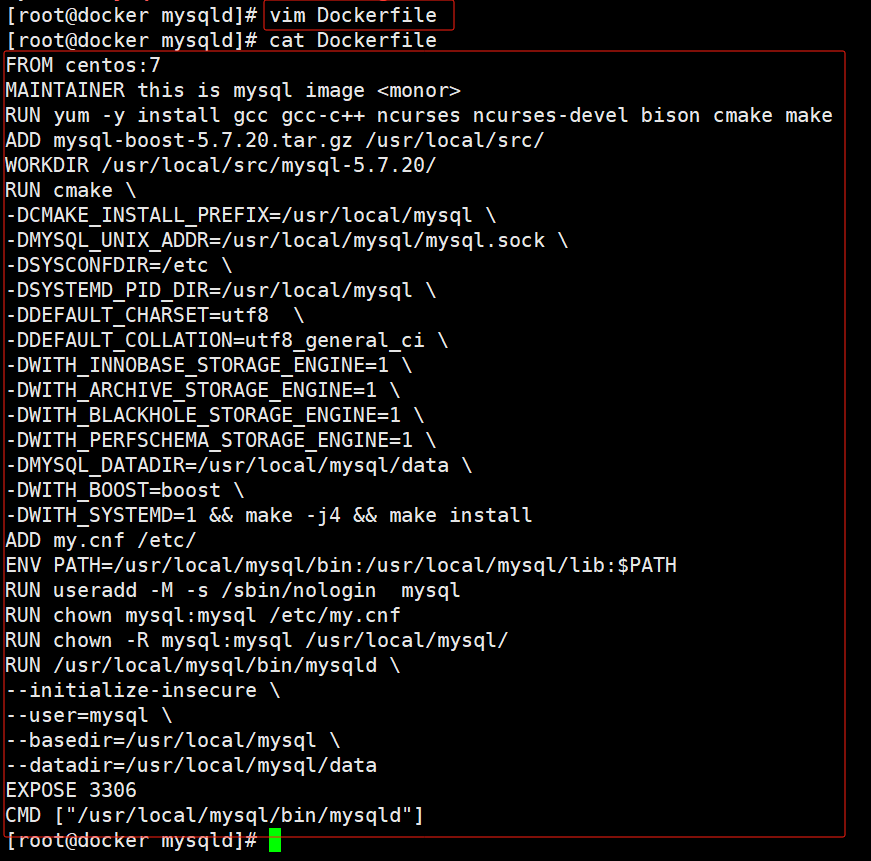
vim my.cnf 配置文件
vim my.cnf
i
[client]
port = 3306
socket = /usr/local/mysql/mysql.sock[mysql]
port = 3306
socket = /usr/local/mysql/mysql.sock[mysqld]
user = mysql
basedir = /usr/local/mysql
datadir = /usr/local/mysql/data
port = 3306
character_set_server=utf8
pid-file = /usr/local/mysql/mysqld.pid
socket = /usr/local/mysql/mysql.sock
server-id = 1sql_mode=NO_ENGINE_SUBSTITUTION,STRICT_TRANS_TABLES,NO_AUTO_CREATE_USER,NO_AUTO_VALUE_ON_ZERO,NO_ZERO_IN_DATE,NO_ZERO_DATE,ERROR_FOR_DIVISION_BY_ZERO,PIPES_AS_CONCAT,ANSI_QUOTES
创建mysql镜像
docker build -t mysql:lnmp .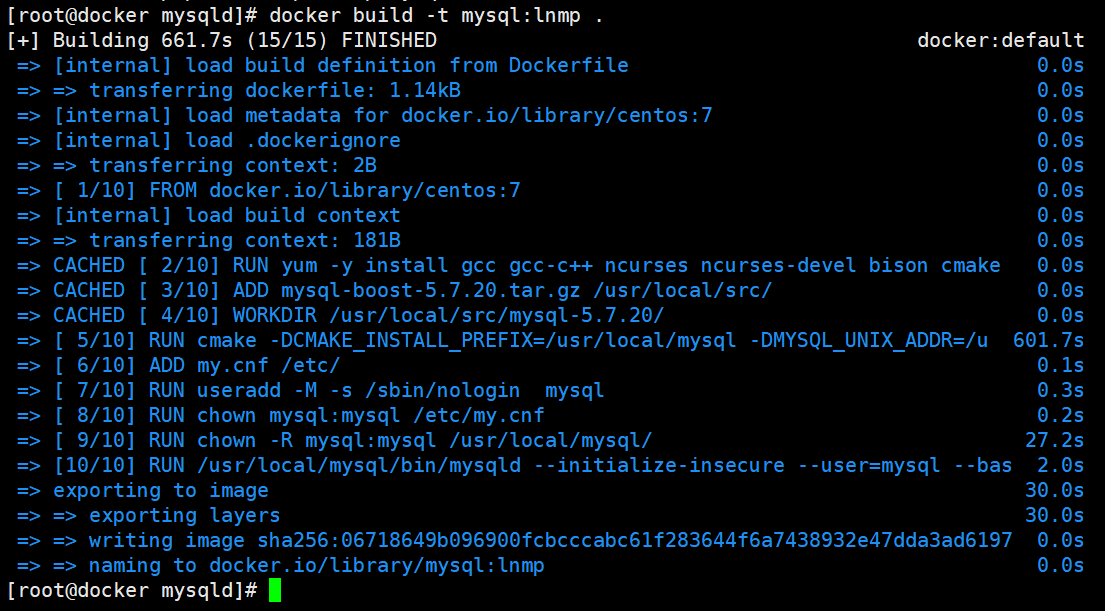
创建容器,设置共享目录和ip
docker run -d --name mysql --privileged -v /usr/local/mysql --net mynetwork --ip 172.18.0.20 mysql:lnmpdocker ps -a
部署PHP镜像(容器为:172.18.0.30)
创建php目录
mkdir /opt/lnmp/php
cd /opt/lnmp/php/
上传 php-7.1.10.tar.bz2 到/opt/lnmp/php 目录中

编辑Dockerfile文件
vim Dockerfile
i
FROM centos:7
MAINTAINER this is php image <monor>
RUN yum -y install gd \
libjpeg libjpeg-devel \
libpng libpng-devel \
freetype freetype-devel \
libxml2 libxml2-devel \
zlib zlib-devel \
curl curl-devel \
openssl openssl-devel \
gcc gcc-c++ make pcre-devel
RUN useradd -M -s /sbin/nologin nginx
ADD php-7.1.10.tar.bz2 /usr/local/src/
WORKDIR /usr/local/src/php-7.1.10
RUN ./configure \
--prefix=/usr/local/php \
--with-mysql-sock=/usr/local/mysql/mysql.sock \
--with-mysqli \
--with-zlib \
--with-curl \
--with-gd \
--with-jpeg-dir \
--with-png-dir \
--with-freetype-dir \
--with-openssl \
--enable-fpm \
--enable-mbstring \
--enable-xml \
--enable-session \
--enable-ftp \
--enable-pdo \
--enable-tokenizer \
--enable-zip && make -j4 && make install
ENV PATH /usr/local/php/bin:/usr/local/php/sbin:$PATH
ADD php.ini /usr/local/php/lib/
ADD php-fpm.conf /usr/local/php/etc/
ADD www.conf /usr/local/php/etc/php-fpm.d/
EXPOSE 9000
ENTRYPOINT [ "/usr/local/php/sbin/php-fpm", "-F" ]
php.ini 文件
vim php.ini
i
[PHP];;;;;;;;;;;;;;;;;;;
; About php.ini ;
;;;;;;;;;;;;;;;;;;;
; PHP's initialization file, generally called php.ini, is responsible for
; configuring many of the aspects of PHP's behavior.; PHP attempts to find and load this configuration from a number of locations.
; The following is a summary of its search order:
; 1. SAPI module specific location.
; 2. The PHPRC environment variable. (As of PHP 5.2.0)
; 3. A number of predefined registry keys on Windows (As of PHP 5.2.0)
; 4. Current working directory (except CLI)
; 5. The web server's directory (for SAPI modules), or directory of PHP
; (otherwise in Windows)
; 6. The directory from the --with-config-file-path compile time option, or the
; Windows directory (C:\windows or C:\winnt)
; See the PHP docs for more specific information.
; http://php.net/configuration.file; The syntax of the file is extremely simple. Whitespace and lines
; beginning with a semicolon are silently ignored (as you probably guessed).
; Section headers (e.g. [Foo]) are also silently ignored, even though
; they might mean something in the future.; Directives following the section heading [PATH=/www/mysite] only
; apply to PHP files in the /www/mysite directory. Directives
; following the section heading [HOST=www.example.com] only apply to
; PHP files served from www.example.com. Directives set in these
; special sections cannot be overridden by user-defined INI files or
; at runtime. Currently, [PATH=] and [HOST=] sections only work under
; CGI/FastCGI.
; http://php.net/ini.sections; Directives are specified using the following syntax:
; directive = value
; Directive names are *case sensitive* - foo=bar is different from FOO=bar.
; Directives are variables used to configure PHP or PHP extensions.
; There is no name validation. If PHP can't find an expected
; directive because it is not set or is mistyped, a default value will be used.; The value can be a string, a number, a PHP constant (e.g. E_ALL or M_PI), one
; of the INI constants (On, Off, True, False, Yes, No and None) or an expression
; (e.g. E_ALL & ~E_NOTICE), a quoted string ("bar"), or a reference to a
; previously set variable or directive (e.g. ${foo}); Expressions in the INI file are limited to bitwise operators and parentheses:
; | bitwise OR
; ^ bitwise XOR
; & bitwise AND
; ~ bitwise NOT
; ! boolean NOT; Boolean flags can be turned on using the values 1, On, True or Yes.
; They can be turned off using the values 0, Off, False or No.; An empty string can be denoted by simply not writing anything after the equal
; sign, or by using the None keyword:; foo = ; sets foo to an empty string
; foo = None ; sets foo to an empty string
; foo = "None" ; sets foo to the string 'None'; If you use constants in your value, and these constants belong to a
; dynamically loaded extension (either a PHP extension or a Zend extension),
; you may only use these constants *after* the line that loads the extension.;;;;;;;;;;;;;;;;;;;
; About this file ;
;;;;;;;;;;;;;;;;;;;
; PHP comes packaged with two INI files. One that is recommended to be used
; in production environments and one that is recommended to be used in
; development environments.; php.ini-production contains settings which hold security, performance and
; best practices at its core. But please be aware, these settings may break
; compatibility with older or less security conscience applications. We
; recommending using the production ini in production and testing environments.; php.ini-development is very similar to its production variant, except it is
; much more verbose when it comes to errors. We recommend using the
; development version only in development environments, as errors shown to
; application users can inadvertently leak otherwise secure information.; This is php.ini-development INI file.;;;;;;;;;;;;;;;;;;;
; Quick Reference ;
;;;;;;;;;;;;;;;;;;;
; The following are all the settings which are different in either the production
; or development versions of the INIs with respect to PHP's default behavior.
; Please see the actual settings later in the document for more details as to why
; we recommend these changes in PHP's behavior.; display_errors
; Default Value: On
; Development Value: On
; Production Value: Off; display_startup_errors
; Default Value: Off
; Development Value: On
; Production Value: Off; error_reporting
; Default Value: E_ALL & ~E_NOTICE & ~E_STRICT & ~E_DEPRECATED
; Development Value: E_ALL
; Production Value: E_ALL & ~E_DEPRECATED & ~E_STRICT; html_errors
; Default Value: On
; Development Value: On
; Production value: On; log_errors
; Default Value: Off
; Development Value: On
; Production Value: On; max_input_time
; Default Value: -1 (Unlimited)
; Development Value: 60 (60 seconds)
; Production Value: 60 (60 seconds); output_buffering
; Default Value: Off
; Development Value: 4096
; Production Value: 4096; register_argc_argv
; Default Value: On
; Development Value: Off
; Production Value: Off; request_order
; Default Value: None
; Development Value: "GP"
; Production Value: "GP"; session.gc_divisor
; Default Value: 100
; Development Value: 1000
; Production Value: 1000; session.sid_bits_per_character
; Default Value: 4
; Development Value: 5
; Production Value: 5; short_open_tag
; Default Value: On
; Development Value: Off
; Production Value: Off; track_errors
; Default Value: Off
; Development Value: On
; Production Value: Off; variables_order
; Default Value: "EGPCS"
; Development Value: "GPCS"
; Production Value: "GPCS";;;;;;;;;;;;;;;;;;;;
; php.ini Options ;
;;;;;;;;;;;;;;;;;;;;
; Name for user-defined php.ini (.htaccess) files. Default is ".user.ini"
;user_ini.filename = ".user.ini"; To disable this feature set this option to empty value
;user_ini.filename =; TTL for user-defined php.ini files (time-to-live) in seconds. Default is 300 seconds (5 minutes)
;user_ini.cache_ttl = 300;;;;;;;;;;;;;;;;;;;;
; Language Options ;
;;;;;;;;;;;;;;;;;;;;; Enable the PHP scripting language engine under Apache.
; http://php.net/engine
engine = On; This directive determines whether or not PHP will recognize code between
; <? and ?> tags as PHP source which should be processed as such. It is
; generally recommended that <?php and ?> should be used and that this feature
; should be disabled, as enabling it may result in issues when generating XML
; documents, however this remains supported for backward compatibility reasons.
; Note that this directive does not control the <?= shorthand tag, which can be
; used regardless of this directive.
; Default Value: On
; Development Value: Off
; Production Value: Off
; http://php.net/short-open-tag
short_open_tag = Off; The number of significant digits displayed in floating point numbers.
; http://php.net/precision
precision = 14; Output buffering is a mechanism for controlling how much output data
; (excluding headers and cookies) PHP should keep internally before pushing that
; data to the client. If your application's output exceeds this setting, PHP
; will send that data in chunks of roughly the size you specify.
; Turning on this setting and managing its maximum buffer size can yield some
; interesting side-effects depending on your application and web server.
; You may be able to send headers and cookies after you've already sent output
; through print or echo. You also may see performance benefits if your server is
; emitting less packets due to buffered output versus PHP streaming the output
; as it gets it. On production servers, 4096 bytes is a good setting for performance
; reasons.
; Note: Output buffering can also be controlled via Output Buffering Control
; functions.
; Possible Values:
; On = Enabled and buffer is unlimited. (Use with caution)
; Off = Disabled
; Integer = Enables the buffer and sets its maximum size in bytes.
; Note: This directive is hardcoded to Off for the CLI SAPI
; Default Value: Off
; Development Value: 4096
; Production Value: 4096
; http://php.net/output-buffering
output_buffering = 4096; You can redirect all of the output of your scripts to a function. For
; example, if you set output_handler to "mb_output_handler", character
; encoding will be transparently converted to the specified encoding.
; Setting any output handler automatically turns on output buffering.
; Note: People who wrote portable scripts should not depend on this ini
; directive. Instead, explicitly set the output handler using ob_start().
; Using this ini directive may cause problems unless you know what script
; is doing.
; Note: You cannot use both "mb_output_handler" with "ob_iconv_handler"
; and you cannot use both "ob_gzhandler" and "zlib.output_compression".
; Note: output_handler must be empty if this is set 'On' !!!!
; Instead you must use zlib.output_handler.
; http://php.net/output-handler
;output_handler =; URL rewriter function rewrites URL on the fly by using
; output buffer. You can set target tags by this configuration.
; "form" tag is special tag. It will add hidden input tag to pass values.
; Refer to session.trans_sid_tags for usage.
; Default Value: "form="
; Development Value: "form="
; Production Value: "form="
;url_rewriter.tags; URL rewriter will not rewrites absolute URL nor form by default. To enable
; absolute URL rewrite, allowed hosts must be defined at RUNTIME.
; Refer to session.trans_sid_hosts for more details.
; Default Value: ""
; Development Value: ""
; Production Value: ""
;url_rewriter.hosts; Transparent output compression using the zlib library
; Valid values for this option are 'off', 'on', or a specific buffer size
; to be used for compression (default is 4KB)
; Note: Resulting chunk size may vary due to nature of compression. PHP
; outputs chunks that are few hundreds bytes each as a result of
; compression. If you prefer a larger chunk size for better
; performance, enable output_buffering in addition.
; Note: You need to use zlib.output_handler instead of the standard
; output_handler, or otherwise the output will be corrupted.
; http://php.net/zlib.output-compression
zlib.output_compression = Off; http://php.net/zlib.output-compression-level
;zlib.output_compression_level = -1; You cannot specify additional output handlers if zlib.output_compression
; is activated here. This setting does the same as output_handler but in
; a different order.
; http://php.net/zlib.output-handler
;zlib.output_handler =; Implicit flush tells PHP to tell the output layer to flush itself
; automatically after every output block. This is equivalent to calling the
; PHP function flush() after each and every call to print() or echo() and each
; and every HTML block. Turning this option on has serious performance
; implications and is generally recommended for debugging purposes only.
; http://php.net/implicit-flush
; Note: This directive is hardcoded to On for the CLI SAPI
implicit_flush = Off; The unserialize callback function will be called (with the undefined class'
; name as parameter), if the unserializer finds an undefined class
; which should be instantiated. A warning appears if the specified function is
; not defined, or if the function doesn't include/implement the missing class.
; So only set this entry, if you really want to implement such a
; callback-function.
unserialize_callback_func =; When floats & doubles are serialized store serialize_precision significant
; digits after the floating point. The default value ensures that when floats
; are decoded with unserialize, the data will remain the same.
; The value is also used for json_encode when encoding double values.
; If -1 is used, then dtoa mode 0 is used which automatically select the best
; precision.
serialize_precision = -1; open_basedir, if set, limits all file operations to the defined directory
; and below. This directive makes most sense if used in a per-directory
; or per-virtualhost web server configuration file.
; http://php.net/open-basedir
;open_basedir =; This directive allows you to disable certain functions for security reasons.
; It receives a comma-delimited list of function names.
; http://php.net/disable-functions
disable_functions =; This directive allows you to disable certain classes for security reasons.
; It receives a comma-delimited list of class names.
; http://php.net/disable-classes
disable_classes =; Colors for Syntax Highlighting mode. Anything that's acceptable in
; <span style="color: ???????"> would work.
; http://php.net/syntax-highlighting
;highlight.string = #DD0000
;highlight.comment = #FF9900
;highlight.keyword = #007700
;highlight.default = #0000BB
;highlight.html = #000000; If enabled, the request will be allowed to complete even if the user aborts
; the request. Consider enabling it if executing long requests, which may end up
; being interrupted by the user or a browser timing out. PHP's default behavior
; is to disable this feature.
; http://php.net/ignore-user-abort
;ignore_user_abort = On; Determines the size of the realpath cache to be used by PHP. This value should
; be increased on systems where PHP opens many files to reflect the quantity of
; the file operations performed.
; http://php.net/realpath-cache-size
;realpath_cache_size = 4096k; Duration of time, in seconds for which to cache realpath information for a given
; file or directory. For systems with rarely changing files, consider increasing this
; value.
; http://php.net/realpath-cache-ttl
;realpath_cache_ttl = 120; Enables or disables the circular reference collector.
; http://php.net/zend.enable-gc
zend.enable_gc = On; If enabled, scripts may be written in encodings that are incompatible with
; the scanner. CP936, Big5, CP949 and Shift_JIS are the examples of such
; encodings. To use this feature, mbstring extension must be enabled.
; Default: Off
;zend.multibyte = Off; Allows to set the default encoding for the scripts. This value will be used
; unless "declare(encoding=...)" directive appears at the top of the script.
; Only affects if zend.multibyte is set.
; Default: ""
;zend.script_encoding =;;;;;;;;;;;;;;;;;
; Miscellaneous ;
;;;;;;;;;;;;;;;;;; Decides whether PHP may expose the fact that it is installed on the server
; (e.g. by adding its signature to the Web server header). It is no security
; threat in any way, but it makes it possible to determine whether you use PHP
; on your server or not.
; http://php.net/expose-php
expose_php = On;;;;;;;;;;;;;;;;;;;
; Resource Limits ;
;;;;;;;;;;;;;;;;;;;; Maximum execution time of each script, in seconds
; http://php.net/max-execution-time
; Note: This directive is hardcoded to 0 for the CLI SAPI
max_execution_time = 30; Maximum amount of time each script may spend parsing request data. It's a good
; idea to limit this time on productions servers in order to eliminate unexpectedly
; long running scripts.
; Note: This directive is hardcoded to -1 for the CLI SAPI
; Default Value: -1 (Unlimited)
; Development Value: 60 (60 seconds)
; Production Value: 60 (60 seconds)
; http://php.net/max-input-time
max_input_time = 60; Maximum input variable nesting level
; http://php.net/max-input-nesting-level
;max_input_nesting_level = 64; How many GET/POST/COOKIE input variables may be accepted
; max_input_vars = 1000; Maximum amount of memory a script may consume (128MB)
; http://php.net/memory-limit
memory_limit = 128M;;;;;;;;;;;;;;;;;;;;;;;;;;;;;;
; Error handling and logging ;
;;;;;;;;;;;;;;;;;;;;;;;;;;;;;;; This directive informs PHP of which errors, warnings and notices you would like
; it to take action for. The recommended way of setting values for this
; directive is through the use of the error level constants and bitwise
; operators. The error level constants are below here for convenience as well as
; some common settings and their meanings.
; By default, PHP is set to take action on all errors, notices and warnings EXCEPT
; those related to E_NOTICE and E_STRICT, which together cover best practices and
; recommended coding standards in PHP. For performance reasons, this is the
; recommend error reporting setting. Your production server shouldn't be wasting
; resources complaining about best practices and coding standards. That's what
; development servers and development settings are for.
; Note: The php.ini-development file has this setting as E_ALL. This
; means it pretty much reports everything which is exactly what you want during
; development and early testing.
;
; Error Level Constants:
; E_ALL - All errors and warnings (includes E_STRICT as of PHP 5.4.0)
; E_ERROR - fatal run-time errors
; E_RECOVERABLE_ERROR - almost fatal run-time errors
; E_WARNING - run-time warnings (non-fatal errors)
; E_PARSE - compile-time parse errors
; E_NOTICE - run-time notices (these are warnings which often result
; from a bug in your code, but it's possible that it was
; intentional (e.g., using an uninitialized variable and
; relying on the fact it is automatically initialized to an
; empty string)
; E_STRICT - run-time notices, enable to have PHP suggest changes
; to your code which will ensure the best interoperability
; and forward compatibility of your code
; E_CORE_ERROR - fatal errors that occur during PHP's initial startup
; E_CORE_WARNING - warnings (non-fatal errors) that occur during PHP's
; initial startup
; E_COMPILE_ERROR - fatal compile-time errors
; E_COMPILE_WARNING - compile-time warnings (non-fatal errors)
; E_USER_ERROR - user-generated error message
; E_USER_WARNING - user-generated warning message
; E_USER_NOTICE - user-generated notice message
; E_DEPRECATED - warn about code that will not work in future versions
; of PHP
; E_USER_DEPRECATED - user-generated deprecation warnings
;
; Common Values:
; E_ALL (Show all errors, warnings and notices including coding standards.)
; E_ALL & ~E_NOTICE (Show all errors, except for notices)
; E_ALL & ~E_NOTICE & ~E_STRICT (Show all errors, except for notices and coding standards warnings.)
; E_COMPILE_ERROR|E_RECOVERABLE_ERROR|E_ERROR|E_CORE_ERROR (Show only errors)
; Default Value: E_ALL & ~E_NOTICE & ~E_STRICT & ~E_DEPRECATED
; Development Value: E_ALL
; Production Value: E_ALL & ~E_DEPRECATED & ~E_STRICT
; http://php.net/error-reporting
error_reporting = E_ALL; This directive controls whether or not and where PHP will output errors,
; notices and warnings too. Error output is very useful during development, but
; it could be very dangerous in production environments. Depending on the code
; which is triggering the error, sensitive information could potentially leak
; out of your application such as database usernames and passwords or worse.
; For production environments, we recommend logging errors rather than
; sending them to STDOUT.
; Possible Values:
; Off = Do not display any errors
; stderr = Display errors to STDERR (affects only CGI/CLI binaries!)
; On or stdout = Display errors to STDOUT
; Default Value: On
; Development Value: On
; Production Value: Off
; http://php.net/display-errors
display_errors = On; The display of errors which occur during PHP's startup sequence are handled
; separately from display_errors. PHP's default behavior is to suppress those
; errors from clients. Turning the display of startup errors on can be useful in
; debugging configuration problems. We strongly recommend you
; set this to 'off' for production servers.
; Default Value: Off
; Development Value: On
; Production Value: Off
; http://php.net/display-startup-errors
display_startup_errors = On; Besides displaying errors, PHP can also log errors to locations such as a
; server-specific log, STDERR, or a location specified by the error_log
; directive found below. While errors should not be displayed on productions
; servers they should still be monitored and logging is a great way to do that.
; Default Value: Off
; Development Value: On
; Production Value: On
; http://php.net/log-errors
log_errors = On; Set maximum length of log_errors. In error_log information about the source is
; added. The default is 1024 and 0 allows to not apply any maximum length at all.
; http://php.net/log-errors-max-len
log_errors_max_len = 1024; Do not log repeated messages. Repeated errors must occur in same file on same
; line unless ignore_repeated_source is set true.
; http://php.net/ignore-repeated-errors
ignore_repeated_errors = Off; Ignore source of message when ignoring repeated messages. When this setting
; is On you will not log errors with repeated messages from different files or
; source lines.
; http://php.net/ignore-repeated-source
ignore_repeated_source = Off; If this parameter is set to Off, then memory leaks will not be shown (on
; stdout or in the log). This has only effect in a debug compile, and if
; error reporting includes E_WARNING in the allowed list
; http://php.net/report-memleaks
report_memleaks = On; This setting is on by default.
;report_zend_debug = 0; Store the last error/warning message in $php_errormsg (boolean). Setting this value
; to On can assist in debugging and is appropriate for development servers. It should
; however be disabled on production servers.
; Default Value: Off
; Development Value: On
; Production Value: Off
; http://php.net/track-errors
track_errors = On; Turn off normal error reporting and emit XML-RPC error XML
; http://php.net/xmlrpc-errors
;xmlrpc_errors = 0; An XML-RPC faultCode
;xmlrpc_error_number = 0; When PHP displays or logs an error, it has the capability of formatting the
; error message as HTML for easier reading. This directive controls whether
; the error message is formatted as HTML or not.
; Note: This directive is hardcoded to Off for the CLI SAPI
; Default Value: On
; Development Value: On
; Production value: On
; http://php.net/html-errors
html_errors = On; If html_errors is set to On *and* docref_root is not empty, then PHP
; produces clickable error messages that direct to a page describing the error
; or function causing the error in detail.
; You can download a copy of the PHP manual from http://php.net/docs
; and change docref_root to the base URL of your local copy including the
; leading '/'. You must also specify the file extension being used including
; the dot. PHP's default behavior is to leave these settings empty, in which
; case no links to documentation are generated.
; Note: Never use this feature for production boxes.
; http://php.net/docref-root
; Examples
;docref_root = "/phpmanual/"; http://php.net/docref-ext
;docref_ext = .html; String to output before an error message. PHP's default behavior is to leave
; this setting blank.
; http://php.net/error-prepend-string
; Example:
;error_prepend_string = "<span style='color: #ff0000'>"; String to output after an error message. PHP's default behavior is to leave
; this setting blank.
; http://php.net/error-append-string
; Example:
;error_append_string = "</span>"; Log errors to specified file. PHP's default behavior is to leave this value
; empty.
; http://php.net/error-log
; Example:
;error_log = php_errors.log
; Log errors to syslog (Event Log on Windows).
;error_log = syslog;windows.show_crt_warning
; Default value: 0
; Development value: 0
; Production value: 0;;;;;;;;;;;;;;;;;
; Data Handling ;
;;;;;;;;;;;;;;;;;; The separator used in PHP generated URLs to separate arguments.
; PHP's default setting is "&".
; http://php.net/arg-separator.output
; Example:
;arg_separator.output = "&"; List of separator(s) used by PHP to parse input URLs into variables.
; PHP's default setting is "&".
; NOTE: Every character in this directive is considered as separator!
; http://php.net/arg-separator.input
; Example:
;arg_separator.input = ";&"; This directive determines which super global arrays are registered when PHP
; starts up. G,P,C,E & S are abbreviations for the following respective super
; globals: GET, POST, COOKIE, ENV and SERVER. There is a performance penalty
; paid for the registration of these arrays and because ENV is not as commonly
; used as the others, ENV is not recommended on productions servers. You
; can still get access to the environment variables through getenv() should you
; need to.
; Default Value: "EGPCS"
; Development Value: "GPCS"
; Production Value: "GPCS";
; http://php.net/variables-order
variables_order = "GPCS"; This directive determines which super global data (G,P & C) should be
; registered into the super global array REQUEST. If so, it also determines
; the order in which that data is registered. The values for this directive
; are specified in the same manner as the variables_order directive,
; EXCEPT one. Leaving this value empty will cause PHP to use the value set
; in the variables_order directive. It does not mean it will leave the super
; globals array REQUEST empty.
; Default Value: None
; Development Value: "GP"
; Production Value: "GP"
; http://php.net/request-order
request_order = "GP"; This directive determines whether PHP registers $argv & $argc each time it
; runs. $argv contains an array of all the arguments passed to PHP when a script
; is invoked. $argc contains an integer representing the number of arguments
; that were passed when the script was invoked. These arrays are extremely
; useful when running scripts from the command line. When this directive is
; enabled, registering these variables consumes CPU cycles and memory each time
; a script is executed. For performance reasons, this feature should be disabled
; on production servers.
; Note: This directive is hardcoded to On for the CLI SAPI
; Default Value: On
; Development Value: Off
; Production Value: Off
; http://php.net/register-argc-argv
register_argc_argv = Off; When enabled, the ENV, REQUEST and SERVER variables are created when they're
; first used (Just In Time) instead of when the script starts. If these
; variables are not used within a script, having this directive on will result
; in a performance gain. The PHP directive register_argc_argv must be disabled
; for this directive to have any affect.
; http://php.net/auto-globals-jit
auto_globals_jit = On; Whether PHP will read the POST data.
; This option is enabled by default.
; Most likely, you won't want to disable this option globally. It causes $_POST
; and $_FILES to always be empty; the only way you will be able to read the
; POST data will be through the php://input stream wrapper. This can be useful
; to proxy requests or to process the POST data in a memory efficient fashion.
; http://php.net/enable-post-data-reading
;enable_post_data_reading = Off; Maximum size of POST data that PHP will accept.
; Its value may be 0 to disable the limit. It is ignored if POST data reading
; is disabled through enable_post_data_reading.
; http://php.net/post-max-size
post_max_size = 8M; Automatically add files before PHP document.
; http://php.net/auto-prepend-file
auto_prepend_file =; Automatically add files after PHP document.
; http://php.net/auto-append-file
auto_append_file =; By default, PHP will output a media type using the Content-Type header. To
; disable this, simply set it to be empty.
;
; PHP's built-in default media type is set to text/html.
; http://php.net/default-mimetype
default_mimetype = "text/html"; PHP's default character set is set to UTF-8.
; http://php.net/default-charset
default_charset = "UTF-8"; PHP internal character encoding is set to empty.
; If empty, default_charset is used.
; http://php.net/internal-encoding
;internal_encoding =; PHP input character encoding is set to empty.
; If empty, default_charset is used.
; http://php.net/input-encoding
;input_encoding =; PHP output character encoding is set to empty.
; If empty, default_charset is used.
; See also output_buffer.
; http://php.net/output-encoding
;output_encoding =;;;;;;;;;;;;;;;;;;;;;;;;;
; Paths and Directories ;
;;;;;;;;;;;;;;;;;;;;;;;;;; UNIX: "/path1:/path2"
;include_path = ".:/php/includes"
;
; Windows: "\path1;\path2"
;include_path = ".;c:\php\includes"
;
; PHP's default setting for include_path is ".;/path/to/php/pear"
; http://php.net/include-path; The root of the PHP pages, used only if nonempty.
; if PHP was not compiled with FORCE_REDIRECT, you SHOULD set doc_root
; if you are running php as a CGI under any web server (other than IIS)
; see documentation for security issues. The alternate is to use the
; cgi.force_redirect configuration below
; http://php.net/doc-root
doc_root =; The directory under which PHP opens the script using /~username used only
; if nonempty.
; http://php.net/user-dir
user_dir =; Directory in which the loadable extensions (modules) reside.
; http://php.net/extension-dir
; extension_dir = "./"
; On windows:
; extension_dir = "ext"; Directory where the temporary files should be placed.
; Defaults to the system default (see sys_get_temp_dir)
; sys_temp_dir = "/tmp"; Whether or not to enable the dl() function. The dl() function does NOT work
; properly in multithreaded servers, such as IIS or Zeus, and is automatically
; disabled on them.
; http://php.net/enable-dl
enable_dl = Off; cgi.force_redirect is necessary to provide security running PHP as a CGI under
; most web servers. Left undefined, PHP turns this on by default. You can
; turn it off here AT YOUR OWN RISK
; **You CAN safely turn this off for IIS, in fact, you MUST.**
; http://php.net/cgi.force-redirect
;cgi.force_redirect = 1; if cgi.nph is enabled it will force cgi to always sent Status: 200 with
; every request. PHP's default behavior is to disable this feature.
;cgi.nph = 1; if cgi.force_redirect is turned on, and you are not running under Apache or Netscape
; (iPlanet) web servers, you MAY need to set an environment variable name that PHP
; will look for to know it is OK to continue execution. Setting this variable MAY
; cause security issues, KNOW WHAT YOU ARE DOING FIRST.
; http://php.net/cgi.redirect-status-env
;cgi.redirect_status_env =; cgi.fix_pathinfo provides *real* PATH_INFO/PATH_TRANSLATED support for CGI. PHP's
; previous behaviour was to set PATH_TRANSLATED to SCRIPT_FILENAME, and to not grok
; what PATH_INFO is. For more information on PATH_INFO, see the cgi specs. Setting
; this to 1 will cause PHP CGI to fix its paths to conform to the spec. A setting
; of zero causes PHP to behave as before. Default is 1. You should fix your scripts
; to use SCRIPT_FILENAME rather than PATH_TRANSLATED.
; http://php.net/cgi.fix-pathinfo
;cgi.fix_pathinfo=1; if cgi.discard_path is enabled, the PHP CGI binary can safely be placed outside
; of the web tree and people will not be able to circumvent .htaccess security.
; http://php.net/cgi.dicard-path
;cgi.discard_path=1; FastCGI under IIS (on WINNT based OS) supports the ability to impersonate
; security tokens of the calling client. This allows IIS to define the
; security context that the request runs under. mod_fastcgi under Apache
; does not currently support this feature (03/17/2002)
; Set to 1 if running under IIS. Default is zero.
; http://php.net/fastcgi.impersonate
;fastcgi.impersonate = 1; Disable logging through FastCGI connection. PHP's default behavior is to enable
; this feature.
;fastcgi.logging = 0; cgi.rfc2616_headers configuration option tells PHP what type of headers to
; use when sending HTTP response code. If set to 0, PHP sends Status: header that
; is supported by Apache. When this option is set to 1, PHP will send
; RFC2616 compliant header.
; Default is zero.
; http://php.net/cgi.rfc2616-headers
;cgi.rfc2616_headers = 0; cgi.check_shebang_line controls whether CGI PHP checks for line starting with #!
; (shebang) at the top of the running script. This line might be needed if the
; script support running both as stand-alone script and via PHP CGI<. PHP in CGI
; mode skips this line and ignores its content if this directive is turned on.
; http://php.net/cgi.check-shebang-line
;cgi.check_shebang_line=1;;;;;;;;;;;;;;;;
; File Uploads ;
;;;;;;;;;;;;;;;;; Whether to allow HTTP file uploads.
; http://php.net/file-uploads
file_uploads = On; Temporary directory for HTTP uploaded files (will use system default if not
; specified).
; http://php.net/upload-tmp-dir
;upload_tmp_dir =; Maximum allowed size for uploaded files.
; http://php.net/upload-max-filesize
upload_max_filesize = 2M; Maximum number of files that can be uploaded via a single request
max_file_uploads = 20;;;;;;;;;;;;;;;;;;
; Fopen wrappers ;
;;;;;;;;;;;;;;;;;;; Whether to allow the treatment of URLs (like http:// or ftp://) as files.
; http://php.net/allow-url-fopen
allow_url_fopen = On; Whether to allow include/require to open URLs (like http:// or ftp://) as files.
; http://php.net/allow-url-include
allow_url_include = Off; Define the anonymous ftp password (your email address). PHP's default setting
; for this is empty.
; http://php.net/from
;from="john@doe.com"; Define the User-Agent string. PHP's default setting for this is empty.
; http://php.net/user-agent
;user_agent="PHP"; Default timeout for socket based streams (seconds)
; http://php.net/default-socket-timeout
default_socket_timeout = 60; If your scripts have to deal with files from Macintosh systems,
; or you are running on a Mac and need to deal with files from
; unix or win32 systems, setting this flag will cause PHP to
; automatically detect the EOL character in those files so that
; fgets() and file() will work regardless of the source of the file.
; http://php.net/auto-detect-line-endings
;auto_detect_line_endings = Off;;;;;;;;;;;;;;;;;;;;;;
; Dynamic Extensions ;
;;;;;;;;;;;;;;;;;;;;;;; If you wish to have an extension loaded automatically, use the following
; syntax:
;
; extension=modulename.extension
;
; For example, on Windows:
;
; extension=msql.dll
;
; ... or under UNIX:
;
; extension=msql.so
;
; ... or with a path:
;
; extension=/path/to/extension/msql.so
;
; If you only provide the name of the extension, PHP will look for it in its
; default extension directory.
;
; Windows Extensions
; Note that ODBC support is built in, so no dll is needed for it.
; Note that many DLL files are located in the extensions/ (PHP 4) ext/ (PHP 5+)
; extension folders as well as the separate PECL DLL download (PHP 5+).
; Be sure to appropriately set the extension_dir directive.
;
;extension=php_bz2.dll
;extension=php_curl.dll
;extension=php_fileinfo.dll
;extension=php_ftp.dll
;extension=php_gd2.dll
;extension=php_gettext.dll
;extension=php_gmp.dll
;extension=php_intl.dll
;extension=php_imap.dll
;extension=php_interbase.dll
;extension=php_ldap.dll
;extension=php_mbstring.dll
;extension=php_exif.dll ; Must be after mbstring as it depends on it
;extension=php_mysqli.dll
;extension=php_oci8_12c.dll ; Use with Oracle Database 12c Instant Client
;extension=php_openssl.dll
;extension=php_pdo_firebird.dll
;extension=php_pdo_mysql.dll
;extension=php_pdo_oci.dll
;extension=php_pdo_odbc.dll
;extension=php_pdo_pgsql.dll
;extension=php_pdo_sqlite.dll
;extension=php_pgsql.dll
;extension=php_shmop.dll; The MIBS data available in the PHP distribution must be installed.
; See http://www.php.net/manual/en/snmp.installation.php
;extension=php_snmp.dll;extension=php_soap.dll
;extension=php_sockets.dll
;extension=php_sqlite3.dll
;extension=php_tidy.dll
;extension=php_xmlrpc.dll
;extension=php_xsl.dll;;;;;;;;;;;;;;;;;;;
; Module Settings ;
;;;;;;;;;;;;;;;;;;;[CLI Server]
; Whether the CLI web server uses ANSI color coding in its terminal output.
cli_server.color = On[Date]
; Defines the default timezone used by the date functions
; http://php.net/date.timezone
date.timezone = Asia/Shanghai; http://php.net/date.default-latitude
;date.default_latitude = 31.7667; http://php.net/date.default-longitude
;date.default_longitude = 35.2333; http://php.net/date.sunrise-zenith
;date.sunrise_zenith = 90.583333; http://php.net/date.sunset-zenith
;date.sunset_zenith = 90.583333[filter]
; http://php.net/filter.default
;filter.default = unsafe_raw; http://php.net/filter.default-flags
;filter.default_flags =[iconv]
; Use of this INI entry is deprecated, use global input_encoding instead.
; If empty, default_charset or input_encoding or iconv.input_encoding is used.
; The precedence is: default_charset < intput_encoding < iconv.input_encoding
;iconv.input_encoding =; Use of this INI entry is deprecated, use global internal_encoding instead.
; If empty, default_charset or internal_encoding or iconv.internal_encoding is used.
; The precedence is: default_charset < internal_encoding < iconv.internal_encoding
;iconv.internal_encoding =; Use of this INI entry is deprecated, use global output_encoding instead.
; If empty, default_charset or output_encoding or iconv.output_encoding is used.
; The precedence is: default_charset < output_encoding < iconv.output_encoding
; To use an output encoding conversion, iconv's output handler must be set
; otherwise output encoding conversion cannot be performed.
;iconv.output_encoding =[intl]
;intl.default_locale =
; This directive allows you to produce PHP errors when some error
; happens within intl functions. The value is the level of the error produced.
; Default is 0, which does not produce any errors.
;intl.error_level = E_WARNING
;intl.use_exceptions = 0[sqlite3]
;sqlite3.extension_dir =[Pcre]
;PCRE library backtracking limit.
; http://php.net/pcre.backtrack-limit
;pcre.backtrack_limit=100000;PCRE library recursion limit.
;Please note that if you set this value to a high number you may consume all
;the available process stack and eventually crash PHP (due to reaching the
;stack size limit imposed by the Operating System).
; http://php.net/pcre.recursion-limit
;pcre.recursion_limit=100000;Enables or disables JIT compilation of patterns. This requires the PCRE
;library to be compiled with JIT support.
;pcre.jit=1[Pdo]
; Whether to pool ODBC connections. Can be one of "strict", "relaxed" or "off"
; http://php.net/pdo-odbc.connection-pooling
;pdo_odbc.connection_pooling=strict;pdo_odbc.db2_instance_name[Pdo_mysql]
; If mysqlnd is used: Number of cache slots for the internal result set cache
; http://php.net/pdo_mysql.cache_size
pdo_mysql.cache_size = 2000; Default socket name for local MySQL connects. If empty, uses the built-in
; MySQL defaults.
; http://php.net/pdo_mysql.default-socket
pdo_mysql.default_socket=[Phar]
; http://php.net/phar.readonly
;phar.readonly = On; http://php.net/phar.require-hash
;phar.require_hash = On;phar.cache_list =[mail function]
; For Win32 only.
; http://php.net/smtp
SMTP = localhost
; http://php.net/smtp-port
smtp_port = 25; For Win32 only.
; http://php.net/sendmail-from
;sendmail_from = me@example.com; For Unix only. You may supply arguments as well (default: "sendmail -t -i").
; http://php.net/sendmail-path
;sendmail_path =; Force the addition of the specified parameters to be passed as extra parameters
; to the sendmail binary. These parameters will always replace the value of
; the 5th parameter to mail().
;mail.force_extra_parameters =; Add X-PHP-Originating-Script: that will include uid of the script followed by the filename
mail.add_x_header = On; The path to a log file that will log all mail() calls. Log entries include
; the full path of the script, line number, To address and headers.
;mail.log =
; Log mail to syslog (Event Log on Windows).
;mail.log = syslog[SQL]
; http://php.net/sql.safe-mode
sql.safe_mode = Off[ODBC]
; http://php.net/odbc.default-db
;odbc.default_db = Not yet implemented; http://php.net/odbc.default-user
;odbc.default_user = Not yet implemented; http://php.net/odbc.default-pw
;odbc.default_pw = Not yet implemented; Controls the ODBC cursor model.
; Default: SQL_CURSOR_STATIC (default).
;odbc.default_cursortype; Allow or prevent persistent links.
; http://php.net/odbc.allow-persistent
odbc.allow_persistent = On; Check that a connection is still valid before reuse.
; http://php.net/odbc.check-persistent
odbc.check_persistent = On; Maximum number of persistent links. -1 means no limit.
; http://php.net/odbc.max-persistent
odbc.max_persistent = -1; Maximum number of links (persistent + non-persistent). -1 means no limit.
; http://php.net/odbc.max-links
odbc.max_links = -1; Handling of LONG fields. Returns number of bytes to variables. 0 means
; passthru.
; http://php.net/odbc.defaultlrl
odbc.defaultlrl = 4096; Handling of binary data. 0 means passthru, 1 return as is, 2 convert to char.
; See the documentation on odbc_binmode and odbc_longreadlen for an explanation
; of odbc.defaultlrl and odbc.defaultbinmode
; http://php.net/odbc.defaultbinmode
odbc.defaultbinmode = 1;birdstep.max_links = -1[Interbase]
; Allow or prevent persistent links.
ibase.allow_persistent = 1; Maximum number of persistent links. -1 means no limit.
ibase.max_persistent = -1; Maximum number of links (persistent + non-persistent). -1 means no limit.
ibase.max_links = -1; Default database name for ibase_connect().
;ibase.default_db =; Default username for ibase_connect().
;ibase.default_user =; Default password for ibase_connect().
;ibase.default_password =; Default charset for ibase_connect().
;ibase.default_charset =; Default timestamp format.
ibase.timestampformat = "%Y-%m-%d %H:%M:%S"; Default date format.
ibase.dateformat = "%Y-%m-%d"; Default time format.
ibase.timeformat = "%H:%M:%S"[MySQLi]; Maximum number of persistent links. -1 means no limit.
; http://php.net/mysqli.max-persistent
mysqli.max_persistent = -1; Allow accessing, from PHP's perspective, local files with LOAD DATA statements
; http://php.net/mysqli.allow_local_infile
;mysqli.allow_local_infile = On; Allow or prevent persistent links.
; http://php.net/mysqli.allow-persistent
mysqli.allow_persistent = On; Maximum number of links. -1 means no limit.
; http://php.net/mysqli.max-links
mysqli.max_links = -1; If mysqlnd is used: Number of cache slots for the internal result set cache
; http://php.net/mysqli.cache_size
mysqli.cache_size = 2000; Default port number for mysqli_connect(). If unset, mysqli_connect() will use
; the $MYSQL_TCP_PORT or the mysql-tcp entry in /etc/services or the
; compile-time value defined MYSQL_PORT (in that order). Win32 will only look
; at MYSQL_PORT.
; http://php.net/mysqli.default-port
mysqli.default_port = 3306; Default socket name for local MySQL connects. If empty, uses the built-in
; MySQL defaults.
; http://php.net/mysqli.default-socket
mysqli.default_socket = /usr/local/mysql/mysql.sock; Default host for mysql_connect() (doesn't apply in safe mode).
; http://php.net/mysqli.default-host
mysqli.default_host =; Default user for mysql_connect() (doesn't apply in safe mode).
; http://php.net/mysqli.default-user
mysqli.default_user =; Default password for mysqli_connect() (doesn't apply in safe mode).
; Note that this is generally a *bad* idea to store passwords in this file.
; *Any* user with PHP access can run 'echo get_cfg_var("mysqli.default_pw")
; and reveal this password! And of course, any users with read access to this
; file will be able to reveal the password as well.
; http://php.net/mysqli.default-pw
mysqli.default_pw =; Allow or prevent reconnect
mysqli.reconnect = Off[mysqlnd]
; Enable / Disable collection of general statistics by mysqlnd which can be
; used to tune and monitor MySQL operations.
; http://php.net/mysqlnd.collect_statistics
mysqlnd.collect_statistics = On; Enable / Disable collection of memory usage statistics by mysqlnd which can be
; used to tune and monitor MySQL operations.
; http://php.net/mysqlnd.collect_memory_statistics
mysqlnd.collect_memory_statistics = On; Records communication from all extensions using mysqlnd to the specified log
; file.
; http://php.net/mysqlnd.debug
;mysqlnd.debug =; Defines which queries will be logged.
; http://php.net/mysqlnd.log_mask
;mysqlnd.log_mask = 0; Default size of the mysqlnd memory pool, which is used by result sets.
; http://php.net/mysqlnd.mempool_default_size
;mysqlnd.mempool_default_size = 16000; Size of a pre-allocated buffer used when sending commands to MySQL in bytes.
; http://php.net/mysqlnd.net_cmd_buffer_size
;mysqlnd.net_cmd_buffer_size = 2048; Size of a pre-allocated buffer used for reading data sent by the server in
; bytes.
; http://php.net/mysqlnd.net_read_buffer_size
;mysqlnd.net_read_buffer_size = 32768; Timeout for network requests in seconds.
; http://php.net/mysqlnd.net_read_timeout
;mysqlnd.net_read_timeout = 31536000; SHA-256 Authentication Plugin related. File with the MySQL server public RSA
; key.
; http://php.net/mysqlnd.sha256_server_public_key
;mysqlnd.sha256_server_public_key =[OCI8]; Connection: Enables privileged connections using external
; credentials (OCI_SYSOPER, OCI_SYSDBA)
; http://php.net/oci8.privileged-connect
;oci8.privileged_connect = Off; Connection: The maximum number of persistent OCI8 connections per
; process. Using -1 means no limit.
; http://php.net/oci8.max-persistent
;oci8.max_persistent = -1; Connection: The maximum number of seconds a process is allowed to
; maintain an idle persistent connection. Using -1 means idle
; persistent connections will be maintained forever.
; http://php.net/oci8.persistent-timeout
;oci8.persistent_timeout = -1; Connection: The number of seconds that must pass before issuing a
; ping during oci_pconnect() to check the connection validity. When
; set to 0, each oci_pconnect() will cause a ping. Using -1 disables
; pings completely.
; http://php.net/oci8.ping-interval
;oci8.ping_interval = 60; Connection: Set this to a user chosen connection class to be used
; for all pooled server requests with Oracle 11g Database Resident
; Connection Pooling (DRCP). To use DRCP, this value should be set to
; the same string for all web servers running the same application,
; the database pool must be configured, and the connection string must
; specify to use a pooled server.
;oci8.connection_class =; High Availability: Using On lets PHP receive Fast Application
; Notification (FAN) events generated when a database node fails. The
; database must also be configured to post FAN events.
;oci8.events = Off; Tuning: This option enables statement caching, and specifies how
; many statements to cache. Using 0 disables statement caching.
; http://php.net/oci8.statement-cache-size
;oci8.statement_cache_size = 20; Tuning: Enables statement prefetching and sets the default number of
; rows that will be fetched automatically after statement execution.
; http://php.net/oci8.default-prefetch
;oci8.default_prefetch = 100; Compatibility. Using On means oci_close() will not close
; oci_connect() and oci_new_connect() connections.
; http://php.net/oci8.old-oci-close-semantics
;oci8.old_oci_close_semantics = Off[PostgreSQL]
; Allow or prevent persistent links.
; http://php.net/pgsql.allow-persistent
pgsql.allow_persistent = On; Detect broken persistent links always with pg_pconnect().
; Auto reset feature requires a little overheads.
; http://php.net/pgsql.auto-reset-persistent
pgsql.auto_reset_persistent = Off; Maximum number of persistent links. -1 means no limit.
; http://php.net/pgsql.max-persistent
pgsql.max_persistent = -1; Maximum number of links (persistent+non persistent). -1 means no limit.
; http://php.net/pgsql.max-links
pgsql.max_links = -1; Ignore PostgreSQL backends Notice message or not.
; Notice message logging require a little overheads.
; http://php.net/pgsql.ignore-notice
pgsql.ignore_notice = 0; Log PostgreSQL backends Notice message or not.
; Unless pgsql.ignore_notice=0, module cannot log notice message.
; http://php.net/pgsql.log-notice
pgsql.log_notice = 0[bcmath]
; Number of decimal digits for all bcmath functions.
; http://php.net/bcmath.scale
bcmath.scale = 0[browscap]
; http://php.net/browscap
;browscap = extra/browscap.ini[Session]
; Handler used to store/retrieve data.
; http://php.net/session.save-handler
session.save_handler = files; Argument passed to save_handler. In the case of files, this is the path
; where data files are stored. Note: Windows users have to change this
; variable in order to use PHP's session functions.
;
; The path can be defined as:
;
; session.save_path = "N;/path"
;
; where N is an integer. Instead of storing all the session files in
; /path, what this will do is use subdirectories N-levels deep, and
; store the session data in those directories. This is useful if
; your OS has problems with many files in one directory, and is
; a more efficient layout for servers that handle many sessions.
;
; NOTE 1: PHP will not create this directory structure automatically.
; You can use the script in the ext/session dir for that purpose.
; NOTE 2: See the section on garbage collection below if you choose to
; use subdirectories for session storage
;
; The file storage module creates files using mode 600 by default.
; You can change that by using
;
; session.save_path = "N;MODE;/path"
;
; where MODE is the octal representation of the mode. Note that this
; does not overwrite the process's umask.
; http://php.net/session.save-path
;session.save_path = "/tmp"; Whether to use strict session mode.
; Strict session mode does not accept uninitialized session ID and regenerate
; session ID if browser sends uninitialized session ID. Strict mode protects
; applications from session fixation via session adoption vulnerability. It is
; disabled by default for maximum compatibility, but enabling it is encouraged.
; https://wiki.php.net/rfc/strict_sessions
session.use_strict_mode = 0; Whether to use cookies.
; http://php.net/session.use-cookies
session.use_cookies = 1; http://php.net/session.cookie-secure
;session.cookie_secure =; This option forces PHP to fetch and use a cookie for storing and maintaining
; the session id. We encourage this operation as it's very helpful in combating
; session hijacking when not specifying and managing your own session id. It is
; not the be-all and end-all of session hijacking defense, but it's a good start.
; http://php.net/session.use-only-cookies
session.use_only_cookies = 1; Name of the session (used as cookie name).
; http://php.net/session.name
session.name = PHPSESSID; Initialize session on request startup.
; http://php.net/session.auto-start
session.auto_start = 0; Lifetime in seconds of cookie or, if 0, until browser is restarted.
; http://php.net/session.cookie-lifetime
session.cookie_lifetime = 0; The path for which the cookie is valid.
; http://php.net/session.cookie-path
session.cookie_path = /; The domain for which the cookie is valid.
; http://php.net/session.cookie-domain
session.cookie_domain =; Whether or not to add the httpOnly flag to the cookie, which makes it inaccessible to browser scripting languages such as JavaScript.
; http://php.net/session.cookie-httponly
session.cookie_httponly =; Handler used to serialize data. php is the standard serializer of PHP.
; http://php.net/session.serialize-handler
session.serialize_handler = php; Defines the probability that the 'garbage collection' process is started
; on every session initialization. The probability is calculated by using
; gc_probability/gc_divisor. Where session.gc_probability is the numerator
; and gc_divisor is the denominator in the equation. Setting this value to 1
; when the session.gc_divisor value is 100 will give you approximately a 1% chance
; the gc will run on any give request.
; Default Value: 1
; Development Value: 1
; Production Value: 1
; http://php.net/session.gc-probability
session.gc_probability = 1; Defines the probability that the 'garbage collection' process is started on every
; session initialization. The probability is calculated by using the following equation:
; gc_probability/gc_divisor. Where session.gc_probability is the numerator and
; session.gc_divisor is the denominator in the equation. Setting this value to 1
; when the session.gc_divisor value is 100 will give you approximately a 1% chance
; the gc will run on any give request. Increasing this value to 1000 will give you
; a 0.1% chance the gc will run on any give request. For high volume production servers,
; this is a more efficient approach.
; Default Value: 100
; Development Value: 1000
; Production Value: 1000
; http://php.net/session.gc-divisor
session.gc_divisor = 1000; After this number of seconds, stored data will be seen as 'garbage' and
; cleaned up by the garbage collection process.
; http://php.net/session.gc-maxlifetime
session.gc_maxlifetime = 1440; NOTE: If you are using the subdirectory option for storing session files
; (see session.save_path above), then garbage collection does *not*
; happen automatically. You will need to do your own garbage
; collection through a shell script, cron entry, or some other method.
; For example, the following script would is the equivalent of
; setting session.gc_maxlifetime to 1440 (1440 seconds = 24 minutes):
; find /path/to/sessions -cmin +24 -type f | xargs rm; Check HTTP Referer to invalidate externally stored URLs containing ids.
; HTTP_REFERER has to contain this substring for the session to be
; considered as valid.
; http://php.net/session.referer-check
session.referer_check =; Set to {nocache,private,public,} to determine HTTP caching aspects
; or leave this empty to avoid sending anti-caching headers.
; http://php.net/session.cache-limiter
session.cache_limiter = nocache; Document expires after n minutes.
; http://php.net/session.cache-expire
session.cache_expire = 180; trans sid support is disabled by default.
; Use of trans sid may risk your users' security.
; Use this option with caution.
; - User may send URL contains active session ID
; to other person via. email/irc/etc.
; - URL that contains active session ID may be stored
; in publicly accessible computer.
; - User may access your site with the same session ID
; always using URL stored in browser's history or bookmarks.
; http://php.net/session.use-trans-sid
session.use_trans_sid = 0; Set session ID character length. This value could be between 22 to 256.
; Shorter length than default is supported only for compatibility reason.
; Users should use 32 or more chars.
; http://php.net/session.sid-length
; Default Value: 32
; Development Value: 26
; Production Value: 26
session.sid_length = 26; The URL rewriter will look for URLs in a defined set of HTML tags.
; <form> is special; if you include them here, the rewriter will
; add a hidden <input> field with the info which is otherwise appended
; to URLs. <form> tag's action attribute URL will not be modified
; unless it is specified.
; Note that all valid entries require a "=", even if no value follows.
; Default Value: "a=href,area=href,frame=src,form="
; Development Value: "a=href,area=href,frame=src,form="
; Production Value: "a=href,area=href,frame=src,form="
; http://php.net/url-rewriter.tags
session.trans_sid_tags = "a=href,area=href,frame=src,form="; URL rewriter does not rewrite absolute URLs by default.
; To enable rewrites for absolute pathes, target hosts must be specified
; at RUNTIME. i.e. use ini_set()
; <form> tags is special. PHP will check action attribute's URL regardless
; of session.trans_sid_tags setting.
; If no host is defined, HTTP_HOST will be used for allowed host.
; Example value: php.net,www.php.net,wiki.php.net
; Use "," for multiple hosts. No spaces are allowed.
; Default Value: ""
; Development Value: ""
; Production Value: ""
;session.trans_sid_hosts=""; Define how many bits are stored in each character when converting
; the binary hash data to something readable.
; Possible values:
; 4 (4 bits: 0-9, a-f)
; 5 (5 bits: 0-9, a-v)
; 6 (6 bits: 0-9, a-z, A-Z, "-", ",")
; Default Value: 4
; Development Value: 5
; Production Value: 5
; http://php.net/session.hash-bits-per-character
session.sid_bits_per_character = 5; Enable upload progress tracking in $_SESSION
; Default Value: On
; Development Value: On
; Production Value: On
; http://php.net/session.upload-progress.enabled
;session.upload_progress.enabled = On; Cleanup the progress information as soon as all POST data has been read
; (i.e. upload completed).
; Default Value: On
; Development Value: On
; Production Value: On
; http://php.net/session.upload-progress.cleanup
;session.upload_progress.cleanup = On; A prefix used for the upload progress key in $_SESSION
; Default Value: "upload_progress_"
; Development Value: "upload_progress_"
; Production Value: "upload_progress_"
; http://php.net/session.upload-progress.prefix
;session.upload_progress.prefix = "upload_progress_"; The index name (concatenated with the prefix) in $_SESSION
; containing the upload progress information
; Default Value: "PHP_SESSION_UPLOAD_PROGRESS"
; Development Value: "PHP_SESSION_UPLOAD_PROGRESS"
; Production Value: "PHP_SESSION_UPLOAD_PROGRESS"
; http://php.net/session.upload-progress.name
;session.upload_progress.name = "PHP_SESSION_UPLOAD_PROGRESS"; How frequently the upload progress should be updated.
; Given either in percentages (per-file), or in bytes
; Default Value: "1%"
; Development Value: "1%"
; Production Value: "1%"
; http://php.net/session.upload-progress.freq
;session.upload_progress.freq = "1%"; The minimum delay between updates, in seconds
; Default Value: 1
; Development Value: 1
; Production Value: 1
; http://php.net/session.upload-progress.min-freq
;session.upload_progress.min_freq = "1"; Only write session data when session data is changed. Enabled by default.
; http://php.net/session.lazy-write
;session.lazy_write = On[Assertion]
; Switch whether to compile assertions at all (to have no overhead at run-time)
; -1: Do not compile at all
; 0: Jump over assertion at run-time
; 1: Execute assertions
; Changing from or to a negative value is only possible in php.ini! (For turning assertions on and off at run-time, see assert.active, when zend.assertions = 1)
; Default Value: 1
; Development Value: 1
; Production Value: -1
; http://php.net/zend.assertions
zend.assertions = 1; Assert(expr); active by default.
; http://php.net/assert.active
;assert.active = On; Throw an AssertationException on failed assertions
; http://php.net/assert.exception
;assert.exception = On; Issue a PHP warning for each failed assertion. (Overridden by assert.exception if active)
; http://php.net/assert.warning
;assert.warning = On; Don't bail out by default.
; http://php.net/assert.bail
;assert.bail = Off; User-function to be called if an assertion fails.
; http://php.net/assert.callback
;assert.callback = 0; Eval the expression with current error_reporting(). Set to true if you want
; error_reporting(0) around the eval().
; http://php.net/assert.quiet-eval
;assert.quiet_eval = 0[COM]
; path to a file containing GUIDs, IIDs or filenames of files with TypeLibs
; http://php.net/com.typelib-file
;com.typelib_file =; allow Distributed-COM calls
; http://php.net/com.allow-dcom
;com.allow_dcom = true; autoregister constants of a components typlib on com_load()
; http://php.net/com.autoregister-typelib
;com.autoregister_typelib = true; register constants casesensitive
; http://php.net/com.autoregister-casesensitive
;com.autoregister_casesensitive = false; show warnings on duplicate constant registrations
; http://php.net/com.autoregister-verbose
;com.autoregister_verbose = true; The default character set code-page to use when passing strings to and from COM objects.
; Default: system ANSI code page
;com.code_page=[mbstring]
; language for internal character representation.
; This affects mb_send_mail() and mbstring.detect_order.
; http://php.net/mbstring.language
;mbstring.language = Japanese; Use of this INI entry is deprecated, use global internal_encoding instead.
; internal/script encoding.
; Some encoding cannot work as internal encoding. (e.g. SJIS, BIG5, ISO-2022-*)
; If empty, default_charset or internal_encoding or iconv.internal_encoding is used.
; The precedence is: default_charset < internal_encoding < iconv.internal_encoding
;mbstring.internal_encoding =; Use of this INI entry is deprecated, use global input_encoding instead.
; http input encoding.
; mbstring.encoding_traslation = On is needed to use this setting.
; If empty, default_charset or input_encoding or mbstring.input is used.
; The precedence is: default_charset < intput_encoding < mbsting.http_input
; http://php.net/mbstring.http-input
;mbstring.http_input =; Use of this INI entry is deprecated, use global output_encoding instead.
; http output encoding.
; mb_output_handler must be registered as output buffer to function.
; If empty, default_charset or output_encoding or mbstring.http_output is used.
; The precedence is: default_charset < output_encoding < mbstring.http_output
; To use an output encoding conversion, mbstring's output handler must be set
; otherwise output encoding conversion cannot be performed.
; http://php.net/mbstring.http-output
;mbstring.http_output =; enable automatic encoding translation according to
; mbstring.internal_encoding setting. Input chars are
; converted to internal encoding by setting this to On.
; Note: Do _not_ use automatic encoding translation for
; portable libs/applications.
; http://php.net/mbstring.encoding-translation
;mbstring.encoding_translation = Off; automatic encoding detection order.
; "auto" detect order is changed according to mbstring.language
; http://php.net/mbstring.detect-order
;mbstring.detect_order = auto; substitute_character used when character cannot be converted
; one from another
; http://php.net/mbstring.substitute-character
;mbstring.substitute_character = none; overload(replace) single byte functions by mbstring functions.
; mail(), ereg(), etc are overloaded by mb_send_mail(), mb_ereg(),
; etc. Possible values are 0,1,2,4 or combination of them.
; For example, 7 for overload everything.
; 0: No overload
; 1: Overload mail() function
; 2: Overload str*() functions
; 4: Overload ereg*() functions
; http://php.net/mbstring.func-overload
;mbstring.func_overload = 0; enable strict encoding detection.
; Default: Off
;mbstring.strict_detection = On; This directive specifies the regex pattern of content types for which mb_output_handler()
; is activated.
; Default: mbstring.http_output_conv_mimetype=^(text/|application/xhtml\+xml)
;mbstring.http_output_conv_mimetype=[gd]
; Tell the jpeg decode to ignore warnings and try to create
; a gd image. The warning will then be displayed as notices
; disabled by default
; http://php.net/gd.jpeg-ignore-warning
;gd.jpeg_ignore_warning = 1[exif]
; Exif UNICODE user comments are handled as UCS-2BE/UCS-2LE and JIS as JIS.
; With mbstring support this will automatically be converted into the encoding
; given by corresponding encode setting. When empty mbstring.internal_encoding
; is used. For the decode settings you can distinguish between motorola and
; intel byte order. A decode setting cannot be empty.
; http://php.net/exif.encode-unicode
;exif.encode_unicode = ISO-8859-15; http://php.net/exif.decode-unicode-motorola
;exif.decode_unicode_motorola = UCS-2BE; http://php.net/exif.decode-unicode-intel
;exif.decode_unicode_intel = UCS-2LE; http://php.net/exif.encode-jis
;exif.encode_jis =; http://php.net/exif.decode-jis-motorola
;exif.decode_jis_motorola = JIS; http://php.net/exif.decode-jis-intel
;exif.decode_jis_intel = JIS[Tidy]
; The path to a default tidy configuration file to use when using tidy
; http://php.net/tidy.default-config
;tidy.default_config = /usr/local/lib/php/default.tcfg; Should tidy clean and repair output automatically?
; WARNING: Do not use this option if you are generating non-html content
; such as dynamic images
; http://php.net/tidy.clean-output
tidy.clean_output = Off[soap]
; Enables or disables WSDL caching feature.
; http://php.net/soap.wsdl-cache-enabled
soap.wsdl_cache_enabled=1; Sets the directory name where SOAP extension will put cache files.
; http://php.net/soap.wsdl-cache-dir
soap.wsdl_cache_dir="/tmp"; (time to live) Sets the number of second while cached file will be used
; instead of original one.
; http://php.net/soap.wsdl-cache-ttl
soap.wsdl_cache_ttl=86400; Sets the size of the cache limit. (Max. number of WSDL files to cache)
soap.wsdl_cache_limit = 5[sysvshm]
; A default size of the shared memory segment
;sysvshm.init_mem = 10000[ldap]
; Sets the maximum number of open links or -1 for unlimited.
ldap.max_links = -1[mcrypt]
; For more information about mcrypt settings see http://php.net/mcrypt-module-open; Directory where to load mcrypt algorithms
; Default: Compiled in into libmcrypt (usually /usr/local/lib/libmcrypt)
;mcrypt.algorithms_dir=; Directory where to load mcrypt modes
; Default: Compiled in into libmcrypt (usually /usr/local/lib/libmcrypt)
;mcrypt.modes_dir=[dba]
;dba.default_handler=[opcache]
; Determines if Zend OPCache is enabled
;opcache.enable=1; Determines if Zend OPCache is enabled for the CLI version of PHP
;opcache.enable_cli=0; The OPcache shared memory storage size.
;opcache.memory_consumption=128; The amount of memory for interned strings in Mbytes.
;opcache.interned_strings_buffer=8; The maximum number of keys (scripts) in the OPcache hash table.
; Only numbers between 200 and 1000000 are allowed.
;opcache.max_accelerated_files=10000; The maximum percentage of "wasted" memory until a restart is scheduled.
;opcache.max_wasted_percentage=5; When this directive is enabled, the OPcache appends the current working
; directory to the script key, thus eliminating possible collisions between
; files with the same name (basename). Disabling the directive improves
; performance, but may break existing applications.
;opcache.use_cwd=1; When disabled, you must reset the OPcache manually or restart the
; webserver for changes to the filesystem to take effect.
;opcache.validate_timestamps=1; How often (in seconds) to check file timestamps for changes to the shared
; memory storage allocation. ("1" means validate once per second, but only
; once per request. "0" means always validate)
;opcache.revalidate_freq=2; Enables or disables file search in include_path optimization
;opcache.revalidate_path=0; If disabled, all PHPDoc comments are dropped from the code to reduce the
; size of the optimized code.
;opcache.save_comments=1; If enabled, a fast shutdown sequence is used for the accelerated code
; Depending on the used Memory Manager this may cause some incompatibilities.
;opcache.fast_shutdown=0; Allow file existence override (file_exists, etc.) performance feature.
;opcache.enable_file_override=0; A bitmask, where each bit enables or disables the appropriate OPcache
; passes
;opcache.optimization_level=0xffffffff;opcache.inherited_hack=1
;opcache.dups_fix=0; The location of the OPcache blacklist file (wildcards allowed).
; Each OPcache blacklist file is a text file that holds the names of files
; that should not be accelerated. The file format is to add each filename
; to a new line. The filename may be a full path or just a file prefix
; (i.e., /var/www/x blacklists all the files and directories in /var/www
; that start with 'x'). Line starting with a ; are ignored (comments).
;opcache.blacklist_filename=; Allows exclusion of large files from being cached. By default all files
; are cached.
;opcache.max_file_size=0; Check the cache checksum each N requests.
; The default value of "0" means that the checks are disabled.
;opcache.consistency_checks=0; How long to wait (in seconds) for a scheduled restart to begin if the cache
; is not being accessed.
;opcache.force_restart_timeout=180; OPcache error_log file name. Empty string assumes "stderr".
;opcache.error_log=; All OPcache errors go to the Web server log.
; By default, only fatal errors (level 0) or errors (level 1) are logged.
; You can also enable warnings (level 2), info messages (level 3) or
; debug messages (level 4).
;opcache.log_verbosity_level=1; Preferred Shared Memory back-end. Leave empty and let the system decide.
;opcache.preferred_memory_model=; Protect the shared memory from unexpected writing during script execution.
; Useful for internal debugging only.
;opcache.protect_memory=0; Allows calling OPcache API functions only from PHP scripts which path is
; started from specified string. The default "" means no restriction
;opcache.restrict_api=; Mapping base of shared memory segments (for Windows only). All the PHP
; processes have to map shared memory into the same address space. This
; directive allows to manually fix the "Unable to reattach to base address"
; errors.
;opcache.mmap_base=; Enables and sets the second level cache directory.
; It should improve performance when SHM memory is full, at server restart or
; SHM reset. The default "" disables file based caching.
;opcache.file_cache=; Enables or disables opcode caching in shared memory.
;opcache.file_cache_only=0; Enables or disables checksum validation when script loaded from file cache.
;opcache.file_cache_consistency_checks=1; Implies opcache.file_cache_only=1 for a certain process that failed to
; reattach to the shared memory (for Windows only). Explicitly enabled file
; cache is required.
;opcache.file_cache_fallback=1; Enables or disables copying of PHP code (text segment) into HUGE PAGES.
; This should improve performance, but requires appropriate OS configuration.
;opcache.huge_code_pages=0; Validate cached file permissions.
;opcache.validate_permission=0; Prevent name collisions in chroot'ed environment.
;opcache.validate_root=0[curl]
; A default value for the CURLOPT_CAINFO option. This is required to be an
; absolute path.
;curl.cainfo =[openssl]
; The location of a Certificate Authority (CA) file on the local filesystem
; to use when verifying the identity of SSL/TLS peers. Most users should
; not specify a value for this directive as PHP will attempt to use the
; OS-managed cert stores in its absence. If specified, this value may still
; be overridden on a per-stream basis via the "cafile" SSL stream context
; option.
;openssl.cafile=; If openssl.cafile is not specified or if the CA file is not found, the
; directory pointed to by openssl.capath is searched for a suitable
; certificate. This value must be a correctly hashed certificate directory.
; Most users should not specify a value for this directive as PHP will
; attempt to use the OS-managed cert stores in its absence. If specified,
; this value may still be overridden on a per-stream basis via the "capath"
; SSL stream context option.
;openssl.capath=; Local Variables:
; tab-width: 4
; End:
php-fpm.conf 文件
vim php-fpm.conf
i
;;;;;;;;;;;;;;;;;;;;;
; FPM Configuration ;
;;;;;;;;;;;;;;;;;;;;;; All relative paths in this configuration file are relative to PHP's install
; prefix (/usr/local/php). This prefix can be dynamically changed by using the
; '-p' argument from the command line.;;;;;;;;;;;;;;;;;;
; Global Options ;
;;;;;;;;;;;;;;;;;;[global]
; Pid file
; Note: the default prefix is /usr/local/php/var
; Default Value: none
pid = run/php-fpm.pid; Error log file
; If it's set to "syslog", log is sent to syslogd instead of being written
; into a local file.
; Note: the default prefix is /usr/local/php/var
; Default Value: log/php-fpm.log
;error_log = log/php-fpm.log; syslog_facility is used to specify what type of program is logging the
; message. This lets syslogd specify that messages from different facilities
; will be handled differently.
; See syslog(3) for possible values (ex daemon equiv LOG_DAEMON)
; Default Value: daemon
;syslog.facility = daemon; syslog_ident is prepended to every message. If you have multiple FPM
; instances running on the same server, you can change the default value
; which must suit common needs.
; Default Value: php-fpm
;syslog.ident = php-fpm; Log level
; Possible Values: alert, error, warning, notice, debug
; Default Value: notice
;log_level = notice; If this number of child processes exit with SIGSEGV or SIGBUS within the time
; interval set by emergency_restart_interval then FPM will restart. A value
; of '0' means 'Off'.
; Default Value: 0
;emergency_restart_threshold = 0; Interval of time used by emergency_restart_interval to determine when
; a graceful restart will be initiated. This can be useful to work around
; accidental corruptions in an accelerator's shared memory.
; Available Units: s(econds), m(inutes), h(ours), or d(ays)
; Default Unit: seconds
; Default Value: 0
;emergency_restart_interval = 0; Time limit for child processes to wait for a reaction on signals from master.
; Available units: s(econds), m(inutes), h(ours), or d(ays)
; Default Unit: seconds
; Default Value: 0
;process_control_timeout = 0; The maximum number of processes FPM will fork. This has been designed to control
; the global number of processes when using dynamic PM within a lot of pools.
; Use it with caution.
; Note: A value of 0 indicates no limit
; Default Value: 0
; process.max = 128; Specify the nice(2) priority to apply to the master process (only if set)
; The value can vary from -19 (highest priority) to 20 (lowest priority)
; Note: - It will only work if the FPM master process is launched as root
; - The pool process will inherit the master process priority
; unless specified otherwise
; Default Value: no set
; process.priority = -19; Send FPM to background. Set to 'no' to keep FPM in foreground for debugging.
; Default Value: yes
;daemonize = yes; Set open file descriptor rlimit for the master process.
; Default Value: system defined value
;rlimit_files = 1024; Set max core size rlimit for the master process.
; Possible Values: 'unlimited' or an integer greater or equal to 0
; Default Value: system defined value
;rlimit_core = 0; Specify the event mechanism FPM will use. The following is available:
; - select (any POSIX os)
; - poll (any POSIX os)
; - epoll (linux >= 2.5.44)
; - kqueue (FreeBSD >= 4.1, OpenBSD >= 2.9, NetBSD >= 2.0)
; - /dev/poll (Solaris >= 7)
; - port (Solaris >= 10)
; Default Value: not set (auto detection)
;events.mechanism = epoll; When FPM is built with systemd integration, specify the interval,
; in seconds, between health report notification to systemd.
; Set to 0 to disable.
; Available Units: s(econds), m(inutes), h(ours)
; Default Unit: seconds
; Default value: 10
;systemd_interval = 10;;;;;;;;;;;;;;;;;;;;
; Pool Definitions ;
;;;;;;;;;;;;;;;;;;;;; Multiple pools of child processes may be started with different listening
; ports and different management options. The name of the pool will be
; used in logs and stats. There is no limitation on the number of pools which
; FPM can handle. Your system will tell you anyway :); Include one or more files. If glob(3) exists, it is used to include a bunch of
; files from a glob(3) pattern. This directive can be used everywhere in the
; file.
; Relative path can also be used. They will be prefixed by:
; - the global prefix if it's been set (-p argument)
; - /usr/local/php otherwise
include=/usr/local/php/etc/php-fpm.d/*.confwww.conf 文件
vim www.conf
i
; Start a new pool named 'www'.
; the variable $pool can be used in any directive and will be replaced by the
; pool name ('www' here)
[www]; Per pool prefix
; It only applies on the following directives:
; - 'access.log'
; - 'slowlog'
; - 'listen' (unixsocket)
; - 'chroot'
; - 'chdir'
; - 'php_values'
; - 'php_admin_values'
; When not set, the global prefix (or /usr/local/php) applies instead.
; Note: This directive can also be relative to the global prefix.
; Default Value: none
;prefix = /path/to/pools/$pool; Unix user/group of processes
; Note: The user is mandatory. If the group is not set, the default user's group
;       will be used.
user = nginx
group = nginx; The address on which to accept FastCGI requests.
; Valid syntaxes are:
;   'ip.add.re.ss:port'    - to listen on a TCP socket to a specific IPv4 address on
;                            a specific port;
;   '[ip:6:addr:ess]:port' - to listen on a TCP socket to a specific IPv6 address on
;                            a specific port;
;   'port'                 - to listen on a TCP socket to all addresses
;                            (IPv6 and IPv4-mapped) on a specific port;
;   '/path/to/unix/socket' - to listen on a unix socket.
; Note: This value is mandatory.
listen = 172.18.0.30:9000; Set listen(2) backlog.
; Default Value: 511 (-1 on FreeBSD and OpenBSD)
;listen.backlog = 511; Set permissions for unix socket, if one is used. In Linux, read/write
; permissions must be set in order to allow connections from a web server. Many
; BSD-derived systems allow connections regardless of permissions.
; Default Values: user and group are set as the running user
;                 mode is set to 0660
;listen.owner = nobody
;listen.group = nobody
;listen.mode = 0660
; When POSIX Access Control Lists are supported you can set them using
; these options, value is a comma separated list of user/group names.
; When set, listen.owner and listen.group are ignored
;listen.acl_users =
;listen.acl_groups =; List of addresses (IPv4/IPv6) of FastCGI clients which are allowed to connect.
; Equivalent to the FCGI_WEB_SERVER_ADDRS environment variable in the original
; PHP FCGI (5.2.2+). Makes sense only with a tcp listening socket. Each address
; must be separated by a comma. If this value is left blank, connections will be
; accepted from any ip address.
; Default Value: any
listen.allowed_clients = 127.0.0.1,172.18.0.10; Specify the nice(2) priority to apply to the pool processes (only if set)
; The value can vary from -19 (highest priority) to 20 (lower priority)
; Note: - It will only work if the FPM master process is launched as root
;       - The pool processes will inherit the master process priority
;         unless it specified otherwise
; Default Value: no set
; process.priority = -19; Choose how the process manager will control the number of child processes.
; Possible Values:
;   static  - a fixed number (pm.max_children) of child processes;
;   dynamic - the number of child processes are set dynamically based on the
;             following directives. With this process management, there will be
;             always at least 1 children.
;             pm.max_children      - the maximum number of children that can
;                                    be alive at the same time.
;             pm.start_servers     - the number of children created on startup.
;             pm.min_spare_servers - the minimum number of children in 'idle'
;                                    state (waiting to process). If the number
;                                    of 'idle' processes is less than this
;                                    number then some children will be created.
;             pm.max_spare_servers - the maximum number of children in 'idle'
;                                    state (waiting to process). If the number
;                                    of 'idle' processes is greater than this
;                                    number then some children will be killed.
;  ondemand - no children are created at startup. Children will be forked when
;             new requests will connect. The following parameter are used:
;             pm.max_children           - the maximum number of children that
;                                         can be alive at the same time.
;             pm.process_idle_timeout   - The number of seconds after which
;                                         an idle process will be killed.
; Note: This value is mandatory.
pm = dynamic; The number of child processes to be created when pm is set to 'static' and the
; maximum number of child processes when pm is set to 'dynamic' or 'ondemand'.
; This value sets the limit on the number of simultaneous requests that will be
; served. Equivalent to the ApacheMaxClients directive with mpm_prefork.
; Equivalent to the PHP_FCGI_CHILDREN environment variable in the original PHP
; CGI. The below defaults are based on a server without much resources. Don't
; forget to tweak pm.* to fit your needs.
; Note: Used when pm is set to 'static', 'dynamic' or 'ondemand'
; Note: This value is mandatory.
pm.max_children = 5; The number of child processes created on startup.
; Note: Used only when pm is set to 'dynamic'
; Default Value: min_spare_servers + (max_spare_servers - min_spare_servers) / 2
pm.start_servers = 2; The desired minimum number of idle server processes.
; Note: Used only when pm is set to 'dynamic'
; Note: Mandatory when pm is set to 'dynamic'
pm.min_spare_servers = 1; The desired maximum number of idle server processes.
; Note: Used only when pm is set to 'dynamic'
; Note: Mandatory when pm is set to 'dynamic'
pm.max_spare_servers = 3; The number of seconds after which an idle process will be killed.
; Note: Used only when pm is set to 'ondemand'
; Default Value: 10s
;pm.process_idle_timeout = 10s;; The number of requests each child process should execute before respawning.
; This can be useful to work around memory leaks in 3rd party libraries. For
; endless request processing specify '0'. Equivalent to PHP_FCGI_MAX_REQUESTS.
; Default Value: 0
;pm.max_requests = 500; The URI to view the FPM status page. If this value is not set, no URI will be
; recognized as a status page. It shows the following informations:
;   pool                 - the name of the pool;
;   process manager      - static, dynamic or ondemand;
;   start time           - the date and time FPM has started;
;   start since          - number of seconds since FPM has started;
;   accepted conn        - the number of request accepted by the pool;
;   listen queue         - the number of request in the queue of pending
;                          connections (see backlog in listen(2));
;   max listen queue     - the maximum number of requests in the queue
;                          of pending connections since FPM has started;
;   listen queue len     - the size of the socket queue of pending connections;
;   idle processes       - the number of idle processes;
;   active processes     - the number of active processes;
;   total processes      - the number of idle + active processes;
;   max active processes - the maximum number of active processes since FPM
;                          has started;
;   max children reached - number of times, the process limit has been reached,
;                          when pm tries to start more children (works only for
;                          pm 'dynamic' and 'ondemand');
; Value are updated in real time.
; Example output:
;   pool:                 www
;   process manager:      static
;   start time:           01/Jul/2011:17:53:49 +0200
;   start since:          62636
;   accepted conn:        190460
;   listen queue:         0
;   max listen queue:     1
;   listen queue len:     42
;   idle processes:       4
;   active processes:     11
;   total processes:      15
;   max active processes: 12
;   max children reached: 0
;
; By default the status page output is formatted as text/plain. Passing either
; 'html', 'xml' or 'json' in the query string will return the corresponding
; output syntax. Example:
;   http://www.foo.bar/status
;   http://www.foo.bar/status?json
;   http://www.foo.bar/status?html
;   http://www.foo.bar/status?xml
;
; By default the status page only outputs short status. Passing 'full' in the
; query string will also return status for each pool process.
; Example:
;   http://www.foo.bar/status?full
;   http://www.foo.bar/status?json&full
;   http://www.foo.bar/status?html&full
;   http://www.foo.bar/status?xml&full
; The Full status returns for each process:
;   pid                  - the PID of the process;
;   state                - the state of the process (Idle, Running, ...);
;   start time           - the date and time the process has started;
;   start since          - the number of seconds since the process has started;
;   requests             - the number of requests the process has served;
;   request duration     - the duration in µs of the requests;
;   request method       - the request method (GET, POST, ...);
;   request URI          - the request URI with the query string;
;   content length       - the content length of the request (only with POST);
;   user                 - the user (PHP_AUTH_USER) (or '-' if not set);
;   script               - the main script called (or '-' if not set);
;   last request cpu     - the %cpu the last request consumed
;                          it's always 0 if the process is not in Idle state
;                          because CPU calculation is done when the request
;                          processing has terminated;
;   last request memory  - the max amount of memory the last request consumed
;                          it's always 0 if the process is not in Idle state
;                          because memory calculation is done when the request
;                          processing has terminated;
; If the process is in Idle state, then informations are related to the
; last request the process has served. Otherwise informations are related to
; the current request being served.
; Example output:
;   ************************
;   pid:                  31330
;   state:                Running
;   start time:           01/Jul/2011:17:53:49 +0200
;   start since:          63087
;   requests:             12808
;   request duration:     1250261
;   request method:       GET
;   request URI:          /test_mem.php?N=10000
;   content length:       0
;   user:                 -
;   script:               /home/fat/web/docs/php/test_mem.php
;   last request cpu:     0.00
;   last request memory:  0
;
; Note: There is a real-time FPM status monitoring sample web page available
;       It's available in: /usr/local/php/share/php/fpm/status.html
;
; Note: The value must start with a leading slash (/). The value can be
;       anything, but it may not be a good idea to use the .php extension or it
;       may conflict with a real PHP file.
; Default Value: not set
;pm.status_path = /status; The ping URI to call the monitoring page of FPM. If this value is not set, no
; URI will be recognized as a ping page. This could be used to test from outside
; that FPM is alive and responding, or to
; - create a graph of FPM availability (rrd or such);
; - remove a server from a group if it is not responding (load balancing);
; - trigger alerts for the operating team (24/7).
; Note: The value must start with a leading slash (/). The value can be
;       anything, but it may not be a good idea to use the .php extension or it
;       may conflict with a real PHP file.
; Default Value: not set
;ping.path = /ping; This directive may be used to customize the response of a ping request. The
; response is formatted as text/plain with a 200 response code.
; Default Value: pong
;ping.response = pong; The access log file
; Default: not set
;access.log = log/$pool.access.log; The access log format.
; The following syntax is allowed
;  %%: the '%' character
;  %C: %CPU used by the request
;      it can accept the following format:
;      - %{user}C for user CPU only
;      - %{system}C for system CPU only
;      - %{total}C  for user + system CPU (default)
;  %d: time taken to serve the request
;      it can accept the following format:
;      - %{seconds}d (default)
;      - %{miliseconds}d
;      - %{mili}d
;      - %{microseconds}d
;      - %{micro}d
;  %e: an environment variable (same as $_ENV or $_SERVER)
;      it must be associated with embraces to specify the name of the env
;      variable. Some exemples:
;      - server specifics like: %{REQUEST_METHOD}e or %{SERVER_PROTOCOL}e
;      - HTTP headers like: %{HTTP_HOST}e or %{HTTP_USER_AGENT}e
;  %f: script filename
;  %l: content-length of the request (for POST request only)
;  %m: request method
;  %M: peak of memory allocated by PHP
;      it can accept the following format:
;      - %{bytes}M (default)
;      - %{kilobytes}M
;      - %{kilo}M
;      - %{megabytes}M
;      - %{mega}M
;  %n: pool name
;  %o: output header
;      it must be associated with embraces to specify the name of the header:
;      - %{Content-Type}o
;      - %{X-Powered-By}o
;      - %{Transfert-Encoding}o
;      - ....
;  %p: PID of the child that serviced the request
;  %P: PID of the parent of the child that serviced the request
;  %q: the query string
;  %Q: the '?' character if query string exists
;  %r: the request URI (without the query string, see %q and %Q)
;  %R: remote IP address
;  %s: status (response code)
;  %t: server time the request was received
;      it can accept a strftime(3) format:
;      %d/%b/%Y:%H:%M:%S %z (default)
;      The strftime(3) format must be encapsuled in a %{<strftime_format>}t tag
;      e.g. for a ISO8601 formatted timestring, use: %{%Y-%m-%dT%H:%M:%S%z}t
;  %T: time the log has been written (the request has finished)
;      it can accept a strftime(3) format:
;      %d/%b/%Y:%H:%M:%S %z (default)
;      The strftime(3) format must be encapsuled in a %{<strftime_format>}t tag
;      e.g. for a ISO8601 formatted timestring, use: %{%Y-%m-%dT%H:%M:%S%z}t
;  %u: remote user
;
; Default: "%R - %u %t \"%m %r\" %s"
;access.format = "%R - %u %t \"%m %r%Q%q\" %s %f %{mili}d %{kilo}M %C%%"; The log file for slow requests
; Default Value: not set
; Note: slowlog is mandatory if request_slowlog_timeout is set
;slowlog = log/$pool.log.slow; The timeout for serving a single request after which a PHP backtrace will be
; dumped to the 'slowlog' file. A value of '0s' means 'off'.
; Available units: s(econds)(default), m(inutes), h(ours), or d(ays)
; Default Value: 0
;request_slowlog_timeout = 0; The timeout for serving a single request after which the worker process will
; be killed. This option should be used when the 'max_execution_time' ini option
; does not stop script execution for some reason. A value of '0' means 'off'.
; Available units: s(econds)(default), m(inutes), h(ours), or d(ays)
; Default Value: 0
;request_terminate_timeout = 0; Set open file descriptor rlimit.
; Default Value: system defined value
;rlimit_files = 1024; Set max core size rlimit.
; Possible Values: 'unlimited' or an integer greater or equal to 0
; Default Value: system defined value
;rlimit_core = 0; Chroot to this directory at the start. This value must be defined as an
; absolute path. When this value is not set, chroot is not used.
; Note: you can prefix with '$prefix' to chroot to the pool prefix or one
; of its subdirectories. If the pool prefix is not set, the global prefix
; will be used instead.
; Note: chrooting is a great security feature and should be used whenever
;       possible. However, all PHP paths will be relative to the chroot
;       (error_log, sessions.save_path, ...).
; Default Value: not set
;chroot =; Chdir to this directory at the start.
; Note: relative path can be used.
; Default Value: current directory or / when chroot
;chdir = /var/www; Redirect worker stdout and stderr into main error log. If not set, stdout and
; stderr will be redirected to /dev/null according to FastCGI specs.
; Note: on highloaded environement, this can cause some delay in the page
; process time (several ms).
; Default Value: no
;catch_workers_output = yes; Clear environment in FPM workers
; Prevents arbitrary environment variables from reaching FPM worker processes
; by clearing the environment in workers before env vars specified in this
; pool configuration are added.
; Setting to "no" will make all environment variables available to PHP code
; via getenv(), $_ENV and $_SERVER.
; Default Value: yes
;clear_env = no; Limits the extensions of the main script FPM will allow to parse. This can
; prevent configuration mistakes on the web server side. You should only limit
; FPM to .php extensions to prevent malicious users to use other extensions to
; execute php code.
; Note: set an empty value to allow all extensions.
; Default Value: .php
;security.limit_extensions = .php .php3 .php4 .php5 .php7; Pass environment variables like LD_LIBRARY_PATH. All $VARIABLEs are taken from
; the current environment.
; Default Value: clean env
;env[HOSTNAME] = $HOSTNAME
;env[PATH] = /usr/local/bin:/usr/bin:/bin
;env[TMP] = /tmp
;env[TMPDIR] = /tmp
;env[TEMP] = /tmp; Additional php.ini defines, specific to this pool of workers. These settings
; overwrite the values previously defined in the php.ini. The directives are the
; same as the PHP SAPI:
;   php_value/php_flag             - you can set classic ini defines which can
;                                    be overwritten from PHP call 'ini_set'.
;   php_admin_value/php_admin_flag - these directives won't be overwritten by
;                                     PHP call 'ini_set'
; For php_*flag, valid values are on, off, 1, 0, true, false, yes or no.; Defining 'extension' will load the corresponding shared extension from
; extension_dir. Defining 'disable_functions' or 'disable_classes' will not
; overwrite previously defined php.ini values, but will append the new value
; instead.; Note: path INI options can be relative and will be expanded with the prefix
; (pool, global or /usr/local/php); Default Value: nothing is defined by default except the values in php.ini and
;                specified at startup with the -d argument
;php_admin_value[sendmail_path] = /usr/sbin/sendmail -t -i -f www@my.domain.com
;php_flag[display_errors] = off
;php_admin_value[error_log] = /var/log/fpm-php.www.log
;php_admin_flag[log_errors] = on
;php_admin_value[memory_limit] = 32M
创建php镜像
docker build -t php:lnmp .
创建容器,设置端口和ip
docker run -d --name php -p 9000:9000 --volumes-from mysql --volumes-from nginx --net mynetwork --ip 172.18.0.30 php:lnmp
登录容器
docker exec -it mysql /bin/bash
mysql -uroot -p
赋权
#建库
create database wordpress;
#查看
show databases;
#赋权
grant all privileges on wordpress.* to 'wordpress'@'%' identified by '123456';
grant all privileges on *.* to 'root'@'%' identified by 'abc123';
#刷新
flush privileges;
浏览器访问
http://192.168.67.30/wordpress/index.php
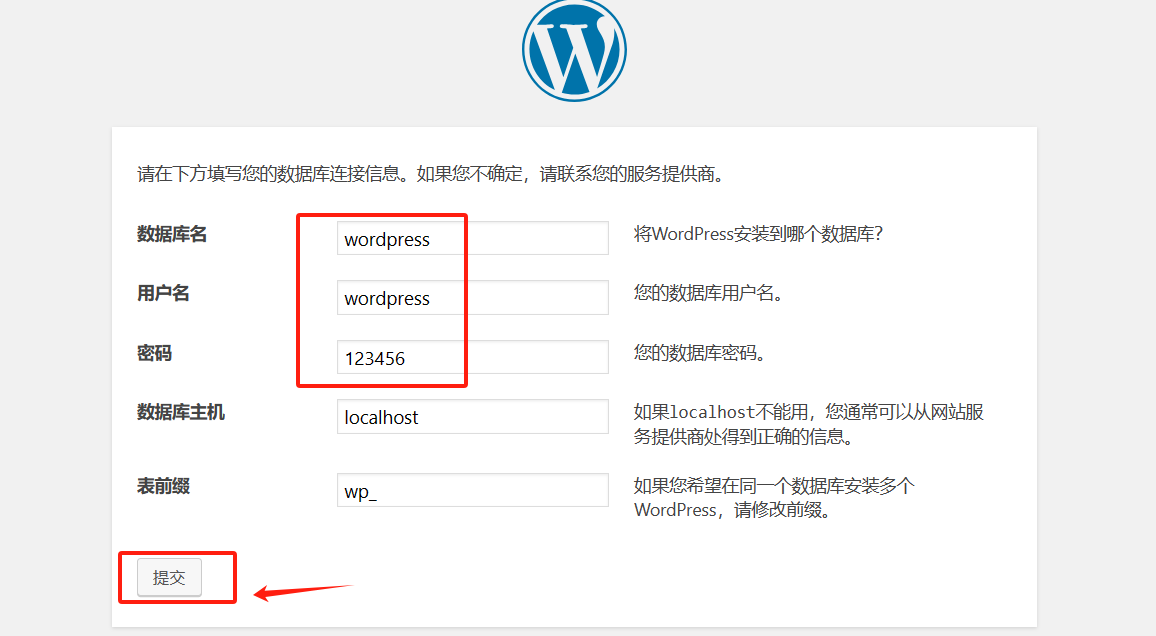
wp-config.php 文件
cd /opt/lnmp/nginx/html/wordpress/
ls
cp wp-config-sample.php wp-config.php
vim wp-config.php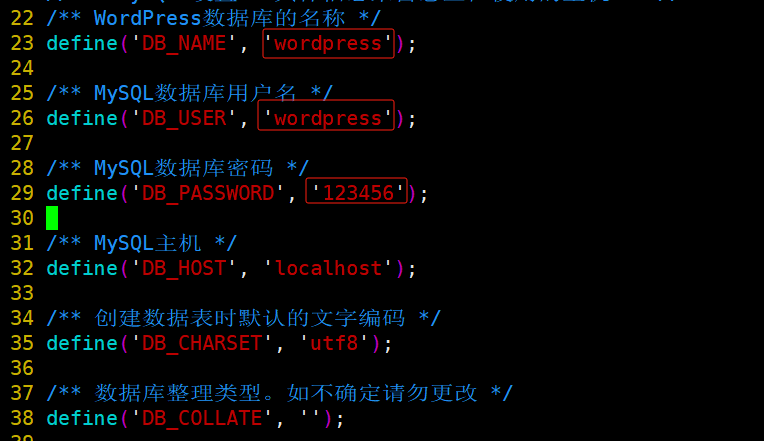


登录成功
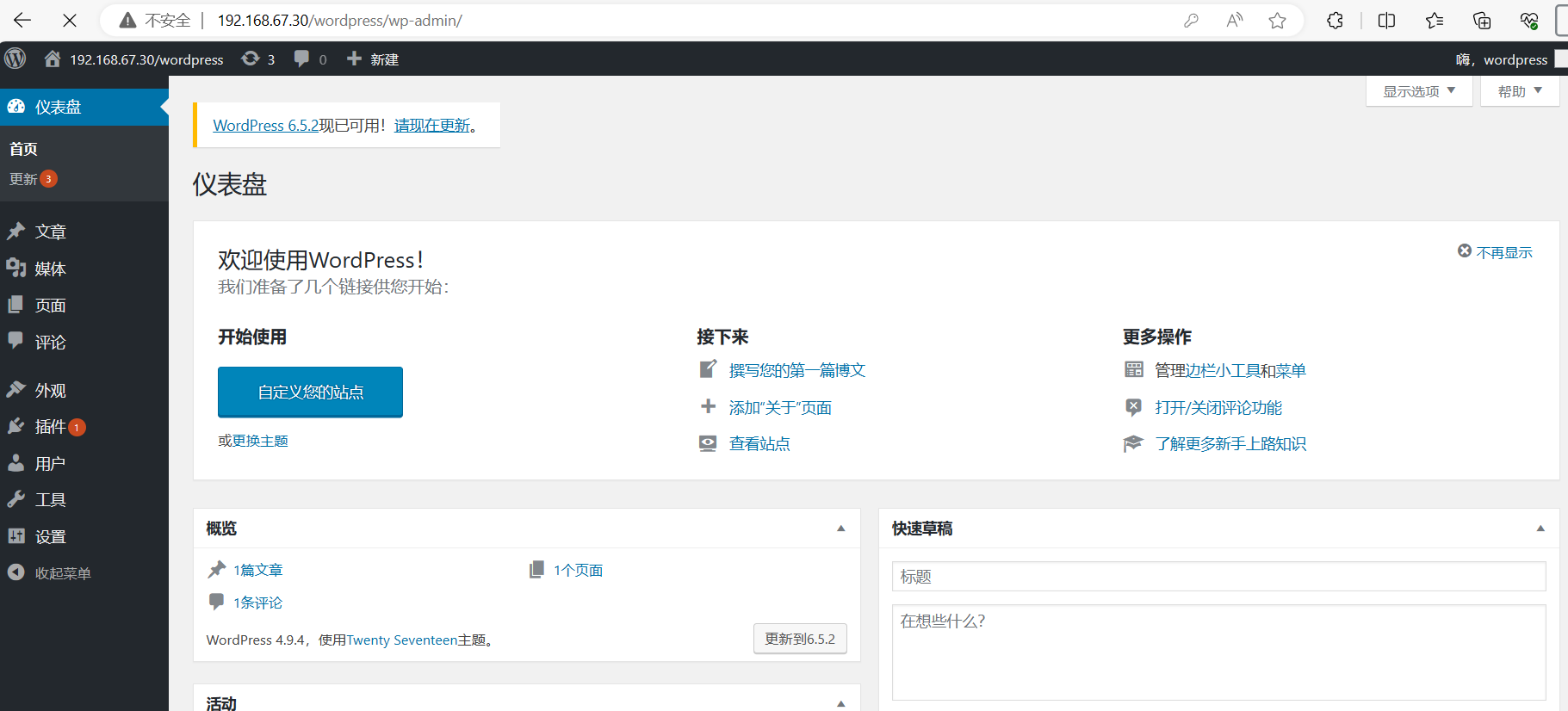
相关文章:
【Docker】docker部署lnmp和搭建wordpress网站
环境准备 docker:192.168.67.30 虚拟机:4核4G systemctl stop firewalld systemctl disable firewalld setenforce 0 安装docker #安装依赖包 yum -y install yum-utils device-mapper-persistent-data lvm2 #设置阿里云镜像 yum-config-manager --add…...

C#装箱拆箱是怎么回事
代码如下: int i 123; object o i; // Boxing int j (int)o; // Unboxing 缺点: 当装箱和拆箱发生时,该技术允许将值类型视为对象。虽然非常有益,但它们会带来性能开销。值类型和引用类型之间的转换过多可能会导致垃圾回收…...

JavaEE 初阶篇-深入了解 Junit 单元测试框架和 Java 中的反射机制(使用反射做一个简易版框架)
🔥博客主页: 【小扳_-CSDN博客】 ❤感谢大家点赞👍收藏⭐评论✍ 文章目录 1.0 Junit 单元测试框架概述 1.1 使用 Junit 框架进行测试业务代码 1.2 Junit 单元测试框架的常用注解(Junit 4.xxx 版本) 2.0 反射概述 2.1 获…...

人力资源管理新视野:挖掘员工潜力,共筑卓越未来
在21世纪的商业环境中,企业的成功不再仅仅依赖于资本、技术和市场策略,而更多地依赖于其人力资源的有效管理。人力资源管理的新视野正致力于挖掘员工的潜力,为企业创造持续的价值,共筑卓越的未来。 一、员工潜力的挖掘 员工是企业…...

rust语言tokio库spawn, blocking_spawn等的使用
目录 tokio的spawn以及spawn_blocking的使用tokio::task::spawn方法解析tokio::task::spawn_blocking()方法解析 时间会遗忘一切 最后更新时间2024.04.29 tokio版本: tokio的spawn以及spawn_blocking的使用 tokio::task::spawn方法解析 tokio的实现原理以及源码…...

Day_1
1. 环境搭建 技术选型 后端项目结构 sky-take-out maven父工程,统一管理依赖版本,聚合其他子模块 sky-common 子模块,存放公共类,例如:工具类、常量类、异常类等 sky-pojo 子模块,存放实体类、VO、DTO…...
2024.05.06作业
自由发挥应用场景,实现登录界面。 要求:尽量每行代码都有注释。 #include "yuanshen.h"yuanshen::yuanshen(QWidget *parent): QWidget(parent) {//窗口相关设置this->resize(1600,910);this->setFixedSize(1600,910);//窗口标题this-…...

什么是抖音橱窗?它和抖音小店有什么区别?普通人更适合做哪个?
大家好,我是电商糖果 相信有很多想在抖音卖货的朋友,都会搞不清抖音橱窗是什么? 甚至会把它和抖音小店当成一个项目,也不知道哪个更适合自己。 自己越了解发现越迷糊,有的说不需要直播,粉丝,…...
spring高级篇(九)
boot的执行流程分为构造SpringApplication对象、调用run方法两部分 1、Spring Boot 执行流程-构造 通常我们会在SpringBoot的主启动类中写以下的代码: 参数一是当前类的字节码,参数二是main的args参数。 public class StartApplication {public static…...

用wordpress建跨境电商独立站的5大优势
免费和开源 WordPress是一个免费的开源内容管理系统,用户可以自由下载、安装和使用,无需支付版权费用或订阅费用。开源特性也意味着用户可以根据自己的需求修改和定制代码,或者使用其他开发者提供的插件和主题来扩展和美化网站。 易用和灵活…...

Windows中安装的PostgreSQL 数据库如何重启
1. 使用Windows服务管理器 打开“运行”对话框(按WinR键)。输入services.msc并按回车,这将打开服务列表。在服务列表中找到PostgreSQL服务。它通常命名为“PostgreSQL”后面跟着版本号和实例名称,例如“PostgreSQL 13 - mydb”。…...
Remix框架实现 SSR
SSR SSR是一种网页渲染方式,它与传统的客户端渲染(CSR)相对,在日常的项目中我们更多是使用 CSR 的方式进行前端分离开发,渲染会在浏览器端进行。然而在SSR中,当用户请求一个网页时,服务器将生成…...

如何快速开发项目,提高开发效率
文章目录 一、问题描述二、问题解决1.需求分析2.架构设计3.技术选型4.正式开发 一、问题描述 有很多小伙伴在开发一个项目的时候,总是需要很长时间,效率很低,其实本质是没有掌握开发项目的关键和技巧 我下面列举一些问题,不知道…...
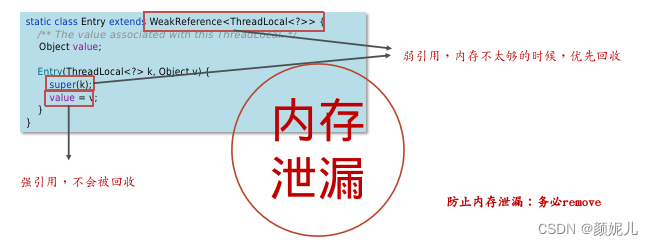
面试笔记——多线程使用场景
线程池使用场景(CountDownLatch, Future) CountDownLatch CountDownLatch(闭锁/倒计时锁)用来进行线程同步协作,等待所有线程完成倒计时(一个或者多个线程,等待其他多个线程完成某件…...

02.0 基于Verilog控制LED灯每秒钟闪烁一次
本段代码是为Verilog初学者提供的一个名为led_blink简单实例Verilog模块,其功能是控制6个LED灯同步闪烁,每秒钟闪烁一次。 本例代码用于理解时序逻辑的概念,理解多个always模块完全并行执行的概念,讲授时可以与C语言的执行过程进行…...

C语言创建文件夹和多级目录
C调用系统命令创建多级目录 #include <stdio.h> #include <stdlib.h>int main() {const char *path "a/b/c";// 创建目录命令的字符串char mkdir_command[100];sprintf(mkdir_command, "mkdir %s", path);// 调用系统命令system(mkdir_comma…...
2024.5.6
#include "mywidget.h"MyWidget::MyWidget(QWidget *parent): QWidget(parent) {//设置窗口大小this->resize(1000,740);//设置窗口图标this->setWindowIcon(QIcon("C:\\Users\\Administrator\\Desktop\\pictrue\\Plants.png"));//设置窗口标题this-…...

mybatis配置获取自增主键
mybatis配置获取自增主键 【/n】 01 使用场景 当需要刚刚插入数据库的数据对应的新增主键时,通过配置xml文件,使数据库返回新增主键id,并把主键id与类参数对应 02 涉及配置 注解TableId(type IdType.AUTO):在类主键id通过配…...
完整、免费的把pdf转word文档
在线工具网 https://www.orcc.online 支持pdf转word,免费、完整、快捷 登录网站 https://orcc.online 选择需要转换的pdf文件: 等待转换完成 点击蓝色文件即可下载 无限制,完整转换。...

使用 Lua 协程模拟 Golang 的 go defer 编程模式
封装 go 函数 在 使用 Lua 协程处理异步回调函数 中已经介绍 这里简要列下: 封装 go 函数---go 函数创建并启动一个协程 ---param _co_task function 函数原型 fun(_co:thread) function go(_co_task)local co coroutine.create(_co_task) -- 创建的协程是暂停的…...

华为OD机试真题 新系统 2026-5-13 多语言实现【查找能被整除的最大整数】
查找能被整除的最大整数(Py/Java /C/C/Js/Go)题解 华为OD新系统机试真题 华为OD新系统上机考试真题 5月13号 100分题型 华为OD机试真题目录点击查看: 华为OD机试真题题库目录|机考题库 算法考点详解 题目内容 给定一个字符串和一个正整数,字符串由大…...

环境光传感器在可穿戴设备中的关键技术与应用
1. 环境光传感器的核心价值与可穿戴设备需求在智能手表和健身手环等可穿戴设备中,屏幕背光功耗往往占据总能耗的30%以上。传统固定亮度方案不仅浪费电量,强光下看不清、暗光下刺眼的问题也严重影响用户体验。环境光传感器(Ambient Light Sensor, ALS)正是…...

PHP文件上传绕过新思路:用.htaccess+GIF89a头绕过exif_imagetype检测的完整操作指南
突破文件上传限制的进阶技巧:.htaccess与GIF89a的协同利用 在Web应用安全领域,文件上传功能一直是攻防对抗的前沿阵地。当开发者采用exif_imagetype()等函数验证文件类型时,攻击者往往会寻找更隐蔽的绕过方式。本文将深入剖析如何通过.htacce…...
)
别再只用AES了!手把手教你用Java BouncyCastle库实现SM4国密加密(附完整工具类)
国密算法实战:用Java BouncyCastle实现SM4加密的完整指南 在数据安全领域,国际通用算法长期占据主导地位,但随着技术自主可控需求的提升,国产密码算法正成为企业级应用的新选择。SM4作为我国商用密码标准体系中的重要对称加密算法…...

ARM生态产品创新评估:从芯片到系统的技术选型方法论
1. 从一次投票看ARM生态的演进与产品创新逻辑2015年秋天,EE Times上的一则投票通知,可能被很多人当作一次普通的行业活动而滑过。标题很简单——“Vote for Best ARM-Based Product”。但如果你恰好是一位嵌入式开发者、半导体行业的从业者,或…...

Aura包管理器与Faur元数据服务器:了解Arch Linux包管理的终极解决方案
Aura包管理器与Faur元数据服务器:了解Arch Linux包管理的终极解决方案 【免费下载链接】aura A multilingual package manager for Arch Linux and the AUR. 项目地址: https://gitcode.com/gh_mirrors/aur/aura Aura是一个多语言包管理器,专为Ar…...

【深度解析】Hermes Agent 新版能力:后台 Computer Use、多智能体编排与 /goal 自主任务循环实战
摘要 本文解析 Hermes Agent 新版核心能力:后台电脑操控、多智能体协同、Kanban 工作流与 /goal 长任务模式,并用 Python 实现一个可运行的自主任务编排原型。背景介绍 AI Agent 正在从“单轮问答工具”演进为“长期运行的自主工作系统”。传统大模型应用…...

OpenArk:Windows系统安全检测的终极完整解决方案指南 [特殊字符]️
OpenArk:Windows系统安全检测的终极完整解决方案指南 🛡️ 【免费下载链接】OpenArk The Next Generation of Anti-Rookit(ARK) tool for Windows. 项目地址: https://gitcode.com/GitHub_Trending/op/OpenArk OpenArk是一款强大的Windows开源反R…...

Agent-Harness:为AI编码助手套上“缰绳”的工程化框架
1. 项目概述:为什么你的AI编码助手总是“犯傻”?如果你和我一样,已经深度使用过Cursor、Windsurf或者Claude Code这类AI编码助手,那你一定经历过这样的挫败时刻:你满怀期待地让它去修改一个复杂的函数,结果…...

Ubuntu服务器性能检测工具NetData安装
1. NetData安装 打开Ubuntu终端并输入以下指令: $ bash <(curl -Ss https://my-netdata.io/kickstart-static64.sh)中途会提示安装文件将为占用磁盘空间,是否继续(Y/N),输入Y即可,安装完成后的截图如下…...